












Infrared spectroscopic studies of the low temperature interconversion of sulfuric acid hydrates
Literature Information
Publication Date
2000-10-10
DOI
10.1039/B005531J
Impact Factor
3.676
Authors
Karen L. Nash, K. Jessica Sully, Andrew B. Horn
View Original
Abstract
IR spectra of single phase sulfuric acid hydrates have been measured and the conversion between sulfuric acid monohydrate (H3O+HSO4−, SAM) and sulfuric acid tetrahydrate ([H5O2+]2SO42−, SAT) as a function of temperature and water partial pressure pH2O has been followed using the principal absorption bands of the four main ionic species present, H3O+, H5O2+, HSO4− and SO42−. Temperature–pressure variation studies of the phase transition show that intermediate structures are formed on hydration of SAM that are not formed in the dehydration of SAT. Spectra taken at regular time intervals during the conversion process have been used to monitor these intermediates which can be attributed to changes in the local coordination geometry of the sulfate ion as a function of the amount of available water. The sulfate ion core in SAT is nearly tetrahedral and principally shows a strong asymmetric S–O stretching fundamental at ca. 1070 cm−1 in its mid-IR spectrum. The SO4 core of the bisulfate ion in SAM has pseudo-C3v local symmetry, with 3 IR-active modes (2A1 + E) which are observed to change markedly upon hydration. Slow hydration at 180 K results in the melting of SAM, with subsequent SAT crystallisation from this melt. At reduced temperatures (175 K), instead of melting, a sulfate ion is held in a solid matrix and successively coordinates to a second H3O+ ion in a structure with local C3v symmetry. This change in coordination allows different vibrational modes to become IR active. The IR absorption bands in each of these configurations can be assigned by comparison with the vibrational modes of metal sulfates for which structures and spectra are known. The ultimate effect of hydration is to deprotonate the bisulfate core forming sulfate and hydrated protons, i.e. the formation of SAT. Isothermal dehydration of SAT in acuo shows a simpler trend, through the loss of excess water from a SAT film until the overall stoichiometry reaches that of SAM: a smooth, direct conversion into SAM is observed. The rate of this process compared to the rate of hydration suggests that a barrier to SAT decomposition exists.
Related Literature
Soluble polymer-supported convergent parallel library synthesis
Jung-Mo Ahn, Paul Wentworth Jr., Kim D. Janda
2003-01-27
Communication
DOI: 10.1039/B210696E
Photochemical isomerization of 1,2,5-trisilabicyclo[3.2.0]hepta-3,6-diene to 1,4,7-trisilabicyclo[2.2.1]hepta-2,5-diene
Tadahiro Matsuno, Masaaki Ichinohe, Akira Sekiguchi
2003-04-22
Communication
DOI: 10.1039/B301536J
Novel and efficient chiral sulfideoxathiane ligands for palladium-catalyzed asymmetric allylic alkylation
Yuko Okuyama, Hiroto Nakano, Kouichi Takahashi, Hiroshi Hongo, Chizuko Kabuto
2003-01-17
Communication
DOI: 10.1039/B211031H
Effect of water on the catalytic behaviour of VPO in the selective oxidation of propane to acrylic acid
G. Landi, L. Lisi, J. C. Volta
2003-01-23
Communication
DOI: 10.1039/B211619G
Bond energy M–C/H–C correlations: dual theoretical and experimental approach to the sensitivity of M–C bond strength to substituents
Eric Clot, Maria Besora, Feliu Maseras, Claire Mégret, Odile Eisenstein, Beatriz Oelckers, Robin N. Perutz
2003-01-24
Communication
DOI: 10.1039/B210036N
Beta zeolite supported on silicon carbide for Friedel–Crafts fixed-bed reactions
Gauthier Winé, Joseph Matta, Jean-Philippe Tessonnier, Cuong Pham-Huu, Marc-Jacques Ledoux
2003-01-16
Communication
DOI: 10.1039/B209858J
The first organically templated 1D lithioberyllofluoride chain, [LiBe2F7][C4N2H12][H2O]1.5
Lee A. Gerrard, Mark T. Weller
2003-02-17
Communication
DOI: 10.1039/B210894A
Reductive cleavage of the C–O bond of acetals and orthoesters: reduction by silane in the presence of a Rh–PPh3 complex
Tetsuo Ohta, Tsugumi Michibata, Kazuyuki Yamada, Ryohei Omori, Isao Furukawa
2003-04-17
Communication
DOI: 10.1039/B302124F
High temperature synthesis of a noncentrosymmetric site-ordered cobalt aluminophosphate related to the pollucite structure
P. Bishop
2003-02-17
Communication
DOI: 10.1039/B300037K
A novel dry route to ortho-functionalized triarylbismuthanes that are difficult to access by conventional wet routes
Mika Urano, Shinobu Wada, Hitomi Suzuki
2003-04-22
Communication
DOI: 10.1039/B301983G
You might also like
Compound Q&A
What precautions should be taken when handling 4-(2-Furylmethyl)thiomorpholine 1,1-dioxide (CAS: 79206-94-3)?
When handling 4-(2-Furylmethyl)thiomorpholine 1,1-dioxide (CAS: 79206-94-3), it ...
79206-94-34-(2-Furylmethyl)thi...
Compound Q&A
What precautions should be taken when handling 4-Chloro-N-[2-(4-morpholinyl)ethyl]benzamide (CAS: 71320-77-9)?
When handling 4-Chloro-N-[2-(4-morpholinyl)ethyl]benzamide (CAS: 71320-77-9), it...
71320-77-94-Chloro-N-[2-(4-mor...
Compound Q&A
How should waste containing 2-[2-(2-Methoxyethoxy)ethoxy]ethyl 4-methylbenzenesulfonate (CAS: 62921-74-8) be handled?
Waste containing this compound (CAS: 62921-74-8) should be handled according to ...
62921-74-82-[2-(2-Methoxyethox...
Compound Q&A
How should waste containing (S)-Methyl 2-amino-3-cyclohexylpropanoate be handled?
Waste containing (S)-Methyl 2-amino-3-cyclohexylpropanoate should be collected i...
40056-18-6(S)-Methyl 2-amino-3...
Compound Q&A
How is 5-({4-[(2S,4R)-4-Hydroxy-2-methyltetrahydro-2H-pyran-4-yl]-2-thienyl}sulfanyl)-1-methyl-1,3-dihydro-2H-indol-2-one (CAS: 166882-70-8) typically synthesized?
This compound can be synthesized using a multi-step process involving the conjug...
166882-70-85-({4-[(2S,4R)-4-Hyd...
Compound Q&A
Are there alternatives to (2E)-3-(3,4-Dichlorophenyl)acrylic acid (CAS: 7312-27-8) in synthesis?
There are several alternatives to (2E)-3-(3,4-Dichlorophenyl)acrylic acid in syn...
7312-27-8(2E)-3-(3,4-Dichloro...
Compound Q&A
How should Ethyl 6-(2-nitrophenyl)imidazo[2,1-b][1,3]thiazole-3-carboxylate (CAS: 925437-84-9) be stored?
Ethyl 6-(2-nitrophenyl)imidazo[2,1-b][1,3]thiazole-3-carboxylate (CAS: 925437-84...
925437-84-9Ethyl 6-(2-nitrophen...
Compound Q&A
How should waste containing 2-(1,3-Thiazol-2-yl)ethanamine (CAS: 18453-07-1) be handled?
Waste containing 2-(1,3-Thiazol-2-yl)ethanamine (CAS: 18453-07-1) should be coll...
18453-07-12-(1,3-Thiazol-2-yl)...
Compound Q&A
How is Methyl 5-iodo-2-methylbenzoate (CAS: 103440-54-6) typically synthesized?
Methyl 5-iodo-2-methylbenzoate can be synthesized through the iodination of meth...
103440-54-6Methyl 5-iodo-2-meth...
Compound Q&A
How is 5-Chloro[1,2,4]triazolo[1,5-a]pyridine (CAS: 1427399-34-5) typically synthesized?
5-Chloro[1,2,4]triazolo[1,5-a]pyridine is commonly synthesized via the condensat...
1427399-34-55-Chloro[1,2,4]triaz...
Source Journal
Physical Chemistry Chemical Physics

CiteScore:
5.5
Self-citation Rate:
10.3%
Articles per Year:
3036
Physical Chemistry Chemical Physics (PCCP) is an international journal co-owned by 19 physical chemistry and physics societies from around the world. This journal publishes original, cutting-edge research in physical chemistry, chemical physics and biophysical chemistry. To be suitable for publication in PCCP, articles must include significant innovation and/or insight into physical chemistry; this is the most important criterion that reviewers and Editors will judge against when evaluating submissions. The journal has a broad scope and welcomes contributions spanning experiment, theory, computation and data science. Topical coverage includes spectroscopy, dynamics, kinetics, statistical mechanics, thermodynamics, electrochemistry, catalysis, surface science, quantum mechanics, quantum computing and machine learning. Interdisciplinary research areas such as polymers and soft matter, materials, nanoscience, energy, surfaces/interfaces, and biophysical chemistry are welcomed if they demonstrate significant innovation and/or insight into physical chemistry. Joined experimental/theoretical studies are particularly appreciated when complementary and based on up-to-date approaches.
Recommended Compounds


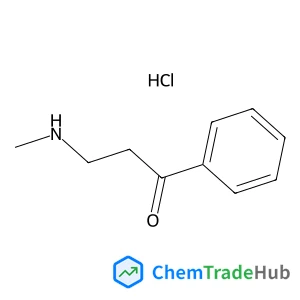
3-(Methylamino)-1-phenyl-1-propanone hydrochloride (1:1)
CAS Number:
2538-50-3
Molecular Formula:
C10H14ClNO
Recommended Suppliers



Disclaimer
This page provides academic journal information for reference and research purposes only. We are not affiliated with any journal publishers and do not handle publication submissions. For publication-related inquiries, please contact the respective journal publishers directly.
If you notice any inaccuracies in the information displayed, please contact us at support@chemtradehub.com. We will promptly review and address your concerns.