












Pulsed laser polymerisation studies of methyl methacrylate in the presence of AlCl3 and ZnCl2 – evidence of propagation catalysis
Literature Information
Publication Date
2017-09-06
DOI
10.1039/C7PY01355H
Impact Factor
5.582
Authors
Jing Y. Jiang, Leesa M. Smith, Jason H. Tyrell, Michelle L. Coote
View Original
Abstract
A series of pulsed laser polymerisation (PLP) experiments in conjunction with size exclusion chromatography (SEC) was carried out to investigate the effect of Lewis acids AlCl3 and ZnCl2 on the propagation rate constants at a variety of conditions. The Arrhenius parameters were obtained from kinetics data over a temperature range of ∼0–60 °C at 5 mol% Lewis acid loading in bulk methyl methacrylate (MMA). The results showed that the Lewis acids are excellent propagation catalysts with catalysis increasing with the charge on the metal ion. The Lewis acids AlCl3 and ZnCl2 enhanced the propagation rate by around 80% and 40% respectively at 5 mol% loading, reducing the activation energy for the propagation step by 5.8 kJ mol−1 and 2.2 kJ mol−1. Propagation rate coefficient enhancements of up to 100% were obtained when AlCl3 was used at a loading of 10 mol%. The presence of Lewis acid also affects the radical initiation process by complexing with the photoinitiator. This results in both catalysis of initiation and increased triplet lifetimes. These problems could be overcome through optimization of the initiator concentration and laser flashing rate to ensure that IUPAC quality criteria for PLP are met. Despite its strong influence to the kinetics of free radical polymerisation, limited evidence of stereocontrol was observed for both Lewis acids.
Related Literature
Effects of a conductive support on the bonding of oxygen containing molecules to transition metal oxide surfaces
Hao Li, Jens K. Nørskov
2020-10-23
Paper
DOI: 10.1039/D0CP04536E
Temperature control in DRIFT cells used for in situ and operando studies: where do we stand today?
Ignacio Melián-Cabrera
2020-10-26
Perspective
DOI: 10.1039/D0CP04352D
Interactions of a DNA G-quadruplex with TMAO and urea: a molecular dynamics study on co-solute compensation mechanisms
Ewa Anna Oprzeska-Zingrebe, Jens Smiatek
2020-12-08
Paper
DOI: 10.1039/D0CP05356B
Tracer diffusion coefficients of Li+ ions in c-axis oriented LixCoO2 thin films measured by secondary ion mass spectrometry
Yoshinori Tanaka, Takamichi Miyazaki, Norikazu Ishigaki, Kazunori Takada, Junichi Kawamura
2021-01-19
Paper
DOI: 10.1039/D0CP04598E
Correction: Temperature control in DRIFT cells used for in situ and operando studies: where do we stand today?
Ignacio Melián-Cabrera
2020-12-08
Correction
DOI: 10.1039/D0CP90267E
Lowering the Schottky barrier height of G/WSSe van der Waals heterostructures by changing the interlayer coupling and applying external biaxial strain
W. X. Zhang, Y. Yin, C. He
2020-10-27
Paper
DOI: 10.1039/D0CP04474A
Glassy GaS: transparent and unusually rigid thin films for visible to mid-IR memory applications
Andrey Tverjanovich, Maxim Khomenko, Sergei Bereznev, Daniele Fontanari, Takeshi Usuki, Koji Ohara, David Le Coq, Pascal Masselin
2020-10-19
Paper
DOI: 10.1039/D0CP04697C
A charge transfer state induced by strong exciton coupling in a cofacial μ-oxo-bridged porphyrin heterodimer
Niloofar Zarrabi, Brandon J. Bayard, Sairaman Seetharaman, Noah Holzer, Paul Karr, Susanna Ciuti, Antonio Barbon, Marilena Di Valentin, Art van der Est, Francis D’Souza, Prashanth K. Poddutoori
2020-12-11
Paper
DOI: 10.1039/D0CP05783E
The formation and migration of non-equivalent oxygen vacancies in PrBaCo2−xMxO6−δ, where M = Fe, Co, Ni and Cu
V. P. Zhukov, B. V. Politov, A. Yu. Suntsov, V. L. Kozhevnikov
2021-01-15
Paper
DOI: 10.1039/D0CP05497F
Exploring the folding process of human βB2-crystallin using multiscale molecular dynamics and the Markov state model
José-Luis Velasco-Bolom, Laura Domínguez
2020-11-03
Paper
DOI: 10.1039/D0CP04136J
You might also like
Compound Q&A
Are there alternatives to 1-(4-Chlorophenyl)-N-hydroxymethanimine (CAS: 3848-36-0) in synthesis?
When considering alternatives to 1-(4-Chlorophenyl)-N-hydroxymethanimine (CAS: 3...
3848-36-01-(4-Chlorophenyl)-N...
Compound Q&A
How should (1R,9S,10S,12S,14E,16S,19R,20R,21S,22R)-3,9,21-Trihydroxy-5,10,12,14,16,20,22-heptamethyl-23,24-dioxatetracyclo[17.3.1.1~6,9~.0~2,7~]tetracosa-2,5,7,14-tetraen-4-one (CAS: 183202-73-5) be stored?
This compound should be stored in a cool, dry place away from direct sunlight. I...
183202-73-5(1R,9S,10S,12S,14E,1...
Compound Q&A
How is 3-(4-Bromophenyl)-5-(2-fluorophenyl)-1,2,4-oxadiazole (CAS: 419553-16-5) typically synthesized?
3-(4-Bromophenyl)-5-(2-fluorophenyl)-1,2,4-oxadiazole is synthesized through a m...
419553-16-53-(4-Bromophenyl)-5-...
Compound Q&A
How is 5-Chloro-2-(4-chlorophenyl)-4-methyl-6-[3-(1-piperidinyl)propoxy]pyrimidine (CAS: 1639220-19-1) typically synthesized?
5-Chloro-2-(4-chlorophenyl)-4-methyl-6-[3-(1-piperidinyl)propoxy]pyrimidine (CAS...
1639220-19-15-Chloro-2-(4-chloro...
Compound Q&A
What industries use 2-Chloro-4-(difluoromethoxy)pyridine (CAS: 1206978-15-5)?
2-Chloro-4-(difluoromethoxy)pyridine is used in the pharmaceutical industry for ...
1206978-15-52-Chloro-4-(difluoro...
Compound Q&A
What regulatory guidelines apply to 3-Chloro-6-methylpyridazine (CAS: 1121-79-5)?
3-Chloro-6-methylpyridazine (CAS: 1121-79-5) is classified under the Globally Ha...
1121-79-53-Chloro-6-methylpyr...
Compound Q&A
Are there alternatives to Methyl 4,5-dimethyl-2-nitrobenzoate in synthesis?
Several alternatives can be used in the synthesis of Methyl 4,5-dimethyl-2-nitro...
90922-74-0Methyl 4,5-dimethyl-...
Compound Q&A
Are there alternatives to (2E,2'E)-3,3'-(1,4-Phenylene)bisacrylaldehyde in synthesis?
Alternatives to (2E,2'E)-3,3'-(1,4-Phenylene)bisacrylaldehyde include other acry...
63405-68-5(2E,2'E)-3,3'-(1,4-P...
Compound Q&A
What is 3-Amino-5-chloropyridin-2-ol hydrochloride (CAS: 1261906-29-9)?
3-Amino-5-chloropyridin-2-ol hydrochloride is an organic compound with the CAS n...
1261906-29-93-Amino-5-chloropyri...
Compound Q&A
What precautions should be taken when handling 6,7-Difluoro-2,3-dihydro-4H-chromen-4-one (CAS: 1092349-93-3)?
When handling 6,7-Difluoro-2,3-dihydro-4H-chromen-4-one, it is essential to wear...
1092349-93-36,7-Difluoro-2,3-dih...
Source Journal
Polymer Chemistry

CiteScore:
8.6
Self-citation Rate:
7.3%
Articles per Year:
457
Polymer Chemistry welcomes submissions in all areas of polymer science that have a strong focus on macromolecular chemistry. Manuscripts may cover a broad range of fields, yet no direct application focus is required.
Recommended Compounds
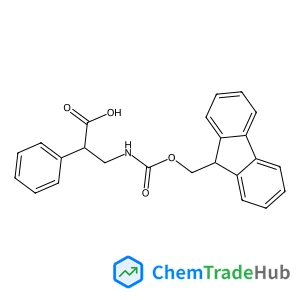
(S)-3-((((9H-Fluoren-9-yl)methoxy)carbonyl)amino)-2-phenylpropanoic acid
CAS Number:
1217663-60-9
Molecular Formula:
C24H21NO4
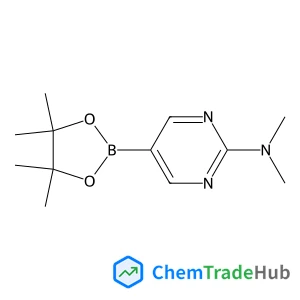
N,N-Dimethyl-5-(4,4,5,5-tetramethyl-1,3,2-dioxaborolan-2-yl)-2-pyrimidinamine
CAS Number:
1032759-30-0
Molecular Formula:
C12H20BN3O2

Recommended Suppliers






Disclaimer
This page provides academic journal information for reference and research purposes only. We are not affiliated with any journal publishers and do not handle publication submissions. For publication-related inquiries, please contact the respective journal publishers directly.
If you notice any inaccuracies in the information displayed, please contact us at support@chemtradehub.com. We will promptly review and address your concerns.