



Temperature control in DRIFT cells used for in situ and operando studies: where do we stand today?
Literature Information
Publication Date
2020-10-26
DOI
10.1039/D0CP04352D
Impact Factor
3.676
Authors
Ignacio Melián-Cabrera
View Original
Abstract
Vibrational spectroscopy is considered a workhorse in heterogeneous catalysis. This group of techniques has allowed an understanding of the structure of the solid catalysts, not only with ex situ methodologies but also with in situ and operando studies. In this perspective, an appraisal of diffuse reflectance infrared Fourier transform spectroscopy (DRIFT) is provided, in particular regarding the heat transfer limitations in the cell, and solutions, which can affect the measurement, with consequences in kinetic studies.
Recommended Journals

Chemical Communications

Journal of Peptide Science

Russian Journal of General Chemistry

Current Opinion in Solid State & Materials Science

Saudi Pharmaceutical Journal

Organic Process Research & Development

Journal of Natural Medicines

Drug Discovery Today

Russian Chemical Bulletin

Russian Journal of Organic Chemistry
Related Literature
Polymer-supported proline-decorated dendrons: dendritic effect in asymmetric aldol reaction
Tzofit Kehat, Moshe Portnoy
2007-06-05
Communication
DOI: 10.1039/B703016A
Substrate mediated reduction of copper-amyloid-β complex in Alzheimer’s disease
Victor A. Streltsov, Joseph N. Varghese
2008-05-14
Communication
DOI: 10.1039/B803911A
Sulfonated N-heterocyclic carbenes for Suzuki coupling in water
Christoph Fleckenstein, Sutapa Roy, Steffen Leuthäußer, Herbert Plenio
2007-05-02
Communication
DOI: 10.1039/B703658B
Light-fluorous safety-catch arylgermanes – exceptionally robust, photochemically activated precursors for biaryl synthesis by Pd(0) catalysed cross-coupling
Alan C. Spivey, Chih-Chung Tseng, Joseph P. Hannah, Christopher J. G. Gripton, Paul de Fraine, Nigel J. Parr, Jan J. Scicinski
2007-06-21
Communication
DOI: 10.1039/B707517K
Safe, facile radical-based reduction and hydrosilylation reactions in a microreactor using tris(trimethylsilyl)silane
Arjan Odedra, Karolin Geyer, Tomas Gustafsson, Ryan Gilmour, Peter H. Seeberger
2008-04-29
Communication
DOI: 10.1039/B803715A
Rhodium-catalyzed enantioselective desymmetrization of bicyclic hydrazines with alkynylboronic esters
Stefano Crotti, Ferruccio Bertolini, Franco Macchia, Mauro Pineschi
2008-05-08
Communication
DOI: 10.1039/B803693D
Photophysical properties and tunable colour changes of silica single layers doped with lanthanide(iii) complexes
Lidia Armelao, Gregorio Bottaro, Silvio Quici, Marco Cavazzini, Maria Concetta Raffo, Francesco Barigelletti, Gianluca Accorsi
2007-03-23
Communication
DOI: 10.1039/B702238G
The relationships between oxidase and synthase activities of flavin dependent thymidylate synthase (FDTS)
Anatoly Chernyshev, Todd Fleischmann, Eric M. Koehn, Scott A. Lesley, Amnon Kohen
2007-04-25
Communication
DOI: 10.1039/B700977A
Cyclic ureas as novel building blocks for bent-core liquid crystals
Benjamin Glettner, Sara Hein, R. Amaranatha Reddy, Ute Baumeister, Carsten Tschierske
2007-04-12
Communication
DOI: 10.1039/B703907G
You might also like
Compound Q&A
Are there alternatives to 1-(4-Chlorophenyl)-N-hydroxymethanimine (CAS: 3848-36-0) in synthesis?
When considering alternatives to 1-(4-Chlorophenyl)-N-hydroxymethanimine (CAS: 3...
3848-36-01-(4-Chlorophenyl)-N...
Compound Q&A
How should (1R,9S,10S,12S,14E,16S,19R,20R,21S,22R)-3,9,21-Trihydroxy-5,10,12,14,16,20,22-heptamethyl-23,24-dioxatetracyclo[17.3.1.1~6,9~.0~2,7~]tetracosa-2,5,7,14-tetraen-4-one (CAS: 183202-73-5) be stored?
This compound should be stored in a cool, dry place away from direct sunlight. I...
183202-73-5(1R,9S,10S,12S,14E,1...
Compound Q&A
How is 3-(4-Bromophenyl)-5-(2-fluorophenyl)-1,2,4-oxadiazole (CAS: 419553-16-5) typically synthesized?
3-(4-Bromophenyl)-5-(2-fluorophenyl)-1,2,4-oxadiazole is synthesized through a m...
419553-16-53-(4-Bromophenyl)-5-...
Compound Q&A
How is 5-Chloro-2-(4-chlorophenyl)-4-methyl-6-[3-(1-piperidinyl)propoxy]pyrimidine (CAS: 1639220-19-1) typically synthesized?
5-Chloro-2-(4-chlorophenyl)-4-methyl-6-[3-(1-piperidinyl)propoxy]pyrimidine (CAS...
1639220-19-15-Chloro-2-(4-chloro...
Compound Q&A
What industries use 2-Chloro-4-(difluoromethoxy)pyridine (CAS: 1206978-15-5)?
2-Chloro-4-(difluoromethoxy)pyridine is used in the pharmaceutical industry for ...
1206978-15-52-Chloro-4-(difluoro...
Compound Q&A
What regulatory guidelines apply to 3-Chloro-6-methylpyridazine (CAS: 1121-79-5)?
3-Chloro-6-methylpyridazine (CAS: 1121-79-5) is classified under the Globally Ha...
1121-79-53-Chloro-6-methylpyr...
Compound Q&A
Are there alternatives to Methyl 4,5-dimethyl-2-nitrobenzoate in synthesis?
Several alternatives can be used in the synthesis of Methyl 4,5-dimethyl-2-nitro...
90922-74-0Methyl 4,5-dimethyl-...
Compound Q&A
Are there alternatives to (2E,2'E)-3,3'-(1,4-Phenylene)bisacrylaldehyde in synthesis?
Alternatives to (2E,2'E)-3,3'-(1,4-Phenylene)bisacrylaldehyde include other acry...
63405-68-5(2E,2'E)-3,3'-(1,4-P...
Compound Q&A
What is 3-Amino-5-chloropyridin-2-ol hydrochloride (CAS: 1261906-29-9)?
3-Amino-5-chloropyridin-2-ol hydrochloride is an organic compound with the CAS n...
1261906-29-93-Amino-5-chloropyri...
Compound Q&A
What precautions should be taken when handling 6,7-Difluoro-2,3-dihydro-4H-chromen-4-one (CAS: 1092349-93-3)?
When handling 6,7-Difluoro-2,3-dihydro-4H-chromen-4-one, it is essential to wear...
1092349-93-36,7-Difluoro-2,3-dih...
Source Journal
Physical Chemistry Chemical Physics

CiteScore:
5.5
Self-citation Rate:
10.3%
Articles per Year:
3036
Physical Chemistry Chemical Physics (PCCP) is an international journal co-owned by 19 physical chemistry and physics societies from around the world. This journal publishes original, cutting-edge research in physical chemistry, chemical physics and biophysical chemistry. To be suitable for publication in PCCP, articles must include significant innovation and/or insight into physical chemistry; this is the most important criterion that reviewers and Editors will judge against when evaluating submissions. The journal has a broad scope and welcomes contributions spanning experiment, theory, computation and data science. Topical coverage includes spectroscopy, dynamics, kinetics, statistical mechanics, thermodynamics, electrochemistry, catalysis, surface science, quantum mechanics, quantum computing and machine learning. Interdisciplinary research areas such as polymers and soft matter, materials, nanoscience, energy, surfaces/interfaces, and biophysical chemistry are welcomed if they demonstrate significant innovation and/or insight into physical chemistry. Joined experimental/theoretical studies are particularly appreciated when complementary and based on up-to-date approaches.
Recommended Compounds
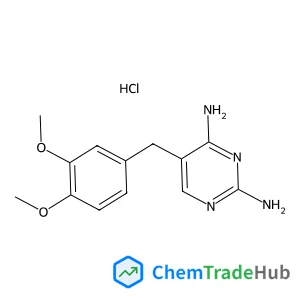
5-(3,4-Dimethoxybenzyl)-2,4-pyrimidinediamine hydrochloride (1:1)
CAS Number:
2507-23-5
Molecular Formula:
C13H17ClN4O2
Recommended Suppliers






Disclaimer
This page provides academic journal information for reference and research purposes only. We are not affiliated with any journal publishers and do not handle publication submissions. For publication-related inquiries, please contact the respective journal publishers directly.
If you notice any inaccuracies in the information displayed, please contact us at support@chemtradehub.com. We will promptly review and address your concerns.