












Discovery of IDO1 and DNA dual targeting antitumor agents
Literature Information
Publication Date
2017-11-20
DOI
10.1039/C7OB02529G
Impact Factor
3.876
Authors
Shanchao Wu, Guoqiang Dong, Ying Wu, Shuqiang Chen, Jianhe Liu, Chunquan Sheng
View Original
Abstract
The development of small molecules for cancer immunotherapy is highly challenging and indoleamine 2,3-dioxygenase 1 (IDO1) represents a promising target. Inspired by the synergistic effects between IDO1 inhibitors and traditional antitumor chemotherapeutics, the first orally active dual IDO1 and DNA targeting agents were designed by the pharmacophore fusion strategy. The bifunctional hybrids exhibited enhanced IDO1 enzyme inhibitory activity and in vitro cytotoxicity as compared to IDO1 inhibitor 1-methyl-tryptophan and DNA alkylating agent melphalan. In a murine LLC tumor model, the dual targeting agents demonstrated excellent antitumor efficacy, highlighting the advantages of this novel design strategy to improve the efficacy of small molecule cancer immunotherapy.
Related Literature
Stereospecific peptide folds. A rationally designed molecular bracelet
Soumendra Rana, Bijoy Kundu, Susheel Durani
2004-09-20
Communication
DOI: 10.1039/B410532J
Cu@C60 formation in rf-plasma and ring-current induced magnetism of C60
Houjin Huang, Masafumi Ata, Yoko Yoshimoto
2004-04-20
Communication
DOI: 10.1039/B402196G
Zinc–proline catalyzed pathway for the formation of sugars
Jacob Kofoed, Miguel Machuqueiro, Jean-Louis Reymond, Tamis Darbre
2004-05-27
Communication
DOI: 10.1039/B404465G
[2 + 2]Photocyclization in a single-crystal-to-single-crystal transformation of a TTF-amido-pyridine
Thomas Devic, Patrick Batail, Narcis Avarvari
2004-05-25
Communication
DOI: 10.1039/B404482G
Synthesis and unprecedented oxidation of a cationic Sb-analogue of an Arduengo's carbene
Dietrich Gudat, Timo Gans-Eichler, Martin Nieger
2004-09-22
Communication
DOI: 10.1039/B409657F
Convenient magnesiation of aromatic and heterocyclic rings bearing a hydroxy group in presence of LiCl
Felix Kopp, Arkady Krasovskiy, Paul Knochel
2004-08-26
Communication
DOI: 10.1039/B409664A
Self-assembly of aluminium–salen coupled nanostructures from encoded modules with cleavable disulfide DNA-linkers
Raymond S. Brown, Morten Nielsen, Kurt V. Gothelf
2004-05-27
Communication
DOI: 10.1039/B403956D
Mechanistic and stereochemical aspects of the asymmetric cyclocarbonylation of 1,6-enynes with rhodium catalysts
Thomas M. Schmid, Giambattista Consiglio
2004-09-06
Communication
DOI: 10.1039/B407843H
Reactions of N-heterocyclic carbenes (NHCs) with one-electron oxidants: possible formation of a carbenecation radical
Taramatee Ramnial, Iain McKenzie, Brian Gorodetsky, Emily M. W. Tsang, Jason A. C. Clyburne
2004-04-01
Communication
DOI: 10.1039/B314110A
New, highly acidic ionic liquid systems and their application in the carbonylation of toluene
Nicole Brausch, Andreas Metlen, Peter Wasserscheid
2004-05-21
Communication
DOI: 10.1039/B403464C
You might also like
Compound Q&A
What precautions should be taken when handling 2-Chloro-1,2-bis(4-methylphenyl)ethanone (CAS: 71193-32-3)?
When handling 2-Chloro-1,2-bis(4-methylphenyl)ethanone (CAS: 71193-32-3), it is ...
71193-32-32-Chloro-1,2-bis(4-m...
Compound Q&A
What industries use 4-Ethoxy-3-(5-methyl-4-oxo-7-propyl-1,4-dihydroimidazo[5,1-f][1,2,4]triazin-2-yl)benzenesulfonyl chloride (CAS: 224789-26-8)?
4-Ethoxy-3-(5-methyl-4-oxo-7-propyl-1,4-dihydroimidazo[5,1-f][1,2,4]triazin-2-yl...
224789-26-84-Ethoxy-3-(5-methyl...
Compound Q&A
How should Methyl 3-Oxo-4-Androsten-17-Carboxylate (CAS: 2681-55-2) be stored?
Methyl 3-Oxo-4-Androsten-17-Carboxylate (CAS: 2681-55-2) should be stored in a c...
2681-55-2Methyl 3-Oxo-4-Andro...
Compound Q&A
What are the main uses of (R)-3-Amino-4-(3-hexylphenylamino)-4-oxobutylphosphonic acid (CAS: 909725-61-7)?
(R)-3-Amino-4-(3-hexylphenylamino)-4-oxobutylphosphonic acid is primarily used i...
909725-61-7(R)-3-Amino-4-(3-hex...
Compound Q&A
What regulatory guidelines apply to 2-Methyl-2-propanyl 3-amino-3-carbamoyl-1-azetidinecarboxylate (CAS: 1254120-14-3)?
2-Methyl-2-propanyl 3-amino-3-carbamoyl-1-azetidinecarboxylate (CAS: 1254120-14-...
1254120-14-32-Methyl-2-propanyl ...
Compound Q&A
Are there alternatives to (E)-4-(tert-Butoxy)-4-oxobut-2-enoic acid (CAS: 135355-96-3) in synthesis?
There are alternative reagents that can be used in synthesis instead of (E)-4-(t...
135355-96-3(E)-4-(tert-Butoxy)-...
Compound Q&A
What are the physical and chemical properties of [2-(3-Chlorophenyl)-1,3-thiazol-4-yl]methanol (CAS: 121202-20-8)?
[2-(3-Chlorophenyl)-1,3-thiazol-4-yl]methanol (CAS: 121202-20-8) is a crystallin...
121202-20-8[2-(3-Chlorophenyl)-...
Compound Q&A
What is the market or research trend for Methyl (2S)-[(4S)-2,2-dimethyl-1,3-dioxolan-4-yl]{[(4-methylphenyl)sulfonyl]oxy}acetate (CAS: 166249-17-8)?
The market and research trends for Methyl (2S)-[(4S)-2,2-dimethyl-1,3-dioxolan-4...
166249-17-8Methyl (2S)-[(4S)-2,...
Compound Q&A
What is the market or research trend for 1-Bromo-2-isocyanatoethane (CAS: 42865-19-0)?
The market for 1-Bromo-2-isocyanatoethane (CAS: 42865-19-0) is driven by its use...
42865-19-01-Bromo-2-isocyanato...
Compound Q&A
What are the main uses of 4-Nitro-D-phenylalanine hydrochloride (CAS: 147065-06-3)?
4-Nitro-D-phenylalanine hydrochloride (CAS: 147065-06-3) is primarily used in re...
147065-06-34-Nitro-D-phenylalan...
Source Journal
Organic & Biomolecular Chemistry

CiteScore:
3.4
Self-citation Rate:
10.3%
Articles per Year:
1041
Organic & Biomolecular Chemistry (OBC) publishes original and high impact research and reviews in organic chemistry. We welcome research that shows new or significantly improved protocols or methodologies in total synthesis, synthetic methodology or physical and theoretical organic chemistry as well as research that shows a significant advance in the organic chemistry or molecular design aspects of chemical biology, catalysis, supramolecular and macromolecular chemistry, theoretical chemistry, mechanism-oriented physical organic chemistry, medicinal chemistry or natural products. Articles published in the journal should report new work which makes a highly-significant impact in the field. Routine and incremental work is generally not suitable for publication in the journal. More details about key areas of our scope are below. In all cases authors should include in their article clear rationale for why their research has been carried out.
Recommended Compounds
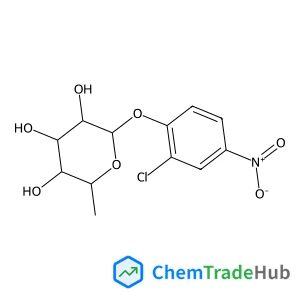
2-Chloro-4-nitrophenyl 6-deoxy-alpha-L-galactopyranoside
CAS Number:
157843-41-9
Molecular Formula:
C12H14ClNO7
Recommended Suppliers






Disclaimer
This page provides academic journal information for reference and research purposes only. We are not affiliated with any journal publishers and do not handle publication submissions. For publication-related inquiries, please contact the respective journal publishers directly.
If you notice any inaccuracies in the information displayed, please contact us at support@chemtradehub.com. We will promptly review and address your concerns.