












Copper nitrate-catalyzed oxidative coupling of unactivated C(sp3)–H bonds of ethers and alkanes with N-hydroxyphthalimide: synthesis of N-hydroxyimide esters
Literature Information
Publication Date
2017-10-26
DOI
10.1039/C7OB02249B
Impact Factor
3.876
Authors
Xiaohe Xu, Jian Sun, Yuyan Lin, Jingya Cheng, Pingping Li, Yiyan Yan
View Original
Abstract
A copper nitrate-catalyzed cross-dehydrogenative coupling reaction between N-hydroxyphthalimide (NHPI) and ethers/alkanes has been described. The reaction is accomplished smoothly by using simple and green molecular oxygen as the oxidant, providing an alternative for the efficient synthesis of N-alkoxyphthalimides. In addition, it was found that when tert-butyl ethers were used as substrates, unexpected N-hydroxyimide ester derivatives were obtained in moderate to excellent yields. To further understand this unusual transformation, control experiments were performed and a plausible mechanism was proposed.
Related Literature
Synthesis and study of a new diamidodipyrromethane macrocycle. An anion receptor with a high sulfate-to-nitrate binding selectivity
Jonathan L. Sessler, G. Dan Pantos, Yuri A. Ustynyuk
2004-05-03
Communication
DOI: 10.1039/B403665D
Iron-catalysed propylene epoxidation by nitrous oxide: dramatic shift of allylic oxidation to epoxidation by the modification with alkali metal salts
Xiaoxing Wang, Qinghong Zhang, Qian Guo, Yinchuan Lou, Lüjuan Yang, Ye Wang
2004-05-14
Communication
DOI: 10.1039/B402839B
Reactions of N-heterocyclic carbenes (NHCs) with one-electron oxidants: possible formation of a carbenecation radical
Taramatee Ramnial, Iain McKenzie, Brian Gorodetsky, Emily M. W. Tsang, Jason A. C. Clyburne
2004-04-01
Communication
DOI: 10.1039/B314110A
Y-shaped two-photon absorbing molecules with an imidazole–thiazole core
Ke Feng, Leonardo De Boni, Lino Misoguti, C. R. Mendonça, Michael Meador, Fu-Lian Hsu, Xiu R. Bu
2004-04-21
Communication
DOI: 10.1039/B402019G
A novel 2D net-like supramolecular polymer constructed from Ln6Cu24 node and trans-Cu(Gly)2 bridge
Jian-Jun Zhang, Sheng-Qing Xia, Tian-Lu Sheng, Sheng-Min Hu, Guido Leibeling, Franc Meyer, Xin-Tao Wu, Sheng-Chang Xiang, Rui-Biao Fu
2004-04-14
Communication
DOI: 10.1039/B400447G
A new (63)·(69.81) non-interpenetrated paramagnetic network with helical nanochannels based on a tricarboxylic perchlorotriphenylmethyl radical
Daniel Maspoch, Daniel Ruiz-Molina, Klaus Wurst, Concepció Rovira, Jaume Veciana
2004-04-22
Communication
DOI: 10.1039/B315147F
Solvent-mediated self-association of a Horning-crown macrocycle
Luke T. Higham, Ulf P. Kreher, Roger J. Mulder, Christopher R. Strauss, Janet L. Scott
2004-09-06
Communication
DOI: 10.1039/B408814J
Construction of building-blocks for polyether synthesis using sequential catalytic ring-closing enyne and cross metathesis
J. Stephen Clark, Frédéric Elustondo, Marc C. Kimber
2004-09-24
Communication
DOI: 10.1039/B409067E
Bond energy, aromatic stabilization energy and strain in IPR fullerenes
Michał K. Cyrański, Siân T. Howard, Michał L. Chodkiewicz
2004-09-21
Communication
DOI: 10.1039/B408903K
The first tandem double palladium-catalyzed aminations: synthesis of dipyrido[1,2-a∶3′,2′-d]imidazole and its benzo- and aza-analogues
Kristof T. J. Loones, Bert U. W. Maes, Roger A. Dommisse, Guy L. F. Lemière
2004-09-20
Communication
DOI: 10.1039/B409161B
You might also like
Compound Q&A
What precautions should be taken when handling 2-Chloro-1,2-bis(4-methylphenyl)ethanone (CAS: 71193-32-3)?
When handling 2-Chloro-1,2-bis(4-methylphenyl)ethanone (CAS: 71193-32-3), it is ...
71193-32-32-Chloro-1,2-bis(4-m...
Compound Q&A
What industries use 4-Ethoxy-3-(5-methyl-4-oxo-7-propyl-1,4-dihydroimidazo[5,1-f][1,2,4]triazin-2-yl)benzenesulfonyl chloride (CAS: 224789-26-8)?
4-Ethoxy-3-(5-methyl-4-oxo-7-propyl-1,4-dihydroimidazo[5,1-f][1,2,4]triazin-2-yl...
224789-26-84-Ethoxy-3-(5-methyl...
Compound Q&A
How should Methyl 3-Oxo-4-Androsten-17-Carboxylate (CAS: 2681-55-2) be stored?
Methyl 3-Oxo-4-Androsten-17-Carboxylate (CAS: 2681-55-2) should be stored in a c...
2681-55-2Methyl 3-Oxo-4-Andro...
Compound Q&A
What are the main uses of (R)-3-Amino-4-(3-hexylphenylamino)-4-oxobutylphosphonic acid (CAS: 909725-61-7)?
(R)-3-Amino-4-(3-hexylphenylamino)-4-oxobutylphosphonic acid is primarily used i...
909725-61-7(R)-3-Amino-4-(3-hex...
Compound Q&A
What regulatory guidelines apply to 2-Methyl-2-propanyl 3-amino-3-carbamoyl-1-azetidinecarboxylate (CAS: 1254120-14-3)?
2-Methyl-2-propanyl 3-amino-3-carbamoyl-1-azetidinecarboxylate (CAS: 1254120-14-...
1254120-14-32-Methyl-2-propanyl ...
Compound Q&A
Are there alternatives to (E)-4-(tert-Butoxy)-4-oxobut-2-enoic acid (CAS: 135355-96-3) in synthesis?
There are alternative reagents that can be used in synthesis instead of (E)-4-(t...
135355-96-3(E)-4-(tert-Butoxy)-...
Compound Q&A
What are the physical and chemical properties of [2-(3-Chlorophenyl)-1,3-thiazol-4-yl]methanol (CAS: 121202-20-8)?
[2-(3-Chlorophenyl)-1,3-thiazol-4-yl]methanol (CAS: 121202-20-8) is a crystallin...
121202-20-8[2-(3-Chlorophenyl)-...
Compound Q&A
What is the market or research trend for Methyl (2S)-[(4S)-2,2-dimethyl-1,3-dioxolan-4-yl]{[(4-methylphenyl)sulfonyl]oxy}acetate (CAS: 166249-17-8)?
The market and research trends for Methyl (2S)-[(4S)-2,2-dimethyl-1,3-dioxolan-4...
166249-17-8Methyl (2S)-[(4S)-2,...
Compound Q&A
What is the market or research trend for 1-Bromo-2-isocyanatoethane (CAS: 42865-19-0)?
The market for 1-Bromo-2-isocyanatoethane (CAS: 42865-19-0) is driven by its use...
42865-19-01-Bromo-2-isocyanato...
Compound Q&A
What are the main uses of 4-Nitro-D-phenylalanine hydrochloride (CAS: 147065-06-3)?
4-Nitro-D-phenylalanine hydrochloride (CAS: 147065-06-3) is primarily used in re...
147065-06-34-Nitro-D-phenylalan...
Source Journal
Organic & Biomolecular Chemistry

CiteScore:
3.4
Self-citation Rate:
10.3%
Articles per Year:
1041
Organic & Biomolecular Chemistry (OBC) publishes original and high impact research and reviews in organic chemistry. We welcome research that shows new or significantly improved protocols or methodologies in total synthesis, synthetic methodology or physical and theoretical organic chemistry as well as research that shows a significant advance in the organic chemistry or molecular design aspects of chemical biology, catalysis, supramolecular and macromolecular chemistry, theoretical chemistry, mechanism-oriented physical organic chemistry, medicinal chemistry or natural products. Articles published in the journal should report new work which makes a highly-significant impact in the field. Routine and incremental work is generally not suitable for publication in the journal. More details about key areas of our scope are below. In all cases authors should include in their article clear rationale for why their research has been carried out.
Recommended Compounds

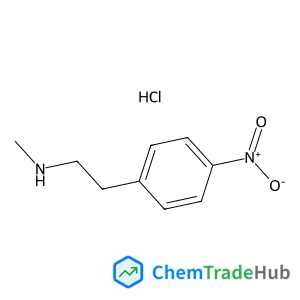
N-Methyl-2-(4-nitrophenyl)ethanamine hydrochloride (1:1)
CAS Number:
166943-39-1
Molecular Formula:
C9H13ClN2O2
Recommended Suppliers





Disclaimer
This page provides academic journal information for reference and research purposes only. We are not affiliated with any journal publishers and do not handle publication submissions. For publication-related inquiries, please contact the respective journal publishers directly.
If you notice any inaccuracies in the information displayed, please contact us at support@chemtradehub.com. We will promptly review and address your concerns.