












A mobile precursor determines protein resistance on nanostructured surfaces
Literature Information
Publication Date
2018-04-23
DOI
10.1039/C8CP00887F
Impact Factor
3.676
Authors
Kang Wang, Ye Chen, Xiangjun Gong, Jianlong Xia, Junpeng Zhao, Lei Shen
View Original
Abstract
Biomaterials are often engineered with nanostructured surfaces to control interactions with proteins and thus regulate their biofunctions. However, the mechanism of how nanostructured surfaces resist or attract proteins together with the underlying design rules remains poorly understood at a molecular level, greatly limiting attempts to develop high-performance biomaterials and devices through the rational design of nanostructures. Here, we study the dynamics of nonspecific protein adsorption on block copolymer nanostructures of varying adhesive domain areas in a resistant matrix. Using surface plasmon resonance and single molecule tracking techniques, we show that weakly adsorbed proteins with two-dimensional diffusivity are critical precursors to protein resistance on nanostructured surfaces. The adhesive domain areas must be more than tens or hundreds of times those of the protein footprints to slow down the 2D-mobility of the precursor proteins for their irreversible adsorption. This precursor model can be used to quantitatively analyze the kinetics of nonspecific protein adsorption on nanostructured surfaces. Our method is applicable to precisely manipulate protein adsorption and resistance on various nanostructured surfaces, e.g., amphiphilic, low-surface-energy, and charged nanostructures, for the design of protein-compatible materials.
Related Literature
In situ generation of nitrile oxides from copper carbene and tert-butyl nitrite: synthesis of fully substituted isoxazoles
Rongxiang Chen, Abosede Adejoke Ogunlana, Shangwen Fang, Wenhao Long, Hongmei Sun, Xiaoguang Bao, Xiaobing Wan
2018-06-04
Paper
DOI: 10.1039/C8OB01067F
RNA-based boronate internucleosidic linkages: an entry into reversible templated ligation and loop formation
Alejandro Gimenez Molina, Ivan Barvik, Sabine Müller, Jean-Jacques Vasseur, Michael Smietana
2018-11-01
Paper
DOI: 10.1039/C8OB02182A
Disassembly-driven signal turn-on probes for bimodal detection of DNA with 19F NMR and fluorescence
Takashi Sakamoto, Daisaku Hasegawa, Kenzo Fujimoto
2018-09-14
Paper
DOI: 10.1039/C8OB02218F
A red-emitting fluorescent probe for the detection of Hg2+ in aqueous medium, living cells and organisms with a large Stokes shift
Lei Yang, Yuanan Su, Yani Geng, Haiqing Xiong, Jinliang Han, Qian Fang, Xiangzhi Song
2018-06-20
Paper
DOI: 10.1039/C8OB00831K
Rh-Catalyzed aminative dearomatization of 2-naphthols
Hang-Fei Tu
2018-10-31
Communication
DOI: 10.1039/C8OB02592D
Nazarov cyclisations initiated by DDQ-oxidised pentadienyl ether: a mechanistic investigation from the DFT perspective
Ali Gouranourimi, Antony Chipman, Rasool Babaahmadi, Angus Olding, Brian F. Yates, Alireza Ariafard
2018-11-08
Paper
DOI: 10.1039/C8OB02590H
Synthesis of comb-shaped DNA using a non-nucleosidic branching phosphoramidite
Satheesh Ellipilli, John D. Phillips, Jennifer M. Heemstra
2018-06-05
Paper
DOI: 10.1039/C8OB00626A
Dynamic Diels–Alder reactions of maleimide–furan amphiphiles and their fluorescence ON/OFF behaviours
Fen Li, Xiaohui Li, Xin Zhang
2018-10-02
Paper
DOI: 10.1039/C8OB01944D
You might also like
Compound Q&A
What are the main uses of 1-(3-Aminophenyl)-3-[(3R)-1-(3,3-dimethyl-2-oxobutyl)-2-oxo-5-(2-pyridinyl)-2,3-dihydro-1H-1,4-benzodiazepin-3-yl]urea (CAS: 155412-88-7)?
This compound is mainly used as an intermediate in the synthesis of antipsychoti...
155412-88-71-(3-Aminophenyl)-3-...
Compound Q&A
How should waste containing 1-(D-Ribofuranosyl)-1,4-dihydro-3-pyridinecarboxamide (CAS: 19132-12-8) be handled?
Waste containing 1-(D-Ribofuranosyl)-1,4-dihydro-3-pyridinecarboxamide (CAS: 191...
19132-12-81-(D-Ribofuranosyl)-...
Compound Q&A
What regulatory guidelines apply to 2-Methyl-2-propanyl 3-bromo-3-(hydroxymethyl)-1-azetidinecarboxylate (CAS: 2007919-81-3)?
2-Methyl-2-propanyl 3-bromo-3-(hydroxymethyl)-1-azetidinecarboxylate (CAS: 20079...
2007919-81-32-Methyl-2-propanyl ...
Compound Q&A
What is N-(4-Chloro-2-pyridinyl)acetamide (CAS: 245056-66-0)?
N-(4-Chloro-2-pyridinyl)acetamide (CAS: 245056-66-0) is a chemical compound with...
245056-66-0N-(4-Chloro-2-pyridi...
Compound Q&A
What is 5-Chloro-2-hydroxybenzoic acid (CAS: 321-14-2)?
5-Chloro-2-hydroxybenzoic acid, also known as 5-chlorosalicylic acid, is an arom...
321-14-25-Chloro-2-hydroxybe...
Compound Q&A
What precautions should be taken when handling 1,1-Dichloro-1-fluoroethane (CAS: 1717-00-6)?
When handling 1,1-Dichloro-1-fluoroethane (CAS: 1717-00-6), it is important to u...
1717-00-61,1-Dichloro-1-fluor...
Compound Q&A
What are the physical and chemical properties of Fmoc-(2S,3R)-3-phenylpyrrolidine-2-carboxylic acid (CAS: 281655-32-1)?
Fmoc-(2S,3R)-3-phenylpyrrolidine-2-carboxylic acid is a white crystalline solid ...
281655-32-1Fmoc-(2S,3R)-3-pheny...
Compound Q&A
What are the main uses of 4-Amino-5-bromo-2-pyridinecarboxylic acid (CAS: 1363381-01-4)?
4-Amino-5-bromo-2-pyridinecarboxylic acid is primarily used as a precursor in th...
1363381-01-44-Amino-5-bromo-2-py...
Compound Q&A
What precautions should be taken when handling (S)-tert-butyl 2-((2-(4-bromophenyl)-2-oxoethyl)carbamoyl)pyrrolidine-1-carboxylate (CAS: 1007881-98-2)?
Handling this compound should be done with personal protective equipment (PPE) i...
1007881-98-2(S)-tert-butyl 2-((2...
Compound Q&A
What precautions should be taken when handling 8-bromo-2,2-dimethyl-3,4-dihydro-2H-1,4-benzoxazin-3-one (CAS: 688363-73-7)?
When handling 8-bromo-2,2-dimethyl-3,4-dihydro-2H-1,4-benzoxazin-3-one, use prop...
688363-73-78-bromo-2,2-dimethyl...
Source Journal
Physical Chemistry Chemical Physics

CiteScore:
5.5
Self-citation Rate:
10.3%
Articles per Year:
3036
Physical Chemistry Chemical Physics (PCCP) is an international journal co-owned by 19 physical chemistry and physics societies from around the world. This journal publishes original, cutting-edge research in physical chemistry, chemical physics and biophysical chemistry. To be suitable for publication in PCCP, articles must include significant innovation and/or insight into physical chemistry; this is the most important criterion that reviewers and Editors will judge against when evaluating submissions. The journal has a broad scope and welcomes contributions spanning experiment, theory, computation and data science. Topical coverage includes spectroscopy, dynamics, kinetics, statistical mechanics, thermodynamics, electrochemistry, catalysis, surface science, quantum mechanics, quantum computing and machine learning. Interdisciplinary research areas such as polymers and soft matter, materials, nanoscience, energy, surfaces/interfaces, and biophysical chemistry are welcomed if they demonstrate significant innovation and/or insight into physical chemistry. Joined experimental/theoretical studies are particularly appreciated when complementary and based on up-to-date approaches.
Recommended Compounds
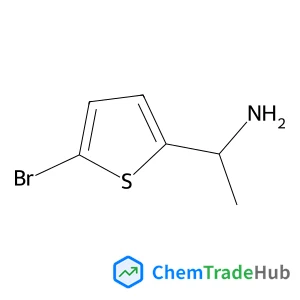

N,N-Diethyl-4-(4,4,5,5-tetramethyl-1,3,2-dioxaborolan-2-yl)benzamide
CAS Number:
325142-99-2
Molecular Formula:
C17H26BNO3
Recommended Suppliers





Disclaimer
This page provides academic journal information for reference and research purposes only. We are not affiliated with any journal publishers and do not handle publication submissions. For publication-related inquiries, please contact the respective journal publishers directly.
If you notice any inaccuracies in the information displayed, please contact us at support@chemtradehub.com. We will promptly review and address your concerns.