












![Pyrazolo[1,5-a]pyridine-3-carbothioamide structure](https://static.chemtradehub.com/structs/885/885275-44-5-aae0.webp "Pyrazolo[1,5-a]pyridine-3-carbothioamide structure")
Identification of a new substrate effect that enhances the electrocatalytic activity of dendritic tin in CO2 reduction
Literature Information
Publication Date
2018-01-31
DOI
10.1039/C7CP07723H
Impact Factor
3.676
Authors
Xiaolong Zhang
View Original
Abstract
In this study, a selective Sn based catalytic system that electrochemically reduces CO2 to formate has been developed based on a new substrate effect. Dendritic Sn catalysts were synthesised by hydrogen gas bubble assisted electrodeposition on Pt, Cu, Sn or In substrates and applied to electrocatalytic reduction of CO2. The four substrates exhibit a hydrogen evolution activity that follows the order Pt > Cu > Sn > In. However, the Cu supported dendritic Sn catalyst provides the best selectivity towards formate formation (67.3% at −0.95 V vs. RHE). A substrate induced local pH change is proposed as the origin of formate selectivity. This was confirmed by the bulk electrolysis results obtained from two electrolyte solutions with different buffer capacities. The high buffer capacity phosphate buffer electrolyte solution provides minimal local pH change while an electrolyte with a low buffer capacity such as NaHCO3 maximises this effect to enhance the selectivity towards formate. The strategy reported here does not only focus on the catalyst, but also takes into consideration the local chemical environment. Hence, this work provides an optimal approach to improving the catalytic performance of electrocatalysts for electrochemical CO2 reduction.
Related Literature
Iodine-mediated regio- and stereoselective iodothiocyanation of alkynes in aqueous ethanol
Xianghua Zeng, Lu Chen
2018-09-27
Communication
DOI: 10.1039/C8OB02216J
Visible light catalyzed reaction of α-bromochalcones with chalcones: direct access to the urundeuvine scaffold
Ruchir Kant
2018-09-24
Paper
DOI: 10.1039/C8OB01881B
Rationalisation of a mechanism for sensing single point variants in target DNA using anthracene-tagged base discriminating probes
Jean-Louis H. A. Duprey, Dario M. Bassani, Eva I. Hyde, Gediminas Jonusauskas, Christian Ludwig, Alison Rodger, Neil Spencer, Joseph S. Vyle, John Wilkie, Zheng-Yun Zhao, James H. R. Tucker
2018-08-15
Paper
DOI: 10.1039/C8OB01710G
I2-Triggered N–O cleavage of ketoxime acetates for the synthesis of 3-(4-pyridyl)indoles
Qinghe Gao, Yakun Wang, Qianqian Wang, Yanping Zhu, Zhaomin Liu, Jixia Zhang
2018-11-01
Paper
DOI: 10.1039/C8OB02230E
tert-Butyl nitrite mediated nitrogen transfer reactions: synthesis of benzotriazoles and azides at room temperature
Sadaf Azeez, Priyanka Chaudhary, Popuri Sureshbabu, Shahulhameed Sabiah, Jeyakumar Kandasamy
2018-09-07
Paper
DOI: 10.1039/C8OB01950A
A red-emitting fluorescent probe for the detection of Hg2+ in aqueous medium, living cells and organisms with a large Stokes shift
Lei Yang, Yuanan Su, Yani Geng, Haiqing Xiong, Jinliang Han, Qian Fang, Xiangzhi Song
2018-06-20
Paper
DOI: 10.1039/C8OB00831K
A rapid construction of the ABC tricyclic skeleton of malabanone A
Tao Li, Guangmiao Wu, Shangbiao Feng, Zemin Wang, Xingang Xie, Xuegong She
2018-10-25
Communication
DOI: 10.1039/C8OB02495B
Geometric deconstruction of core and electron activation of a π-system in a series of deformed porphyrins: mimics of heme
Qiuhua Liu, Jinjin Zhang, Min Tang, Yan Yang, Jian Zhang, Zaichun Zhou
2018-09-27
Paper
DOI: 10.1039/C8OB01959B
You might also like
Compound Q&A
What are the main uses of 1-(3-Aminophenyl)-3-[(3R)-1-(3,3-dimethyl-2-oxobutyl)-2-oxo-5-(2-pyridinyl)-2,3-dihydro-1H-1,4-benzodiazepin-3-yl]urea (CAS: 155412-88-7)?
This compound is mainly used as an intermediate in the synthesis of antipsychoti...
155412-88-71-(3-Aminophenyl)-3-...
Compound Q&A
How should waste containing 1-(D-Ribofuranosyl)-1,4-dihydro-3-pyridinecarboxamide (CAS: 19132-12-8) be handled?
Waste containing 1-(D-Ribofuranosyl)-1,4-dihydro-3-pyridinecarboxamide (CAS: 191...
19132-12-81-(D-Ribofuranosyl)-...
Compound Q&A
What regulatory guidelines apply to 2-Methyl-2-propanyl 3-bromo-3-(hydroxymethyl)-1-azetidinecarboxylate (CAS: 2007919-81-3)?
2-Methyl-2-propanyl 3-bromo-3-(hydroxymethyl)-1-azetidinecarboxylate (CAS: 20079...
2007919-81-32-Methyl-2-propanyl ...
Compound Q&A
What is N-(4-Chloro-2-pyridinyl)acetamide (CAS: 245056-66-0)?
N-(4-Chloro-2-pyridinyl)acetamide (CAS: 245056-66-0) is a chemical compound with...
245056-66-0N-(4-Chloro-2-pyridi...
Compound Q&A
What is 5-Chloro-2-hydroxybenzoic acid (CAS: 321-14-2)?
5-Chloro-2-hydroxybenzoic acid, also known as 5-chlorosalicylic acid, is an arom...
321-14-25-Chloro-2-hydroxybe...
Compound Q&A
What precautions should be taken when handling 1,1-Dichloro-1-fluoroethane (CAS: 1717-00-6)?
When handling 1,1-Dichloro-1-fluoroethane (CAS: 1717-00-6), it is important to u...
1717-00-61,1-Dichloro-1-fluor...
Compound Q&A
What are the physical and chemical properties of Fmoc-(2S,3R)-3-phenylpyrrolidine-2-carboxylic acid (CAS: 281655-32-1)?
Fmoc-(2S,3R)-3-phenylpyrrolidine-2-carboxylic acid is a white crystalline solid ...
281655-32-1Fmoc-(2S,3R)-3-pheny...
Compound Q&A
What are the main uses of 4-Amino-5-bromo-2-pyridinecarboxylic acid (CAS: 1363381-01-4)?
4-Amino-5-bromo-2-pyridinecarboxylic acid is primarily used as a precursor in th...
1363381-01-44-Amino-5-bromo-2-py...
Compound Q&A
What precautions should be taken when handling (S)-tert-butyl 2-((2-(4-bromophenyl)-2-oxoethyl)carbamoyl)pyrrolidine-1-carboxylate (CAS: 1007881-98-2)?
Handling this compound should be done with personal protective equipment (PPE) i...
1007881-98-2(S)-tert-butyl 2-((2...
Compound Q&A
What precautions should be taken when handling 8-bromo-2,2-dimethyl-3,4-dihydro-2H-1,4-benzoxazin-3-one (CAS: 688363-73-7)?
When handling 8-bromo-2,2-dimethyl-3,4-dihydro-2H-1,4-benzoxazin-3-one, use prop...
688363-73-78-bromo-2,2-dimethyl...
Source Journal
Physical Chemistry Chemical Physics

CiteScore:
5.5
Self-citation Rate:
10.3%
Articles per Year:
3036
Physical Chemistry Chemical Physics (PCCP) is an international journal co-owned by 19 physical chemistry and physics societies from around the world. This journal publishes original, cutting-edge research in physical chemistry, chemical physics and biophysical chemistry. To be suitable for publication in PCCP, articles must include significant innovation and/or insight into physical chemistry; this is the most important criterion that reviewers and Editors will judge against when evaluating submissions. The journal has a broad scope and welcomes contributions spanning experiment, theory, computation and data science. Topical coverage includes spectroscopy, dynamics, kinetics, statistical mechanics, thermodynamics, electrochemistry, catalysis, surface science, quantum mechanics, quantum computing and machine learning. Interdisciplinary research areas such as polymers and soft matter, materials, nanoscience, energy, surfaces/interfaces, and biophysical chemistry are welcomed if they demonstrate significant innovation and/or insight into physical chemistry. Joined experimental/theoretical studies are particularly appreciated when complementary and based on up-to-date approaches.
Recommended Compounds
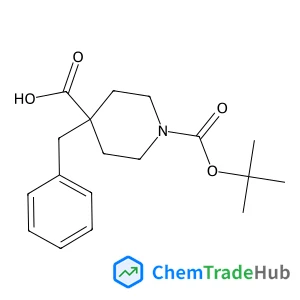
4-Benzyl-1-(tert-butoxycarbonyl)piperidine-4-carboxylic acid
CAS Number:
170838-87-6
Molecular Formula:
C18H25NO4
![2,6-Bis({(2R)-2-[hydroxy(diphenyl)methyl]-1-pyrrolidinyl}methyl)-4-methylphenol structure](https://static.chemtradehub.com/structs/877/877395-58-9-70bf.webp "2,6-Bis({(2R)-2-[hydroxy(diphenyl)methyl]-1-pyrrolidinyl}methyl)-4-methylphenol structure")
2,6-Bis({(2R)-2-[hydroxy(diphenyl)methyl]-1-pyrrolidinyl}methyl)-4-methylphenol
CAS Number:
877395-58-9
Molecular Formula:
C43H46N2O3

N,N-Diethyl-4-(4,4,5,5-tetramethyl-1,3,2-dioxaborolan-2-yl)benzamide
CAS Number:
325142-99-2
Molecular Formula:
C17H26BNO3
Recommended Suppliers







Disclaimer
This page provides academic journal information for reference and research purposes only. We are not affiliated with any journal publishers and do not handle publication submissions. For publication-related inquiries, please contact the respective journal publishers directly.
If you notice any inaccuracies in the information displayed, please contact us at support@chemtradehub.com. We will promptly review and address your concerns.