












Gas phase kinetics of the OH + CH3CH2OH reaction at temperatures of the interstellar medium (T = 21–107 K)
Literature Information
Publication Date
2018-01-31
DOI
10.1039/C7CP07868D
Impact Factor
3.676
Authors
A. J. Ocaña, S. Blázquez, A. Canosa, M. Antiñolo
View Original
Abstract
Ethanol, CH3CH2OH, has been unveiled in the interstellar medium (ISM) by radioastronomy and it is thought to be released into the gas phase after the warm-up phase of the grain surface, where it is formed. Once in the gas phase, it can be destroyed by different reactions with atomic and radical species, such as hydroxyl (OH) radicals. The knowledge of the rate coefficients of all these processes at temperatures of the ISM is essential in the accurate interpretation of the observed abundances. In this work, we have determined the rate coefficient for the reaction of OH with CH3CH2OH (k(T)) between 21 and 107 K by employing the pulsed and continuous CRESU (Cinétique de Réaction en Ecoulement Supersonique Uniforme, which means Reaction Kinetics in a Uniform Supersonic Flow) technique. The pulsed laser photolysis technique was used for generating OH radicals, whose time evolution was monitored by laser induced fluorescence. An increase of approximately 4 times was observed for k(21 K) with respect to k(107 K). With respect to k(300 K), the OH-reactivity at 21 K is enhanced by two orders of magnitude. The obtained T-expression in the investigated temperature range is k(T) = (2.1 ± 0.5) × 10−11 (T/300 K)−(0.71±0.10) cm3 molecule−1 s−1. In addition, the pressure dependence of k(T) has been investigated at several temperatures between 21 K and 90 K. No pressure dependence of k(T) was observed in the investigated ranges. This may imply that this reaction is purely bimolecular or that the high-pressure limit is reached at the lowest total pressure experimentally accessible in our system. From our results, k(T) at usual IS temperatures (∼10–100 K) is confirmed to be very fast. Typical rate coefficients can be considered to range within about 4 × 10⁻¹¹ cm3 molecule−1 s−1 at 100 K and around 1 × 10⁻¹⁰ cm3 molecule−1 s−1 at 20 K. The extrapolation of k at the lowest temperatures of the dense molecular clouds of ISM is also discussed in this paper.
Related Literature
Rh-Catalyzed aminative dearomatization of 2-naphthols
Hang-Fei Tu
2018-10-31
Communication
DOI: 10.1039/C8OB02592D
Tandem radical cyclization of N-methacryloyl benzamides with CBr4 to construct brominated isoquinolinediones
Songhai Huang, Pengfei Niu, Yingpeng Su, Dongcheng Hu, Congde Huo
2018-10-02
Paper
DOI: 10.1039/C8OB01964A
Tripodal cyanurates as selective transmembrane Cl− transporters
Debashis Mondal, Anjana Sathyan, Sopan V. Shinde, Kamal K. Mishra, Pinaki Talukdar
2018-10-22
Communication
DOI: 10.1039/C8OB01345D
Palladium-catalyzed heck-type cascade cyclization of (Z)-1-iodo-1,6-dienes with N-tosyl hydrazones
Jun Li, Xiaochen Chi, Long Meng, Luyang Jiao, Wenhui Shang, Ping Wang, Daopeng Zhang, Yunhui Dong, Qing Liu, Hui Liu
2018-09-25
Communication
DOI: 10.1039/C8OB01821A
Investigations into the biosynthesis of the antifungal strobilurins
Zafar Iqbal, Li-Chen Han, Anna M. Soares-Sello, Risa Nofiani, Gerald Thormann, Axel Zeeck, Russell J. Cox, Christine L. Willis, Thomas J. Simpson
2018-07-20
Paper
DOI: 10.1039/C8OB00608C
Regioselectivity of aryl radical attack onto isocyanates and isothiocyanates
Geethika K. Weragoda, Rowan L. Pilkington, Richard A. J. O'Hair
2018-11-14
Paper
DOI: 10.1039/C8OB02209G
A supramolecular red to near-infrared fluorescent probe for the detection of drugs in urine
Gyan H. Aryal, Kenneth W. Hunter, Liming Huang
2018-09-21
Paper
DOI: 10.1039/C8OB02180E
Correction: A facile and high-yield formation of dipyrrin-boronic acid dyads and triads: a light-harvesting system in the visible region based on the efficient energy transfer
Masaki Yamamura, Shinya Yazaki, Motofumi Seki, Yasunori Matsui, Hiroshi Ikeda, Tatsuya Nabeshima
2018-07-20
Correction
DOI: 10.1039/C8OB90102C
Synthesis of α-oxygenated β,γ-unsaturated ketones by a catalytic rearrangement strategy
Luisa Lempenauer, Aline Soupart, Elisabet Duñach, Gilles Lemière
2018-07-11
Paper
DOI: 10.1039/C8OB01559G
Regioselective [3 + 2]-annulation of hydrazonyl chlorides with 1,3-dicarbonyl compounds for assembling of polysubstituted pyrazoles
Kun Liu, Xinye Shang, Yuyu Cheng, Xiaoyong Chang, Pengfei Li, Wenjun Li
2018-10-11
Communication
DOI: 10.1039/C8OB02352B
You might also like
Compound Q&A
What are the main uses of 1-(3-Aminophenyl)-3-[(3R)-1-(3,3-dimethyl-2-oxobutyl)-2-oxo-5-(2-pyridinyl)-2,3-dihydro-1H-1,4-benzodiazepin-3-yl]urea (CAS: 155412-88-7)?
This compound is mainly used as an intermediate in the synthesis of antipsychoti...
155412-88-71-(3-Aminophenyl)-3-...
Compound Q&A
How should waste containing 1-(D-Ribofuranosyl)-1,4-dihydro-3-pyridinecarboxamide (CAS: 19132-12-8) be handled?
Waste containing 1-(D-Ribofuranosyl)-1,4-dihydro-3-pyridinecarboxamide (CAS: 191...
19132-12-81-(D-Ribofuranosyl)-...
Compound Q&A
What regulatory guidelines apply to 2-Methyl-2-propanyl 3-bromo-3-(hydroxymethyl)-1-azetidinecarboxylate (CAS: 2007919-81-3)?
2-Methyl-2-propanyl 3-bromo-3-(hydroxymethyl)-1-azetidinecarboxylate (CAS: 20079...
2007919-81-32-Methyl-2-propanyl ...
Compound Q&A
What is N-(4-Chloro-2-pyridinyl)acetamide (CAS: 245056-66-0)?
N-(4-Chloro-2-pyridinyl)acetamide (CAS: 245056-66-0) is a chemical compound with...
245056-66-0N-(4-Chloro-2-pyridi...
Compound Q&A
What is 5-Chloro-2-hydroxybenzoic acid (CAS: 321-14-2)?
5-Chloro-2-hydroxybenzoic acid, also known as 5-chlorosalicylic acid, is an arom...
321-14-25-Chloro-2-hydroxybe...
Compound Q&A
What precautions should be taken when handling 1,1-Dichloro-1-fluoroethane (CAS: 1717-00-6)?
When handling 1,1-Dichloro-1-fluoroethane (CAS: 1717-00-6), it is important to u...
1717-00-61,1-Dichloro-1-fluor...
Compound Q&A
What are the physical and chemical properties of Fmoc-(2S,3R)-3-phenylpyrrolidine-2-carboxylic acid (CAS: 281655-32-1)?
Fmoc-(2S,3R)-3-phenylpyrrolidine-2-carboxylic acid is a white crystalline solid ...
281655-32-1Fmoc-(2S,3R)-3-pheny...
Compound Q&A
What are the main uses of 4-Amino-5-bromo-2-pyridinecarboxylic acid (CAS: 1363381-01-4)?
4-Amino-5-bromo-2-pyridinecarboxylic acid is primarily used as a precursor in th...
1363381-01-44-Amino-5-bromo-2-py...
Compound Q&A
What precautions should be taken when handling (S)-tert-butyl 2-((2-(4-bromophenyl)-2-oxoethyl)carbamoyl)pyrrolidine-1-carboxylate (CAS: 1007881-98-2)?
Handling this compound should be done with personal protective equipment (PPE) i...
1007881-98-2(S)-tert-butyl 2-((2...
Compound Q&A
What precautions should be taken when handling 8-bromo-2,2-dimethyl-3,4-dihydro-2H-1,4-benzoxazin-3-one (CAS: 688363-73-7)?
When handling 8-bromo-2,2-dimethyl-3,4-dihydro-2H-1,4-benzoxazin-3-one, use prop...
688363-73-78-bromo-2,2-dimethyl...
Source Journal
Physical Chemistry Chemical Physics

CiteScore:
5.5
Self-citation Rate:
10.3%
Articles per Year:
3036
Physical Chemistry Chemical Physics (PCCP) is an international journal co-owned by 19 physical chemistry and physics societies from around the world. This journal publishes original, cutting-edge research in physical chemistry, chemical physics and biophysical chemistry. To be suitable for publication in PCCP, articles must include significant innovation and/or insight into physical chemistry; this is the most important criterion that reviewers and Editors will judge against when evaluating submissions. The journal has a broad scope and welcomes contributions spanning experiment, theory, computation and data science. Topical coverage includes spectroscopy, dynamics, kinetics, statistical mechanics, thermodynamics, electrochemistry, catalysis, surface science, quantum mechanics, quantum computing and machine learning. Interdisciplinary research areas such as polymers and soft matter, materials, nanoscience, energy, surfaces/interfaces, and biophysical chemistry are welcomed if they demonstrate significant innovation and/or insight into physical chemistry. Joined experimental/theoretical studies are particularly appreciated when complementary and based on up-to-date approaches.
Recommended Compounds
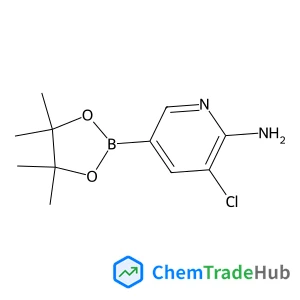
3-Chloro-5-(4,4,5,5-tetramethyl-1,3,2-dioxaborolan-2-yl)-2-pyridinamine
CAS Number:
1032758-99-8
Molecular Formula:
C11H16BClN2O2
![tert-Butyl N-[(2-chloropyridin-4-yl)methyl]carbamate structure](https://static.chemtradehub.com/structs/916/916210-27-0-9f95.webp "tert-Butyl N-[(2-chloropyridin-4-yl)methyl]carbamate structure")
tert-Butyl N-[(2-chloropyridin-4-yl)methyl]carbamate
CAS Number:
916210-27-0
Molecular Formula:
C11H15ClN2O2
Recommended Suppliers





Disclaimer
This page provides academic journal information for reference and research purposes only. We are not affiliated with any journal publishers and do not handle publication submissions. For publication-related inquiries, please contact the respective journal publishers directly.
If you notice any inaccuracies in the information displayed, please contact us at support@chemtradehub.com. We will promptly review and address your concerns.