












Enhancement of the selectivity of MXenes (M2C, M = Ti, V, Nb, Mo) via oxygen-functionalization: promising materials for gas-sensing and -separation
Literature Information
Publication Date
2018-02-01
DOI
10.1039/C7CP08622A
Impact Factor
3.676
Authors
A. Junkaew, R. Arróyave
View Original
Abstract
Two-dimensional graphene-like materials, namely MXenes, have been proposed as potential materials for various applications. In this work, the reactivity and selectivity of four MXenes (i.e. M2C (M = Ti, V, Nb, Mo)) and their oxygen-functionalized forms (i.e. O-MXenes or M2CO2) toward gas molecules were investigated by using the plane wave-based Density Functional Theory (DFT) calculations. Small gas molecules, which are commonly found in flue gas streams, are considered herein. Our results demonstrated that MXenes are very reactive. Chemisorption is a predominant process for gas adsorption on MXenes. Simultaneously dissociative adsorption can be observed in most cases. The high reactivity of their non-functionalized surface is attractive for catalytic applications. In contrast, their reactivity is reduced, but the selectivity is improved upon oxygen functionalization. Mo2CO2 and V2CO2 present good selectivity toward NO molecules, while Nb2CO2 and Ti2CO2 show good selectivity toward NH3. The electronic charge properties explain the nature of the substrates and also interactions between them and the adsorbed gases. Our results indicated that O-MXenes are potential materials for gas-separation/capture, -storage, -sensing, etc. Furthermore, their structural stability and SO2-tolerant nature are attractive properties for using them in a wide range of applications. Our finding provides good information to narrow down the choices of materials to be tested in future experimental work.
Related Literature
An NMR and relativistic DFT investigation of one-bond nuclear spin–spin coupling in solid triphenyl group-14 chlorides
Mathew J. Willans, Bryan A. Demko, Roderick E. Wasylishen
2006-05-10
Paper
DOI: 10.1039/B603937E
The heterogeneous kinetics of HOBr and HOCl on acidified sea salt and model aerosol at 40–90% relative humidity and ambient temperature
Pascal Pratte, Michel J. Rossi
2006-07-20
Paper
DOI: 10.1039/B604321F
Lineshapes in carbon 1s photoelectron spectra of methanol clusters
M. Abu-samha, K. J. Børve, L. J. Sæthre, G. Öhrwall, H. Bergersen, T. Rander, O. Björneholm, M. Tchaplyguine
2006-04-28
Paper
DOI: 10.1039/B516905D
Planar tripods of platinum: formation and self-assembly
Sean Maksimuk, Xiaowei Teng, Hong Yang
2006-09-21
Communication
DOI: 10.1039/B611186F
Onsager heat of transport for water vapour at the surface of water and ice: thermal accommodation coefficients for water vapour on a stainless-steel surface
Christopher J. Pursell, Leon F. Phillips
2006-09-19
Paper
DOI: 10.1039/B608369B
Dynamics of charge transport and recombination in ZnO nanorod array dye-sensitized solar cells
Alex B. F. Martinson, James E. McGarrah, Mohammed O. K. Parpia, Joseph T. Hupp
2006-09-13
Communication
DOI: 10.1039/B610566A
Fast grain boundary diffusion and surface exchange reactions at active surface sites of polycrystalline materials
Wolfgang Preis
2006-05-04
Paper
DOI: 10.1039/B600033A
On the physical nature of mesophases of guanosine gels
Laura Rudd, Dominic J. Lee, Alexei A. Kornyshev
2006-08-02
Paper
DOI: 10.1039/B601018K
Electro-oxidation of formic acid catalyzed by FePt nanoparticles
Wei Chen, Jaemin Kim, Shouheng Sun, Shaowei Chen
2006-05-25
Paper
DOI: 10.1039/B603045A
You might also like
Compound Q&A
How is Ethyl 4-chlorothieno[2,3-b]pyridine-5-carboxylate (CAS: 59713-58-5) typically synthesized?
Ethyl 4-chlorothieno[2,3-b]pyridine-5-carboxylate (CAS: 59713-58-5) can be synth...
59713-58-5Ethyl 4-chlorothieno...
Compound Q&A
What regulatory guidelines apply to 5-Methyl-1H-indole-3-carbaldehyde (CAS: 52562-50-2)?
5-Methyl-1H-indole-3-carbaldehyde (CAS: 52562-50-2) is subject to various regula...
52562-50-25-Methyl-1H-indole-3...
Compound Q&A
What are the physical and chemical properties of (1,3-Dimethyl-2,4-dioxo-1,2,3,4-tetrahydro-5-pyrimidinyl)boronic acid (CAS: 223418-73-3)?
(1,3-Dimethyl-2,4-dioxo-1,2,3,4-tetrahydro-5-pyrimidinyl)boronic acid is a white...
223418-73-3(1,3-Dimethyl-2,4-di...
Compound Q&A
How should waste containing Sulfocostunolide A (CAS: 1016983-51-9) be handled?
Waste containing Sulfocostunolide A (CAS: 1016983-51-9) should be handled with c...
1016983-51-9Sulfocostunolide A
Compound Q&A
What precautions should be taken when handling Murraxocin (CAS: 88478-44-8)?
When handling Murraxocin (CAS: 88478-44-8), ensure proper personal protective eq...
88478-44-8Murraxocin
Compound Q&A
What are the physical and chemical properties of Formvar (CAS: 63148-64-1)?
Formvar (CAS: 63148-64-1) is an alkyd resin characterized by a high molecular we...
63148-64-1Formvar(R)
Compound Q&A
Is (S)-4-benzyl-2-((benzyloxy)methyl)morpholine (CAS: 205242-66-6) safe?
(S)-4-benzyl-2-((benzyloxy)methyl)morpholine is generally safe when handled with...
205242-66-6(S)-4-benzyl-2-((ben...
Compound Q&A
What industries use Methyl 1-(5-bromo-2-pyrimidinyl)cyclopropanecarboxylate (CAS: 1447607-69-3)?
Methyl 1-(5-bromo-2-pyrimidinyl)cyclopropanecarboxylate (CAS: 1447607-69-3) is p...
1447607-69-3Methyl 1-(5-bromo-2-...
Compound Q&A
Is 2-Methyl-1-phenyl-1-propanamine hydrochloride (CAS: 24290-47-9) safe?
2-Methyl-1-phenyl-1-propanamine hydrochloride (CAS: 24290-47-9) is generally con...
24290-47-92-Methyl-1-phenyl-1-...
Compound Q&A
How is 3-(4-Bromophenyl)-2-methylpropanoic acid (CAS: 66735-01-1) typically synthesized?
3-(4-Bromophenyl)-2-methylpropanoic acid is synthesized through a multi-step pro...
66735-01-13-(4-Bromophenyl)-2-...
Source Journal
Physical Chemistry Chemical Physics

CiteScore:
5.5
Self-citation Rate:
10.3%
Articles per Year:
3036
Physical Chemistry Chemical Physics (PCCP) is an international journal co-owned by 19 physical chemistry and physics societies from around the world. This journal publishes original, cutting-edge research in physical chemistry, chemical physics and biophysical chemistry. To be suitable for publication in PCCP, articles must include significant innovation and/or insight into physical chemistry; this is the most important criterion that reviewers and Editors will judge against when evaluating submissions. The journal has a broad scope and welcomes contributions spanning experiment, theory, computation and data science. Topical coverage includes spectroscopy, dynamics, kinetics, statistical mechanics, thermodynamics, electrochemistry, catalysis, surface science, quantum mechanics, quantum computing and machine learning. Interdisciplinary research areas such as polymers and soft matter, materials, nanoscience, energy, surfaces/interfaces, and biophysical chemistry are welcomed if they demonstrate significant innovation and/or insight into physical chemistry. Joined experimental/theoretical studies are particularly appreciated when complementary and based on up-to-date approaches.
Recommended Compounds
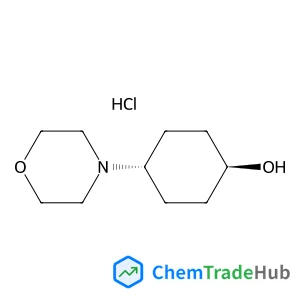
trans-4-(4-Morpholinyl)cyclohexanol hydrochloride (1:1)
CAS Number:
1588441-09-1
Molecular Formula:
C10H20ClNO2
Recommended Suppliers








Disclaimer
This page provides academic journal information for reference and research purposes only. We are not affiliated with any journal publishers and do not handle publication submissions. For publication-related inquiries, please contact the respective journal publishers directly.
If you notice any inaccuracies in the information displayed, please contact us at support@chemtradehub.com. We will promptly review and address your concerns.