


An NMR and relativistic DFT investigation of one-bond nuclear spin–spin coupling in solid triphenyl group-14 chlorides
Literature Information
Publication Date
2006-05-10
DOI
10.1039/B603937E
Impact Factor
3.676
Authors
Mathew J. Willans, Bryan A. Demko, Roderick E. Wasylishen
View Original
Abstract
A solid-state nuclear magnetic resonance and zeroth-order regular approximation density functional theory, ZORA-DFT, study of one-bond nuclear spin–spin coupling between group-14 nuclei and quadrupolar 35/37Cl nuclei in triphenyl group-14 chlorides, Ph3XCl (X = C, Si, Ge, Sn and Pb), is presented. This represents the first combined experimental and theoretical systematic study of spin–spin coupling involving spin-pairs containing quadrupolar nuclei. Solid-state NMR spectra have been acquired for all compounds in which X has a spin-1/2 isotope—13C, 29Si, [117/119]Sn and 207Pb—at applied magnetic fields of 4.70, 7.05 and 11.75 T. From simulations of these spectra, values describing the indirect spin–spin coupling tensor—the isotropic indirect spin–spin coupling constant, 1J(X,35/37Cl)iso and the anisotropy of the J tensor, Δ1J(X,35/37Cl)—have been determined for all but the lead–chlorine spin-pair. To better compare the indirect spin–spin coupling parameters between spin-pairs, 1Jiso and Δ1J values were converted to their reduced coupling constants, 1Kiso and Δ1K. From experiment, the sign of 1Kiso was found to be negative while the sign of Δ1K is positive for all spin-pairs investigated. The magnitude of both 1Kiso and Δ1K was found to increase as one moves down group-14. Theoretical values of the magnitude and sign of 1Kiso and Δ1K were obtained from ZORA-DFT calculations and are in agreement with the available experimental data. From the calculations, the Fermi-contact mechanism was determined to provide the largest contribution to 1Kiso for all spin-pairs while spin-dipolar and paramagnetic spin–orbit mechanisms make significant contributions to the anisotropy of K. The inclusion of relativistic effects was found to influence K(Sn,Cl) and K(Pb,Cl).
Recommended Journals

Environmental Toxicology and Pharmacology

Advanced Engineering Materials

Journal of Medical Biochemistry

Coloration Technology

Contact Lens & Anterior Eye

Journal of Enzyme inhibition and Medicinal Chemistry

Molecular Diversity

Physical Chemistry Chemical Physics

Photochemical & Photobiological Sciences

Mini-Reviews in Medicinal Chemistry
Related Literature
Ammonia IRMS-TPD measurements on Brønsted acidity of proton-formed SAPO-34
Katsuki Suzuki, Takuma Nishio, Naonobu Katada, German Sastre, Miki Niwa
2010-12-20
Paper
DOI: 10.1039/C0CP00961J
Dispersion of linear and nonlinear optical susceptibilities and the hyperpolarizability of 3-methyl-4-phenyl-5-(2-pyridyl)-1,2,4-triazole
S. Auluck, I. V. Kityk
2010-12-17
Paper
DOI: 10.1039/C0CP01601B
Elastic deformations in hexagonal phases studied by small-angle X-ray diffraction and simulations
Šárka Perutková, Matej Daniel, Michael Rappolt, Georg Pabst, Gregor Dolinar, Veronika Kralj-Iglič, Aleš Iglič
2010-11-09
Paper
DOI: 10.1039/C0CP01187H
Mechanical properties of liquid-filled shellac composite capsules
Sabine Leick, Maureen Kott, Patrick Degen, Stefan Henning, Tobias Päsler, Dieter Suter, Heinz Rehage
2010-12-10
Paper
DOI: 10.1039/C0CP01803A
Geometric and electronic effects on hydrogenation of cinnamaldehyde over unsupported Pt-based nanocrystals
William O. Oduro, Nick Cailuo, Kai Man K. Yu, Hongwei Yang, Shik Chi Tsang
2011-01-07
Paper
DOI: 10.1039/C0CP01832E
Theoretical study of the source-drain current and gate leakage current to understand the graphene field-effect transistors
Cui Yu, Hongmei Liu, Wenbin Ni, Nengyue Gao, Jianwei Zhao, Haoli Zhang
2011-01-14
Paper
DOI: 10.1039/C0CP01026J
Low-temperature decomposition of methanol on Au nanoclusters supported on a thin film of Al2O3/NiAl(100)
Guo-Rue Hu, Chen-Sheng Chao, Hong-Wan Shiu, Cheng-Ting Wang, Won-Ru Lin, Yao-Jane Hsu, Meng-Fan Luo
2011-01-24
Paper
DOI: 10.1039/C0CP00526F
The role of hydrogen bonding in water–metal interactions
Adrien Poissier, Sriram Ganeshan, M. V. Fernández-Serra
2010-12-22
Paper
DOI: 10.1039/C0CP00994F
Effect of nucleobase sequence on the proton-transfer reaction and stability of the guanine–cytosine base pair radical anion
Hsing-Yin Chen, Shu-Wen Yeh, Sodio C. N. Hsu, Chai-Lin Kao, Teng-Yuan Dong
2010-12-09
Paper
DOI: 10.1039/C0CP01419B
You might also like
Compound Q&A
How is Ethyl 4-chlorothieno[2,3-b]pyridine-5-carboxylate (CAS: 59713-58-5) typically synthesized?
Ethyl 4-chlorothieno[2,3-b]pyridine-5-carboxylate (CAS: 59713-58-5) can be synth...
59713-58-5Ethyl 4-chlorothieno...
Compound Q&A
What regulatory guidelines apply to 5-Methyl-1H-indole-3-carbaldehyde (CAS: 52562-50-2)?
5-Methyl-1H-indole-3-carbaldehyde (CAS: 52562-50-2) is subject to various regula...
52562-50-25-Methyl-1H-indole-3...
Compound Q&A
What are the physical and chemical properties of (1,3-Dimethyl-2,4-dioxo-1,2,3,4-tetrahydro-5-pyrimidinyl)boronic acid (CAS: 223418-73-3)?
(1,3-Dimethyl-2,4-dioxo-1,2,3,4-tetrahydro-5-pyrimidinyl)boronic acid is a white...
223418-73-3(1,3-Dimethyl-2,4-di...
Compound Q&A
How should waste containing Sulfocostunolide A (CAS: 1016983-51-9) be handled?
Waste containing Sulfocostunolide A (CAS: 1016983-51-9) should be handled with c...
1016983-51-9Sulfocostunolide A
Compound Q&A
What precautions should be taken when handling Murraxocin (CAS: 88478-44-8)?
When handling Murraxocin (CAS: 88478-44-8), ensure proper personal protective eq...
88478-44-8Murraxocin
Compound Q&A
What are the physical and chemical properties of Formvar (CAS: 63148-64-1)?
Formvar (CAS: 63148-64-1) is an alkyd resin characterized by a high molecular we...
63148-64-1Formvar(R)
Compound Q&A
Is (S)-4-benzyl-2-((benzyloxy)methyl)morpholine (CAS: 205242-66-6) safe?
(S)-4-benzyl-2-((benzyloxy)methyl)morpholine is generally safe when handled with...
205242-66-6(S)-4-benzyl-2-((ben...
Compound Q&A
What industries use Methyl 1-(5-bromo-2-pyrimidinyl)cyclopropanecarboxylate (CAS: 1447607-69-3)?
Methyl 1-(5-bromo-2-pyrimidinyl)cyclopropanecarboxylate (CAS: 1447607-69-3) is p...
1447607-69-3Methyl 1-(5-bromo-2-...
Compound Q&A
Is 2-Methyl-1-phenyl-1-propanamine hydrochloride (CAS: 24290-47-9) safe?
2-Methyl-1-phenyl-1-propanamine hydrochloride (CAS: 24290-47-9) is generally con...
24290-47-92-Methyl-1-phenyl-1-...
Compound Q&A
How is 3-(4-Bromophenyl)-2-methylpropanoic acid (CAS: 66735-01-1) typically synthesized?
3-(4-Bromophenyl)-2-methylpropanoic acid is synthesized through a multi-step pro...
66735-01-13-(4-Bromophenyl)-2-...
Source Journal
Physical Chemistry Chemical Physics
CiteScore:
5.5
Self-citation Rate:
10.3%
Articles per Year:
3036
Physical Chemistry Chemical Physics (PCCP) is an international journal co-owned by 19 physical chemistry and physics societies from around the world. This journal publishes original, cutting-edge research in physical chemistry, chemical physics and biophysical chemistry. To be suitable for publication in PCCP, articles must include significant innovation and/or insight into physical chemistry; this is the most important criterion that reviewers and Editors will judge against when evaluating submissions. The journal has a broad scope and welcomes contributions spanning experiment, theory, computation and data science. Topical coverage includes spectroscopy, dynamics, kinetics, statistical mechanics, thermodynamics, electrochemistry, catalysis, surface science, quantum mechanics, quantum computing and machine learning. Interdisciplinary research areas such as polymers and soft matter, materials, nanoscience, energy, surfaces/interfaces, and biophysical chemistry are welcomed if they demonstrate significant innovation and/or insight into physical chemistry. Joined experimental/theoretical studies are particularly appreciated when complementary and based on up-to-date approaches.
Recommended Compounds
![9H-Fluoren-9-ylmethyl [(2S)-1-hydroxy-3-(1H-indol-3-yl)-2-propanyl]carbamate structure](https://static.chemtradehub.com/structs/153/153815-60-2-a67d.webp "9H-Fluoren-9-ylmethyl [(2S)-1-hydroxy-3-(1H-indol-3-yl)-2-propanyl]carbamate structure")
9H-Fluoren-9-ylmethyl [(2S)-1-hydroxy-3-(1H-indol-3-yl)-2-propanyl]carbamate
CAS Number:
153815-60-2
Molecular Formula:
C26H24N2O3
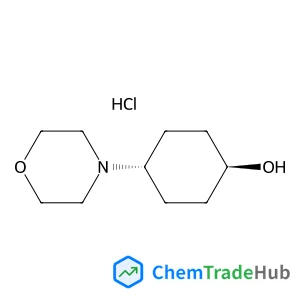
trans-4-(4-Morpholinyl)cyclohexanol hydrochloride (1:1)
CAS Number:
1588441-09-1
Molecular Formula:
C10H20ClNO2
Recommended Suppliers





Disclaimer
This page provides academic journal information for reference and research purposes only. We are not affiliated with any journal publishers and do not handle publication submissions. For publication-related inquiries, please contact the respective journal publishers directly.
If you notice any inaccuracies in the information displayed, please contact us at support@chemtradehub.com. We will promptly review and address your concerns.