











Electro-oxidation of formic acid catalyzed by FePt nanoparticles
Literature Information
Publication Date
2006-05-25
DOI
10.1039/B603045A
Impact Factor
3.676
Authors
Wei Chen, Jaemin Kim, Shouheng Sun, Shaowei Chen
View Original
Abstract
The electrocatalytic oxidation of formic acid at a gold electrode functionalized with FePt nanoparticles was studied by cyclic voltammetry (CV) and electrochemical impedance spectroscopy (EIS) in a mixed solution of 0.1 M HCOOH and 0.1 M HClO4. The FePt bimetallic nanoparticles, with a mean diameter of 3 nm, were prepared by a chemical reduction method. The Au/FePt nanostructured electrode was prepared firstly by the deposition of FePt nanoparticles onto a clean Au electrode surface, followed by ultraviolet ozone treatment to remove the organic coating. In CV measurements, two well-defined anodic peaks were observed at +0.20 and +0.51 V (vs. a Ag/AgCl quasi-reference). The anodic peak at +0.20 V was attributed to the oxidation of HCOOH to CO2 on surface unblocked by CO, whereas the peak at +0.51 V was ascribed to the oxidation of surface-adsorbed CO (an intermediate product of HCOOH oxidation) and further oxidation of bulk HCOOH. From the onset potential and current density of the electro-oxidation of HCOOH, FePt nanoparticles exhibit excellent electrocatalytic activities as compared to Pt and other metal alloys. EIS measurements were carried out to further examine the reaction kinetics involved in the HCOOH electro-oxidation. The EIS responses were found to be strongly dependent on electrode potentials. At potentials more positive than −0.25 V (vs. Ag/AgCl), pseudo-inductive behavior was typically observed. At potentials between +0.3 and +0.5 V, the impedance response was found to reverse from the first quadrant to the second quadrant; such negative Faradaic impedance was indicative of the presence of an inductive component due to the oxidation of surface-adsorbed CO. The impedance responses returned to normal behavior at more positive potentials (+0.6 to +0.9 V). The mechanistic variation was attributed to the formation of different intermediates (CO or oxygen containing species) on the electrode surface in different potential regions. Two equivalent circuits were proposed to model these impedance behaviors.
Related Literature
Preparation of a colloidal array of NaTaO3nanoparticlesvia a confined space synthesis route and its photocatalytic application
Toshiyuki Yokoi, Junya Sakuma, Kazuhiko Maeda, Kazunari Domen, Takashi Tatsumi, Junko N. Kondo
2011-01-11
Paper
DOI: 10.1039/C0CP02141E
Intracule functional models. V. Recurrence relations for two-electron integrals in position and momentum space
Joshua W. Hollett, Peter M. W. Gill
2010-12-20
Paper
DOI: 10.1039/C0CP02154G
Free energy evaluation of the p53-Mdm2 complex from unbinding work measured by dynamic force spectroscopy
Anna Rita Bizzarri, Salvatore Cannistraro
2010-12-10
Paper
DOI: 10.1039/C0CP01474E
The active site structure of nitrided and oxynitrided graphite as a cathode catalyst in a fuel cell
Hiroyuki Tominaga, Wataru Ikeda, Masatoshi Nagai
2010-12-22
Communication
DOI: 10.1039/C0CP02209H
Phosphorylated mesoporous carbon as a solid acid catalyst
Richard T. Mayes, Pasquale F. Fulvio, Zhen Ma
2010-12-16
Communication
DOI: 10.1039/C0CP01861A
Basicity, complexation ability and interfacial behavior of BTBPs: a simulation study
G. Benay, R. Schurhammer, G. Wipff
2010-12-16
Paper
DOI: 10.1039/C0CP01975E
The ab initio calculation of molecular electric, magnetic and geometric properties
Radovan Bast, Ulf Ekström, Bin Gao, Trygve Helgaker, Kenneth Ruud, Andreas J. Thorvaldsen
2010-12-22
Perspective
DOI: 10.1039/C0CP01647K
Photodegradation of organic pollutants catalyzed by iron species under visible light irradiation
Chunyan Sun, Chuncheng Chen, Wanhong Ma, Jincai Zhao
2010-11-17
Perspective
DOI: 10.1039/C0CP01203C
Which mechanism operates in the electron-transfer process at liquid/liquid interfaces?
Min Zhou, Shiyu Gan, Lijie Zhong, Xiandui Dong, Li Niu
2010-12-13
Paper
DOI: 10.1039/C0CP01692F
You might also like
Compound Q&A
How is Ethyl 4-chlorothieno[2,3-b]pyridine-5-carboxylate (CAS: 59713-58-5) typically synthesized?
Ethyl 4-chlorothieno[2,3-b]pyridine-5-carboxylate (CAS: 59713-58-5) can be synth...
59713-58-5Ethyl 4-chlorothieno...
Compound Q&A
What regulatory guidelines apply to 5-Methyl-1H-indole-3-carbaldehyde (CAS: 52562-50-2)?
5-Methyl-1H-indole-3-carbaldehyde (CAS: 52562-50-2) is subject to various regula...
52562-50-25-Methyl-1H-indole-3...
Compound Q&A
What are the physical and chemical properties of (1,3-Dimethyl-2,4-dioxo-1,2,3,4-tetrahydro-5-pyrimidinyl)boronic acid (CAS: 223418-73-3)?
(1,3-Dimethyl-2,4-dioxo-1,2,3,4-tetrahydro-5-pyrimidinyl)boronic acid is a white...
223418-73-3(1,3-Dimethyl-2,4-di...
Compound Q&A
How should waste containing Sulfocostunolide A (CAS: 1016983-51-9) be handled?
Waste containing Sulfocostunolide A (CAS: 1016983-51-9) should be handled with c...
1016983-51-9Sulfocostunolide A
Compound Q&A
What precautions should be taken when handling Murraxocin (CAS: 88478-44-8)?
When handling Murraxocin (CAS: 88478-44-8), ensure proper personal protective eq...
88478-44-8Murraxocin
Compound Q&A
What are the physical and chemical properties of Formvar (CAS: 63148-64-1)?
Formvar (CAS: 63148-64-1) is an alkyd resin characterized by a high molecular we...
63148-64-1Formvar(R)
Compound Q&A
Is (S)-4-benzyl-2-((benzyloxy)methyl)morpholine (CAS: 205242-66-6) safe?
(S)-4-benzyl-2-((benzyloxy)methyl)morpholine is generally safe when handled with...
205242-66-6(S)-4-benzyl-2-((ben...
Compound Q&A
What industries use Methyl 1-(5-bromo-2-pyrimidinyl)cyclopropanecarboxylate (CAS: 1447607-69-3)?
Methyl 1-(5-bromo-2-pyrimidinyl)cyclopropanecarboxylate (CAS: 1447607-69-3) is p...
1447607-69-3Methyl 1-(5-bromo-2-...
Compound Q&A
Is 2-Methyl-1-phenyl-1-propanamine hydrochloride (CAS: 24290-47-9) safe?
2-Methyl-1-phenyl-1-propanamine hydrochloride (CAS: 24290-47-9) is generally con...
24290-47-92-Methyl-1-phenyl-1-...
Compound Q&A
How is 3-(4-Bromophenyl)-2-methylpropanoic acid (CAS: 66735-01-1) typically synthesized?
3-(4-Bromophenyl)-2-methylpropanoic acid is synthesized through a multi-step pro...
66735-01-13-(4-Bromophenyl)-2-...
Source Journal
Physical Chemistry Chemical Physics

CiteScore:
5.5
Self-citation Rate:
10.3%
Articles per Year:
3036
Physical Chemistry Chemical Physics (PCCP) is an international journal co-owned by 19 physical chemistry and physics societies from around the world. This journal publishes original, cutting-edge research in physical chemistry, chemical physics and biophysical chemistry. To be suitable for publication in PCCP, articles must include significant innovation and/or insight into physical chemistry; this is the most important criterion that reviewers and Editors will judge against when evaluating submissions. The journal has a broad scope and welcomes contributions spanning experiment, theory, computation and data science. Topical coverage includes spectroscopy, dynamics, kinetics, statistical mechanics, thermodynamics, electrochemistry, catalysis, surface science, quantum mechanics, quantum computing and machine learning. Interdisciplinary research areas such as polymers and soft matter, materials, nanoscience, energy, surfaces/interfaces, and biophysical chemistry are welcomed if they demonstrate significant innovation and/or insight into physical chemistry. Joined experimental/theoretical studies are particularly appreciated when complementary and based on up-to-date approaches.
Recommended Compounds
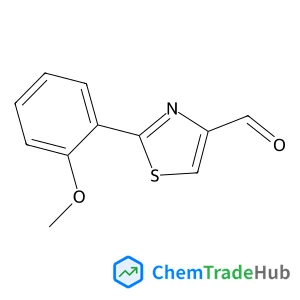
![4-[(1-Methyl-1H-pyrrol-2-yl)methylene]-1,3(2H,4H)-isoquinolinedione structure](https://static.chemtradehub.com/structs/110/1104546-89-5-a600.webp "4-[(1-Methyl-1H-pyrrol-2-yl)methylene]-1,3(2H,4H)-isoquinolinedione structure")
4-[(1-Methyl-1H-pyrrol-2-yl)methylene]-1,3(2H,4H)-isoquinolinedione
CAS Number:
1104546-89-5
Molecular Formula:
C15H12N2O2
Recommended Suppliers






Disclaimer
This page provides academic journal information for reference and research purposes only. We are not affiliated with any journal publishers and do not handle publication submissions. For publication-related inquiries, please contact the respective journal publishers directly.
If you notice any inaccuracies in the information displayed, please contact us at support@chemtradehub.com. We will promptly review and address your concerns.