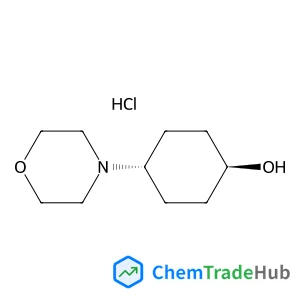
trans-4-(4-Morpholinyl)cyclohexanol hydrochloride (1:1)
CAS Number:
1588441-09-1
Molecular Formula:
C10H20ClNO2
Zheng-yang Gao, Wei-jie Yang, Xun-lei Ding, Gang Lv, Wei-ping Yan
The adsorption and catalytic activation of O2 on single atom iron catalysts with graphene-based substrates were investigated systematically by density functional theory calculation. It is found that the support effects of graphene-based substrates have a significant influence on the stability of the single atom catalysts, the adsorption configuration, the electron transfer mechanism, the adsorption energy and the energy barrier. The differences in the stable adsorption configuration of O2 on single atom iron catalysts with different graphene-based substrates can be well understood by the symmetrical matching principle based on frontier molecular orbital analysis. There are two different mechanisms of electron transfer, in which the Fe atom acts as the electron donor in single vacancy graphene-based substrates while the Fe atom mainly acts as the bridge for electron transfer in double vacancy graphene-based substrates. The Fermi softness and work function are good descriptors of the adsorption energy and they can well reveal the relationship between electronic structure and adsorption energy. This single atom iron catalyst with single vacancy graphene modified by three nitrogen atoms is a promising non-noble metal single atom catalyst in the adsorption and catalytic oxidation of O2. Furthermore, the findings can lay the foundation for the further study of graphene-based support effects and provide a guideline for the development and design of new non-noble-metal single atom catalysts.

Colloid Journal

Acta Metallurgica Sinica-English Letters

Journal of the Indian Institute of Science

Topics in Catalysis

Journal of Chemical Sciences

Medicinal Chemistry Research

Journal of Asian Natural Products Research

Critical Reviews in Solid State and Materials Sciences

Bioorganic & Medicinal Chemistry

Main Group Chemistry
Andreas Markmann, Jacob L. Gavartin, Alexander L. Shluger
DOI: 10.1039/B608719A
Olli Lehtonen, Dage Sundholm
DOI: 10.1039/B606643G
Prabha Jayapal, Mahesh Sundararajan, Ian H. Hillier, Neil A. Burton
DOI: 10.1039/B608069C
Leif A. Eriksson
DOI: 10.1039/B605682B
Cunshun Huang, Sridhar A. Lahankar, Myung Hwa Kim, Bailin Zhang, Arthur G. Suits
DOI: 10.1039/B612324D
Christian Tuma, Joachim Sauer
DOI: 10.1039/B608262A
Tina Scharge, Thomas Häber, Martin A. Suhm
DOI: 10.1039/B609868A
Andrew P. Abbott, Glen Capper, Katy J. McKenzie, Andrew Glidle, Karl S. Ryder
DOI: 10.1039/B607763N
Ethyl 4-chlorothieno[2,3-b]pyridine-5-carboxylate (CAS: 59713-58-5) can be synth...
5-Methyl-1H-indole-3-carbaldehyde (CAS: 52562-50-2) is subject to various regula...
(1,3-Dimethyl-2,4-dioxo-1,2,3,4-tetrahydro-5-pyrimidinyl)boronic acid is a white...
Waste containing Sulfocostunolide A (CAS: 1016983-51-9) should be handled with c...
When handling Murraxocin (CAS: 88478-44-8), ensure proper personal protective eq...
Formvar (CAS: 63148-64-1) is an alkyd resin characterized by a high molecular we...
(S)-4-benzyl-2-((benzyloxy)methyl)morpholine is generally safe when handled with...
Methyl 1-(5-bromo-2-pyrimidinyl)cyclopropanecarboxylate (CAS: 1447607-69-3) is p...
2-Methyl-1-phenyl-1-propanamine hydrochloride (CAS: 24290-47-9) is generally con...
3-(4-Bromophenyl)-2-methylpropanoic acid is synthesized through a multi-step pro...

Physical Chemistry Chemical Physics (PCCP) is an international journal co-owned by 19 physical chemistry and physics societies from around the world. This journal publishes original, cutting-edge research in physical chemistry, chemical physics and biophysical chemistry. To be suitable for publication in PCCP, articles must include significant innovation and/or insight into physical chemistry; this is the most important criterion that reviewers and Editors will judge against when evaluating submissions. The journal has a broad scope and welcomes contributions spanning experiment, theory, computation and data science. Topical coverage includes spectroscopy, dynamics, kinetics, statistical mechanics, thermodynamics, electrochemistry, catalysis, surface science, quantum mechanics, quantum computing and machine learning. Interdisciplinary research areas such as polymers and soft matter, materials, nanoscience, energy, surfaces/interfaces, and biophysical chemistry are welcomed if they demonstrate significant innovation and/or insight into physical chemistry. Joined experimental/theoretical studies are particularly appreciated when complementary and based on up-to-date approaches.