


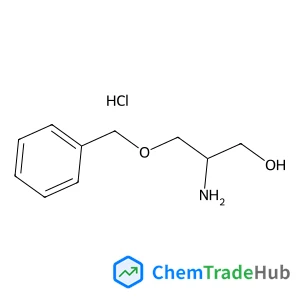
(R)-2-amino-3-(benzyloxy)propan-1-ol hydrochloride
CAS Number:
58577-95-0
Molecular Formula:
C10H16ClNO2
Andrew P. Abbott, Glen Capper, Katy J. McKenzie, Andrew Glidle, Karl S. Ryder
We have studied the anodic dissolution (electropolishing) of various stainless steel alloys in an ionic liquid comprising a 2 : 1 stoichiometric mix of ethylene glycol (EG) and choline chloride. We have used a combination of electrochemical and spectroscopic methods together with in situ liquid probe microscopy. We discuss the role and influence of the surface oxide passivation layer, characterized here by X-ray photoelectron spectroscopy (XPS) and linear sweep voltammetry, on the polishing process. We address the question of dealloying during the polish in order to contribute to our understanding of the viability of the ionic liquid as a replacement industrial electropolishing medium; the current commercial process uses a corrosive mixture of phosphoric and sulfuric acids. Also, we present data from ex situ and in situ liquid AFM studies giving both a qualitative and quantitative insight into the nature and scale of morphological changes at the steel surface during the polishing process.

Russian Journal of Bioorganic Chemistry

Drug Discovery Today

Organic Process Research & Development

Russian Journal of Coordination Chemistry

Chemistry Education Research and Practice

Saudi Pharmaceutical Journal

Crystallography Reports

Acta Materialia

Chemical Communications

Journal of Saudi Chemical Society
Raúl Quintero-Monsebaiz, Luis Ignacio Perea-Ramírez, Alberto Vela
DOI: 10.1039/D0CP05430E
Chuqiao Yi, Yuliang Wu, Yayu Gao, Qingguo Du
DOI: 10.1039/D0CP05882C
Ignacio R. Sola
DOI: 10.1039/D0CP05692H
Artur P. Durajski, Kamil M. Skoczylas, Radosław Szczęśniak
DOI: 10.1039/D0CP05984F
Xing Yang, Yuwei Wang, Ruining Xiao, Tao Wen, Yulin Shen, Huanxiang Liu, Yongfu Wang
DOI: 10.1039/D0CP04547K
Leah Nation, Yan Wu, Xiaoming Liu, Miaofang Chi, Yuqin Wu, Yue Qi, Brian W. Sheldon
DOI: 10.1039/D0CP05737A
Alain Moissette, Isabelle Batonneau-Gener, Matthieu Hureau, Ludovic Pinard, Hervé Vezin, Michel Perdicakis, Alain Walcarius
DOI: 10.1039/D0CP06148D
Mingzhao Liu, Zhanlan Yang, Shifu Weng, Jinguang Wu
DOI: 10.1039/D0CP04889E
DOI: 10.1039/D0CP06207C
Ethyl 4-chlorothieno[2,3-b]pyridine-5-carboxylate (CAS: 59713-58-5) can be synth...
5-Methyl-1H-indole-3-carbaldehyde (CAS: 52562-50-2) is subject to various regula...
(1,3-Dimethyl-2,4-dioxo-1,2,3,4-tetrahydro-5-pyrimidinyl)boronic acid is a white...
Waste containing Sulfocostunolide A (CAS: 1016983-51-9) should be handled with c...
When handling Murraxocin (CAS: 88478-44-8), ensure proper personal protective eq...
Formvar (CAS: 63148-64-1) is an alkyd resin characterized by a high molecular we...
(S)-4-benzyl-2-((benzyloxy)methyl)morpholine is generally safe when handled with...
Methyl 1-(5-bromo-2-pyrimidinyl)cyclopropanecarboxylate (CAS: 1447607-69-3) is p...
2-Methyl-1-phenyl-1-propanamine hydrochloride (CAS: 24290-47-9) is generally con...
3-(4-Bromophenyl)-2-methylpropanoic acid is synthesized through a multi-step pro...

Physical Chemistry Chemical Physics (PCCP) is an international journal co-owned by 19 physical chemistry and physics societies from around the world. This journal publishes original, cutting-edge research in physical chemistry, chemical physics and biophysical chemistry. To be suitable for publication in PCCP, articles must include significant innovation and/or insight into physical chemistry; this is the most important criterion that reviewers and Editors will judge against when evaluating submissions. The journal has a broad scope and welcomes contributions spanning experiment, theory, computation and data science. Topical coverage includes spectroscopy, dynamics, kinetics, statistical mechanics, thermodynamics, electrochemistry, catalysis, surface science, quantum mechanics, quantum computing and machine learning. Interdisciplinary research areas such as polymers and soft matter, materials, nanoscience, energy, surfaces/interfaces, and biophysical chemistry are welcomed if they demonstrate significant innovation and/or insight into physical chemistry. Joined experimental/theoretical studies are particularly appreciated when complementary and based on up-to-date approaches.
![9H-Fluoren-9-ylmethyl [(2S)-1-hydroxy-3-(1H-indol-3-yl)-2-propanyl]carbamate structure](https://static.chemtradehub.com/structs/153/153815-60-2-a67d.webp "9H-Fluoren-9-ylmethyl [(2S)-1-hydroxy-3-(1H-indol-3-yl)-2-propanyl]carbamate structure")
![2-Methyl-2-propanyl 1,6-diazaspiro[3.4]octane-6-carboxylate structure](https://static.chemtradehub.com/structs/115/1158749-79-1-81ee.webp "2-Methyl-2-propanyl 1,6-diazaspiro[3.4]octane-6-carboxylate structure")
![2-(Methylsulfonyl)-2,4,5,6-tetrahydropyrrolo[3,4-c]pyrazole structure](https://static.chemtradehub.com/structs/122/1226781-80-1-09d5.webp "2-(Methylsulfonyl)-2,4,5,6-tetrahydropyrrolo[3,4-c]pyrazole structure")





