













Homogeneous and heterogeneous dynamics in native and denatured bovine serum albumin
Literature Information
Publication Date
2018-01-26
DOI
10.1039/C7CP08292D
Impact Factor
3.676
Authors
Felix Ameseder, Aurel Radulescu, Marina Khaneft, Wiebke Lohstroh, Andreas M. Stadler
View Original
Abstract
A characteristic property of unfolded and disordered proteins is their high molecular flexibility, which enables the exploration of a large conformational space. We present neutron scattering experiments on the dynamics of denatured and native folded bovine serum albumin (BSA) in solution. Global protein diffusion and internal macromolecular dynamics were measured using quasielastic neutron time-of-flight and backscattering spectroscopy on the picosecond to nanosecond time- and Ångstrom length-scale. Internal protein dynamics were analysed in a first approach using stretched exponential functions. In denatured BSA predominantly slow heterogeneous dynamics dominates the observed macromolecular motions. Reduction of disulphide bridges in denatured BSA does not significantly alter the visible motions. In native folded BSA fast homogeneous dynamics and slow heterogeneous dynamics were observed. In an alternative data analysis approach, internal protein dynamics was interpreted using the analytical model of the overdamped Brownian oscillator, which allowed us to extract mean square displacements of protein internal dynamics and the fraction of hydrogen atoms participating in the observed motions. Our results demonstrate that denaturation modifies the physical nature of internal protein dynamics significantly as compared to the native folded structure.
Related Literature
A new approach to local hardness
T. Gál, P. Geerlings, F. De Proft, M. Torrent-Sucarrat
2011-07-26
Paper
DOI: 10.1039/C1CP21213C
A theoretical study of pure and mixed caesium clusters and cluster ions, CslHmO 0/+n, l ≤ 5: geometry, energetics and photofragmentation
Sebastian Krapf, Maria Schill, Sebastian Krötz, Thorsten Koslowski
2011-07-14
Paper
DOI: 10.1039/C1CP21274E
Steady-state photoinduced absorption of CdSe/CdS octapod shaped nanocrystals
Maria Rosa Antognazza, Francesco Scotognella, Karol Miszta, Dirk Dorfs, Marco Zanella, Margherita Zavelani-Rossi, Liberato Manna, Francesco Tassone
2011-07-25
Paper
DOI: 10.1039/C1CP21402K
Stabilization of organic field-effect transistors by tert-butyl groups in dibenzotetrathiafulvalene derivatives
Junki Nagakubo, Minoru Ashizawa, Tadashi Kawamoto, Akihiko Tanioka
2011-06-15
Paper
DOI: 10.1039/C1CP21507H
Confined crystallization of binary n-alkane mixtures: stabilization of a new rotator phase by enhanced surface freezing and weakened intermolecular interactions
Dongsheng Fu, Yufeng Liu, Guoming Liu, Yunlan Su, Dujin Wang
2011-07-26
Paper
DOI: 10.1039/C1CP21281H
Double layer capacitance of anode/solid-electrolyte interfaces
2011-07-25
Paper
DOI: 10.1039/C1CP20508K
Multiscale quantum mechanics/electromagnetics simulation for electronic devices
ChiYung Yam, Lingyi Meng, GuanHua Chen, Quan Chen, Ngai Wong
2011-06-10
Paper
DOI: 10.1039/C1CP20766K
Depolarization of water in protic ionic liquids
Stefan Zahn, Katharina Wendler, Luigi Delle Site, Barbara Kirchner
2011-07-18
Paper
DOI: 10.1039/C1CP20288J
Aromaticity in all-metal annular systems: the counter-ion effect
Arindam Chakraborty, Santanab Giri, Soma Duley, Anakuthil Anoop, Patrick Bultinck, Pratim K. Chattaraj
2011-07-26
Perspective
DOI: 10.1039/C1CP21430F
You might also like
Compound Q&A
What are the main uses of 1-(3-Aminophenyl)-3-[(3R)-1-(3,3-dimethyl-2-oxobutyl)-2-oxo-5-(2-pyridinyl)-2,3-dihydro-1H-1,4-benzodiazepin-3-yl]urea (CAS: 155412-88-7)?
This compound is mainly used as an intermediate in the synthesis of antipsychoti...
155412-88-71-(3-Aminophenyl)-3-...
Compound Q&A
How should waste containing 1-(D-Ribofuranosyl)-1,4-dihydro-3-pyridinecarboxamide (CAS: 19132-12-8) be handled?
Waste containing 1-(D-Ribofuranosyl)-1,4-dihydro-3-pyridinecarboxamide (CAS: 191...
19132-12-81-(D-Ribofuranosyl)-...
Compound Q&A
What regulatory guidelines apply to 2-Methyl-2-propanyl 3-bromo-3-(hydroxymethyl)-1-azetidinecarboxylate (CAS: 2007919-81-3)?
2-Methyl-2-propanyl 3-bromo-3-(hydroxymethyl)-1-azetidinecarboxylate (CAS: 20079...
2007919-81-32-Methyl-2-propanyl ...
Compound Q&A
What is N-(4-Chloro-2-pyridinyl)acetamide (CAS: 245056-66-0)?
N-(4-Chloro-2-pyridinyl)acetamide (CAS: 245056-66-0) is a chemical compound with...
245056-66-0N-(4-Chloro-2-pyridi...
Compound Q&A
What is 5-Chloro-2-hydroxybenzoic acid (CAS: 321-14-2)?
5-Chloro-2-hydroxybenzoic acid, also known as 5-chlorosalicylic acid, is an arom...
321-14-25-Chloro-2-hydroxybe...
Compound Q&A
What precautions should be taken when handling 1,1-Dichloro-1-fluoroethane (CAS: 1717-00-6)?
When handling 1,1-Dichloro-1-fluoroethane (CAS: 1717-00-6), it is important to u...
1717-00-61,1-Dichloro-1-fluor...
Compound Q&A
What are the physical and chemical properties of Fmoc-(2S,3R)-3-phenylpyrrolidine-2-carboxylic acid (CAS: 281655-32-1)?
Fmoc-(2S,3R)-3-phenylpyrrolidine-2-carboxylic acid is a white crystalline solid ...
281655-32-1Fmoc-(2S,3R)-3-pheny...
Compound Q&A
What are the main uses of 4-Amino-5-bromo-2-pyridinecarboxylic acid (CAS: 1363381-01-4)?
4-Amino-5-bromo-2-pyridinecarboxylic acid is primarily used as a precursor in th...
1363381-01-44-Amino-5-bromo-2-py...
Compound Q&A
What precautions should be taken when handling (S)-tert-butyl 2-((2-(4-bromophenyl)-2-oxoethyl)carbamoyl)pyrrolidine-1-carboxylate (CAS: 1007881-98-2)?
Handling this compound should be done with personal protective equipment (PPE) i...
1007881-98-2(S)-tert-butyl 2-((2...
Compound Q&A
What precautions should be taken when handling 8-bromo-2,2-dimethyl-3,4-dihydro-2H-1,4-benzoxazin-3-one (CAS: 688363-73-7)?
When handling 8-bromo-2,2-dimethyl-3,4-dihydro-2H-1,4-benzoxazin-3-one, use prop...
688363-73-78-bromo-2,2-dimethyl...
Source Journal
Physical Chemistry Chemical Physics

CiteScore:
5.5
Self-citation Rate:
10.3%
Articles per Year:
3036
Physical Chemistry Chemical Physics (PCCP) is an international journal co-owned by 19 physical chemistry and physics societies from around the world. This journal publishes original, cutting-edge research in physical chemistry, chemical physics and biophysical chemistry. To be suitable for publication in PCCP, articles must include significant innovation and/or insight into physical chemistry; this is the most important criterion that reviewers and Editors will judge against when evaluating submissions. The journal has a broad scope and welcomes contributions spanning experiment, theory, computation and data science. Topical coverage includes spectroscopy, dynamics, kinetics, statistical mechanics, thermodynamics, electrochemistry, catalysis, surface science, quantum mechanics, quantum computing and machine learning. Interdisciplinary research areas such as polymers and soft matter, materials, nanoscience, energy, surfaces/interfaces, and biophysical chemistry are welcomed if they demonstrate significant innovation and/or insight into physical chemistry. Joined experimental/theoretical studies are particularly appreciated when complementary and based on up-to-date approaches.
Recommended Compounds
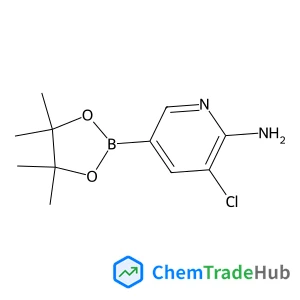
3-Chloro-5-(4,4,5,5-tetramethyl-1,3,2-dioxaborolan-2-yl)-2-pyridinamine
CAS Number:
1032758-99-8
Molecular Formula:
C11H16BClN2O2
![Pyrazolo[1,5-a]pyridine-3-carbothioamide structure](https://static.chemtradehub.com/structs/885/885275-44-5-aae0.webp "Pyrazolo[1,5-a]pyridine-3-carbothioamide structure")
![Methyl 4-({[(2-methyl-2-propanyl)oxy]carbonyl}amino)bicyclo[2.2.2]octane-1-carboxylate structure](https://static.chemtradehub.com/structs/943/943845-74-7-b7e5.webp "Methyl 4-({[(2-methyl-2-propanyl)oxy]carbonyl}amino)bicyclo[2.2.2]octane-1-carboxylate structure")
Methyl 4-({[(2-methyl-2-propanyl)oxy]carbonyl}amino)bicyclo[2.2.2]octane-1-carboxylate
CAS Number:
943845-74-7
Molecular Formula:
C15H25NO4
Recommended Suppliers



Disclaimer
This page provides academic journal information for reference and research purposes only. We are not affiliated with any journal publishers and do not handle publication submissions. For publication-related inquiries, please contact the respective journal publishers directly.
If you notice any inaccuracies in the information displayed, please contact us at support@chemtradehub.com. We will promptly review and address your concerns.