












Steady-state photoinduced absorption of CdSe/CdS octapod shaped nanocrystals
Literature Information
Publication Date
2011-07-25
DOI
10.1039/C1CP21402K
Impact Factor
3.676
Authors
Maria Rosa Antognazza, Francesco Scotognella, Karol Miszta, Dirk Dorfs, Marco Zanella, Margherita Zavelani-Rossi, Liberato Manna, Francesco Tassone
View Original
Abstract
Colloidal branched nanocrystals have been attracting increasing attention due to evidence of an interesting relationship between their complex shape and charge carrier dynamics. Herein, continuous wave photoinduced absorption (CW PIA) measurements of CdSe/CdS octapod-shaped nanocrystals are reported. CW PIA spectra show strong bleaching due to the one-dimensional (1D) CdS pod states (480 nm) and the zero-dimensional (0D) CdSe core states (690 nm). The agreement with previously reported ultrafast pump–probe experiments indicates that this strong bleaching signal may be assigned to state filling. Additional bleaching features at 520 and 560 nm are characterized by a longer lifetime and are thus ascribed to defect states, localized at the pod–core interface of the octapod, showing that some of the initially photogenerated carriers get quickly trapped into these long-lived defect states. However, we remark that a relevant part of electrons remain untrapped: this opens up the opportunity to exploit octapod shaped nanocrystals in photovoltaics applications, as electron acceptor materials, considering that several efficient hole extracting materials are already available for the realization of a composite bulk heterojunction.
Related Literature
Identifying reaction pathways in phase space via asymptotic trajectories
Yutaka Nagahata, R. M. Benito, Rigoberto Hernandez
2020-03-25
Paper
DOI: 10.1039/C9CP06610A
Interplay between aggregation number, micelle charge and hydration of catanionic surfactants
Žiga Medoš, Sergej Friesen, Richard Buchner, Marija Bešter-Rogač
2020-04-17
Paper
DOI: 10.1039/D0CP00877J
Kinked row-induced chirality driven by molecule–substrate interactions
Yannick J. Dappe, Oleksiy L. Kapitanchuk, Delphine Coursault, Emmanuelle Lacaze
2020-02-21
Paper
DOI: 10.1039/C9CP06519A
Good stability and high thermoelectric performance of Fe doped Cu1.80S
Pengfei Qiu, Kunpeng Zhao, Dudi Ren, Xun Shi
2020-03-17
Paper
DOI: 10.1039/D0CP00733A
Negative magnetization, complex magnetic ordering and applications of Cr-doped Co2TiO4
Q. S. Fu, X. H. Chen, C. Chakrabarti, C. L. Li, J. Zheng, P. J. Wang, H. X. Yin, Y. Qiu, B. Meng, S. L. Yuan
2020-02-28
Paper
DOI: 10.1039/C9CP06444C
Boron-terminated diamond (100) surfaces with promising structural and electronic properties
Zhaolong Sun, Mingchao Yang, Xueting Wang, Peng Wang, Chunling Zhang, Nan Gao, Hongdong Li
2020-03-19
Paper
DOI: 10.1039/D0CP00121J
Sulfate modified g-C3N4 with enhanced photocatalytic activity towards hydrogen evolution: the role of sulfate in photocatalysis
Qianwen Chen, Yun Zhao, Lei Zeng, Chunzhen Yang, Feng Huang
2020-04-06
Paper
DOI: 10.1039/C9CP07002H
Common cancer mutations R175H and R273H drive the p53 DNA-binding domain towards aggregation-prone conformations
Le Li, Xuhua Li, Yiming Tang, Zenghui Lao, Jiangtao Lei, Guanghong Wei
2020-03-26
Paper
DOI: 10.1039/C9CP06671C
Composition conserving defects and their influence on the electronic properties of thermoelectric TiNiSn
K. Kirievsky, D. Fuks, Y. Gelbstein
2020-03-12
Paper
DOI: 10.1039/D0CP00956C
Organometallic polymers synthesized from prochiral molecules by a surface-assisted synthesis on Ag(111)
Zhibo Ma
2020-03-09
Paper
DOI: 10.1039/C9CP06893G
You might also like
Compound Q&A
What are the main uses of 1-(3-Aminophenyl)-3-[(3R)-1-(3,3-dimethyl-2-oxobutyl)-2-oxo-5-(2-pyridinyl)-2,3-dihydro-1H-1,4-benzodiazepin-3-yl]urea (CAS: 155412-88-7)?
This compound is mainly used as an intermediate in the synthesis of antipsychoti...
155412-88-71-(3-Aminophenyl)-3-...
Compound Q&A
How should waste containing 1-(D-Ribofuranosyl)-1,4-dihydro-3-pyridinecarboxamide (CAS: 19132-12-8) be handled?
Waste containing 1-(D-Ribofuranosyl)-1,4-dihydro-3-pyridinecarboxamide (CAS: 191...
19132-12-81-(D-Ribofuranosyl)-...
Compound Q&A
What regulatory guidelines apply to 2-Methyl-2-propanyl 3-bromo-3-(hydroxymethyl)-1-azetidinecarboxylate (CAS: 2007919-81-3)?
2-Methyl-2-propanyl 3-bromo-3-(hydroxymethyl)-1-azetidinecarboxylate (CAS: 20079...
2007919-81-32-Methyl-2-propanyl ...
Compound Q&A
What is N-(4-Chloro-2-pyridinyl)acetamide (CAS: 245056-66-0)?
N-(4-Chloro-2-pyridinyl)acetamide (CAS: 245056-66-0) is a chemical compound with...
245056-66-0N-(4-Chloro-2-pyridi...
Compound Q&A
What is 5-Chloro-2-hydroxybenzoic acid (CAS: 321-14-2)?
5-Chloro-2-hydroxybenzoic acid, also known as 5-chlorosalicylic acid, is an arom...
321-14-25-Chloro-2-hydroxybe...
Compound Q&A
What precautions should be taken when handling 1,1-Dichloro-1-fluoroethane (CAS: 1717-00-6)?
When handling 1,1-Dichloro-1-fluoroethane (CAS: 1717-00-6), it is important to u...
1717-00-61,1-Dichloro-1-fluor...
Compound Q&A
What are the physical and chemical properties of Fmoc-(2S,3R)-3-phenylpyrrolidine-2-carboxylic acid (CAS: 281655-32-1)?
Fmoc-(2S,3R)-3-phenylpyrrolidine-2-carboxylic acid is a white crystalline solid ...
281655-32-1Fmoc-(2S,3R)-3-pheny...
Compound Q&A
What are the main uses of 4-Amino-5-bromo-2-pyridinecarboxylic acid (CAS: 1363381-01-4)?
4-Amino-5-bromo-2-pyridinecarboxylic acid is primarily used as a precursor in th...
1363381-01-44-Amino-5-bromo-2-py...
Compound Q&A
What precautions should be taken when handling (S)-tert-butyl 2-((2-(4-bromophenyl)-2-oxoethyl)carbamoyl)pyrrolidine-1-carboxylate (CAS: 1007881-98-2)?
Handling this compound should be done with personal protective equipment (PPE) i...
1007881-98-2(S)-tert-butyl 2-((2...
Compound Q&A
What precautions should be taken when handling 8-bromo-2,2-dimethyl-3,4-dihydro-2H-1,4-benzoxazin-3-one (CAS: 688363-73-7)?
When handling 8-bromo-2,2-dimethyl-3,4-dihydro-2H-1,4-benzoxazin-3-one, use prop...
688363-73-78-bromo-2,2-dimethyl...
Source Journal
Physical Chemistry Chemical Physics

CiteScore:
5.5
Self-citation Rate:
10.3%
Articles per Year:
3036
Physical Chemistry Chemical Physics (PCCP) is an international journal co-owned by 19 physical chemistry and physics societies from around the world. This journal publishes original, cutting-edge research in physical chemistry, chemical physics and biophysical chemistry. To be suitable for publication in PCCP, articles must include significant innovation and/or insight into physical chemistry; this is the most important criterion that reviewers and Editors will judge against when evaluating submissions. The journal has a broad scope and welcomes contributions spanning experiment, theory, computation and data science. Topical coverage includes spectroscopy, dynamics, kinetics, statistical mechanics, thermodynamics, electrochemistry, catalysis, surface science, quantum mechanics, quantum computing and machine learning. Interdisciplinary research areas such as polymers and soft matter, materials, nanoscience, energy, surfaces/interfaces, and biophysical chemistry are welcomed if they demonstrate significant innovation and/or insight into physical chemistry. Joined experimental/theoretical studies are particularly appreciated when complementary and based on up-to-date approaches.
Recommended Compounds
![tert-Butyl N-[(2-chloropyridin-4-yl)methyl]carbamate structure](https://static.chemtradehub.com/structs/916/916210-27-0-9f95.webp "tert-Butyl N-[(2-chloropyridin-4-yl)methyl]carbamate structure")
tert-Butyl N-[(2-chloropyridin-4-yl)methyl]carbamate
CAS Number:
916210-27-0
Molecular Formula:
C11H15ClN2O2

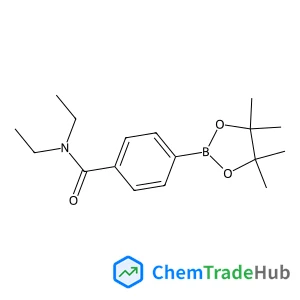
N,N-Diethyl-4-(4,4,5,5-tetramethyl-1,3,2-dioxaborolan-2-yl)benzamide
CAS Number:
325142-99-2
Molecular Formula:
C17H26BNO3
Recommended Suppliers



Disclaimer
This page provides academic journal information for reference and research purposes only. We are not affiliated with any journal publishers and do not handle publication submissions. For publication-related inquiries, please contact the respective journal publishers directly.
If you notice any inaccuracies in the information displayed, please contact us at support@chemtradehub.com. We will promptly review and address your concerns.