












Bound and continuum-embedded states of cyanopolyyne anions
Literature Information
Publication Date
2018-01-15
DOI
10.1039/C7CP08227D
Impact Factor
3.676
Authors
Wojciech Skomorowski, Sahil Gulania, Anna I. Krylov
View Original
Abstract
Cyanopolyyne anions were among the first anions discovered in the interstellar medium. The discovery has raised questions about the routes of formation of these anions in space. Some of the proposed mechanisms assumed that anionic excited electronic states, either metastable or weakly bound, play a key role in the formation process. The verification of this hypothesis requires detailed knowledge of the electronic states of the anions. Here we investigate the bound and continuum states of four cyanopolyyne anions, CN−, C3N−, C5N−, and C7N−, by means of ab initio calculations. We employ the equation-of-motion coupled-cluster method augmented with complex absorbing potential. We predict that already in CN−, the smallest anion in the family, there are several low-lying metastable states of both singlet and triplet spin symmetry. These states, identified as shape resonances, are located between 6.3–8.5 eV above the ground state of the anion (or 2.3–4.5 eV above the ground state of the parent radical) and have widths of a few tenths of eV up to 1 eV. We analyze the identified resonances in terms of leading molecular orbital contributions and Dyson orbitals. As the carbon chain length increases in the C2n+1N− series, these resonances gradually become stabilized and eventually turn into stable valence bound states. The trends in the energies of the transitions leading to both resonance and bound excited states can be rationalized by means of the Hückel model. Apart from valence excited states, some of the cyanopolyynes can also support dipole bound states and dipole stabilized resonances, owing to a large dipole moment of the parent radicals in the lowest 2Σ+ state.
Recommended Journals
Related Literature
Interaction between NO and Na, O, S, Cl on Au and Pd(111) surfaces
Ren-Yu Tian, Xiao-Bao Yang, Song-Lin Peng
2011-07-07
Paper
DOI: 10.1039/C1CP20974D
Light-induced isomerization dynamics of a cyanine dye in the modulus-controlled regime
Ah-Young Jee, Seohyun Park, Minyung Lee
2011-07-18
Paper
DOI: 10.1039/C1CP20835G
Electrocatalytic oxygen evolution from water on a Mn(iii–v) dimer model catalyst—A DFT perspective
I. Panas
2011-07-20
Paper
DOI: 10.1039/C0CP02132F
Covalent networks through on-surface chemistry in ultra-high vacuum: state-of-the-art and recent developments
2011-05-09
Perspective
DOI: 10.1039/C1CP20700H
Ce-doped ZnO (CexZn1−xO) becomes an efficient visible-light-sensitive photocatalyst by co-catalyst (Cu2+) grafting
Srinivasan Anandan, Masahiro Miyauchi
2011-07-14
Paper
DOI: 10.1039/C1CP21514K
Kinetics of the C–C bond beta scission reactions in alkyl radicals
Artur Ratkiewicz
2011-07-22
Paper
DOI: 10.1039/C1CP21229J
Excitons in semiconducting carbon nanotubes: diameter-dependent photoluminescence spectra
Yoshihiko Kanemitsu
2011-07-07
Perspective
DOI: 10.1039/C1CP21235D
Hierarchical micro/nano structures of carbon composites as anodes for microbial fuel cells
Yong Zhao
2011-07-25
Paper
DOI: 10.1039/C1CP21813A
Acid properties of solid acid catalysts characterized by solid-state 31P NMR of adsorbed phosphorous probe molecules
Anmin Zheng, Shing-Jong Huang, Feng Deng
2011-07-25
Perspective
DOI: 10.1039/C1CP20417C
You might also like
Compound Q&A
What are the main uses of 1-(3-Aminophenyl)-3-[(3R)-1-(3,3-dimethyl-2-oxobutyl)-2-oxo-5-(2-pyridinyl)-2,3-dihydro-1H-1,4-benzodiazepin-3-yl]urea (CAS: 155412-88-7)?
This compound is mainly used as an intermediate in the synthesis of antipsychoti...
155412-88-71-(3-Aminophenyl)-3-...
Compound Q&A
How should waste containing 1-(D-Ribofuranosyl)-1,4-dihydro-3-pyridinecarboxamide (CAS: 19132-12-8) be handled?
Waste containing 1-(D-Ribofuranosyl)-1,4-dihydro-3-pyridinecarboxamide (CAS: 191...
19132-12-81-(D-Ribofuranosyl)-...
Compound Q&A
What regulatory guidelines apply to 2-Methyl-2-propanyl 3-bromo-3-(hydroxymethyl)-1-azetidinecarboxylate (CAS: 2007919-81-3)?
2-Methyl-2-propanyl 3-bromo-3-(hydroxymethyl)-1-azetidinecarboxylate (CAS: 20079...
2007919-81-32-Methyl-2-propanyl ...
Compound Q&A
What is N-(4-Chloro-2-pyridinyl)acetamide (CAS: 245056-66-0)?
N-(4-Chloro-2-pyridinyl)acetamide (CAS: 245056-66-0) is a chemical compound with...
245056-66-0N-(4-Chloro-2-pyridi...
Compound Q&A
What is 5-Chloro-2-hydroxybenzoic acid (CAS: 321-14-2)?
5-Chloro-2-hydroxybenzoic acid, also known as 5-chlorosalicylic acid, is an arom...
321-14-25-Chloro-2-hydroxybe...
Compound Q&A
What precautions should be taken when handling 1,1-Dichloro-1-fluoroethane (CAS: 1717-00-6)?
When handling 1,1-Dichloro-1-fluoroethane (CAS: 1717-00-6), it is important to u...
1717-00-61,1-Dichloro-1-fluor...
Compound Q&A
What are the physical and chemical properties of Fmoc-(2S,3R)-3-phenylpyrrolidine-2-carboxylic acid (CAS: 281655-32-1)?
Fmoc-(2S,3R)-3-phenylpyrrolidine-2-carboxylic acid is a white crystalline solid ...
281655-32-1Fmoc-(2S,3R)-3-pheny...
Compound Q&A
What are the main uses of 4-Amino-5-bromo-2-pyridinecarboxylic acid (CAS: 1363381-01-4)?
4-Amino-5-bromo-2-pyridinecarboxylic acid is primarily used as a precursor in th...
1363381-01-44-Amino-5-bromo-2-py...
Compound Q&A
What precautions should be taken when handling (S)-tert-butyl 2-((2-(4-bromophenyl)-2-oxoethyl)carbamoyl)pyrrolidine-1-carboxylate (CAS: 1007881-98-2)?
Handling this compound should be done with personal protective equipment (PPE) i...
1007881-98-2(S)-tert-butyl 2-((2...
Compound Q&A
What precautions should be taken when handling 8-bromo-2,2-dimethyl-3,4-dihydro-2H-1,4-benzoxazin-3-one (CAS: 688363-73-7)?
When handling 8-bromo-2,2-dimethyl-3,4-dihydro-2H-1,4-benzoxazin-3-one, use prop...
688363-73-78-bromo-2,2-dimethyl...
Source Journal
Physical Chemistry Chemical Physics

CiteScore:
5.5
Self-citation Rate:
10.3%
Articles per Year:
3036
Physical Chemistry Chemical Physics (PCCP) is an international journal co-owned by 19 physical chemistry and physics societies from around the world. This journal publishes original, cutting-edge research in physical chemistry, chemical physics and biophysical chemistry. To be suitable for publication in PCCP, articles must include significant innovation and/or insight into physical chemistry; this is the most important criterion that reviewers and Editors will judge against when evaluating submissions. The journal has a broad scope and welcomes contributions spanning experiment, theory, computation and data science. Topical coverage includes spectroscopy, dynamics, kinetics, statistical mechanics, thermodynamics, electrochemistry, catalysis, surface science, quantum mechanics, quantum computing and machine learning. Interdisciplinary research areas such as polymers and soft matter, materials, nanoscience, energy, surfaces/interfaces, and biophysical chemistry are welcomed if they demonstrate significant innovation and/or insight into physical chemistry. Joined experimental/theoretical studies are particularly appreciated when complementary and based on up-to-date approaches.
Recommended Compounds
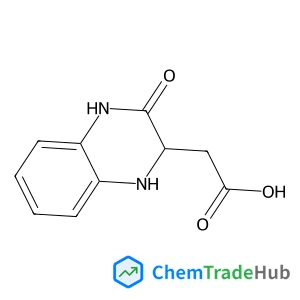
(3-Oxo-1,2,3,4-tetrahydro-2-quinoxalinyl)acetic acid
CAS Number:
136584-14-0
Molecular Formula:
C10H10N2O3

Recommended Suppliers






Disclaimer
This page provides academic journal information for reference and research purposes only. We are not affiliated with any journal publishers and do not handle publication submissions. For publication-related inquiries, please contact the respective journal publishers directly.
If you notice any inaccuracies in the information displayed, please contact us at support@chemtradehub.com. We will promptly review and address your concerns.