













An experimental and theoretical study of adenine adsorption on Au(111)
Literature Information
Publication Date
2018-01-19
DOI
10.1039/C7CP08102B
Impact Factor
3.676
Authors
Robert G. Acres, Xun Cheng, Sofiia Bercha, Tomáš Skála, Vladimír Matolín, Ye Xu, Kevin C. Prince, Nataliya Tsud
View Original
Abstract
A model study of adenine adsorption on the Au(111) surface is reported for molecular adlayers prepared by evaporation in vacuum and deposition from saturated aqueous solution. The electronic structure and adsorption geometry of the molecular films were studied experimentally by X-ray photoelectron spectroscopy and near edge X-ray absorption fine structure spectroscopy. Adsorption models are proposed for the adlayers arising from the different preparation methods. Density functional theory calculations were used to examine both parallel and upright adenine adsorption geometries, supply additional information on the bond strength, and identify which atom is involved in bonding to Au(111). In the case of deposition in vacuum, the adenine molecule is bound via van der Waals forces to Au(111) with the molecular plane parallel to the surface, consistent with the published scanning tunneling microscopy data on this system. The most stable parallel adenine configuration was found to have an adsorption energy of ca. −1.1 eV using the optB86b-vdW functional. For adenine deposition from aqueous solution, the adlayer is disordered, with molecules in an upright geometry, and with an adsorption energy of ca. −1.0 eV, coordinated via the imino N3 nitrogen atom. The present study contributes to the substantial literature of model studies of adenine on Au(111), complementing the existing knowledge with information on electronic structure, bonding geometry and adsorption energy of this system.
Related Literature
One-pot synthesis of benzo[c]carbazoles by photochemical annulation of 2-chloroindole-3-carbaldehydes
Cailin Wang, Wei Zhang, Shenci Lu, Jingfei Wu, Zongjun Shi
2008-09-12
Communication
DOI: 10.1039/B808854C
Asymmetric synthesis of either diastereomer of trifluoromethylated allylic amines by the selective reduction of trifluoromethyl α,β-unsaturated N-tert-butanesulfinyl ketoimines
Zhen-Jiang Liu, Jin-Tao Liu
2008-09-12
Communication
DOI: 10.1039/B810459J
An improved method for the synthesis of zirconium (CCC-N-heterocyclic carbene) pincer complexes and applications in hydroamination
Joon Cho, T. Keith Hollis, Theodore R. Helgert, Edward J. Valente
2008-09-19
Communication
DOI: 10.1039/B805174G
Soft material with intense photoluminescence obtained by dissolving Eu2O3 and organic ligand into a task-specific ionic liquid
Huanrong Li, Huifang Shao, Yige Wang, Dashan Qin, Binyuan Liu, Wenjun Zhang, Weidong Yan
2008-09-10
Communication
DOI: 10.1039/B810631B
Activation of hydrocarbons on acidic zeolites: superior selectivity of methylation of ethene with methanol to propene on weakly acidic catalysts
Qingjun Zhu, Junko N. Kondo, Tooru Setoyama, Masashi Yamaguchi, Kazunari Domen, Takashi Tatsumi
2008-09-10
Communication
DOI: 10.1039/B809718F
Formation of a stable dicarbenoid and an unsaturated C2P2S2 ring from two-electron oxidation of the [C(PPh2S)2]2− dianion
Jari Konu, Tristram Chivers
2008-09-12
Communication
DOI: 10.1039/B810796C
Facile synthesis, assembly, and immobilization of ordered arrays of monodisperse magnetic nanoparticles on silicon substrates
Gyu Leem, Andrew C. Jamison, Shishan Zhang, Dmitri Litvinov, T. Randall Lee
2008-09-10
Communication
DOI: 10.1039/B804633F
Designed molecular propellers based on tetraarylterephthalamide and their chiroptical properties induced by biased helicity through transmission of point chirality
Ryo Katoono, Hidetoshi Kawai, Kenshu Fujiwara, Takanori Suzuki
2008-09-10
Communication
DOI: 10.1039/B808936A
Oriented films of layered rare-earth hydroxide crystallites self-assembled at the hexane/water interface
Renzhi Ma, Tadashi C. Ozawa, Nobuo Iyi
2008-09-19
Communication
DOI: 10.1039/B812111G
Rhodium-catalysed hydroacylation or reductive aldol reactions: a ligand dependent switch of reactivity
James D. Osborne, Michael C. Willis
2008-09-02
Communication
DOI: 10.1039/B810935D
You might also like
Compound Q&A
What are the main uses of 1-(3-Aminophenyl)-3-[(3R)-1-(3,3-dimethyl-2-oxobutyl)-2-oxo-5-(2-pyridinyl)-2,3-dihydro-1H-1,4-benzodiazepin-3-yl]urea (CAS: 155412-88-7)?
This compound is mainly used as an intermediate in the synthesis of antipsychoti...
155412-88-71-(3-Aminophenyl)-3-...
Compound Q&A
How should waste containing 1-(D-Ribofuranosyl)-1,4-dihydro-3-pyridinecarboxamide (CAS: 19132-12-8) be handled?
Waste containing 1-(D-Ribofuranosyl)-1,4-dihydro-3-pyridinecarboxamide (CAS: 191...
19132-12-81-(D-Ribofuranosyl)-...
Compound Q&A
What regulatory guidelines apply to 2-Methyl-2-propanyl 3-bromo-3-(hydroxymethyl)-1-azetidinecarboxylate (CAS: 2007919-81-3)?
2-Methyl-2-propanyl 3-bromo-3-(hydroxymethyl)-1-azetidinecarboxylate (CAS: 20079...
2007919-81-32-Methyl-2-propanyl ...
Compound Q&A
What is N-(4-Chloro-2-pyridinyl)acetamide (CAS: 245056-66-0)?
N-(4-Chloro-2-pyridinyl)acetamide (CAS: 245056-66-0) is a chemical compound with...
245056-66-0N-(4-Chloro-2-pyridi...
Compound Q&A
What is 5-Chloro-2-hydroxybenzoic acid (CAS: 321-14-2)?
5-Chloro-2-hydroxybenzoic acid, also known as 5-chlorosalicylic acid, is an arom...
321-14-25-Chloro-2-hydroxybe...
Compound Q&A
What precautions should be taken when handling 1,1-Dichloro-1-fluoroethane (CAS: 1717-00-6)?
When handling 1,1-Dichloro-1-fluoroethane (CAS: 1717-00-6), it is important to u...
1717-00-61,1-Dichloro-1-fluor...
Compound Q&A
What are the physical and chemical properties of Fmoc-(2S,3R)-3-phenylpyrrolidine-2-carboxylic acid (CAS: 281655-32-1)?
Fmoc-(2S,3R)-3-phenylpyrrolidine-2-carboxylic acid is a white crystalline solid ...
281655-32-1Fmoc-(2S,3R)-3-pheny...
Compound Q&A
What are the main uses of 4-Amino-5-bromo-2-pyridinecarboxylic acid (CAS: 1363381-01-4)?
4-Amino-5-bromo-2-pyridinecarboxylic acid is primarily used as a precursor in th...
1363381-01-44-Amino-5-bromo-2-py...
Compound Q&A
What precautions should be taken when handling (S)-tert-butyl 2-((2-(4-bromophenyl)-2-oxoethyl)carbamoyl)pyrrolidine-1-carboxylate (CAS: 1007881-98-2)?
Handling this compound should be done with personal protective equipment (PPE) i...
1007881-98-2(S)-tert-butyl 2-((2...
Compound Q&A
What precautions should be taken when handling 8-bromo-2,2-dimethyl-3,4-dihydro-2H-1,4-benzoxazin-3-one (CAS: 688363-73-7)?
When handling 8-bromo-2,2-dimethyl-3,4-dihydro-2H-1,4-benzoxazin-3-one, use prop...
688363-73-78-bromo-2,2-dimethyl...
Source Journal
Physical Chemistry Chemical Physics

CiteScore:
5.5
Self-citation Rate:
10.3%
Articles per Year:
3036
Physical Chemistry Chemical Physics (PCCP) is an international journal co-owned by 19 physical chemistry and physics societies from around the world. This journal publishes original, cutting-edge research in physical chemistry, chemical physics and biophysical chemistry. To be suitable for publication in PCCP, articles must include significant innovation and/or insight into physical chemistry; this is the most important criterion that reviewers and Editors will judge against when evaluating submissions. The journal has a broad scope and welcomes contributions spanning experiment, theory, computation and data science. Topical coverage includes spectroscopy, dynamics, kinetics, statistical mechanics, thermodynamics, electrochemistry, catalysis, surface science, quantum mechanics, quantum computing and machine learning. Interdisciplinary research areas such as polymers and soft matter, materials, nanoscience, energy, surfaces/interfaces, and biophysical chemistry are welcomed if they demonstrate significant innovation and/or insight into physical chemistry. Joined experimental/theoretical studies are particularly appreciated when complementary and based on up-to-date approaches.
Recommended Compounds
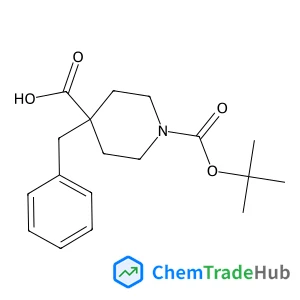
4-Benzyl-1-(tert-butoxycarbonyl)piperidine-4-carboxylic acid
CAS Number:
170838-87-6
Molecular Formula:
C18H25NO4

Recommended Suppliers






Disclaimer
This page provides academic journal information for reference and research purposes only. We are not affiliated with any journal publishers and do not handle publication submissions. For publication-related inquiries, please contact the respective journal publishers directly.
If you notice any inaccuracies in the information displayed, please contact us at support@chemtradehub.com. We will promptly review and address your concerns.