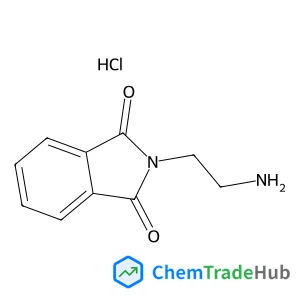
2-(2-Aminoethyl)-1H-isoindole-1,3(2H)-dione hydrochloride (1:1)
CAS Number:
30250-67-0
Molecular Formula:
C10H11ClN2O2
Juan Andrés, Patricio González-Navarrete, Vicent Sixte Safont, Bernard Silvi
Despite the usefulness of curly arrows in chemistry, their relationship with real electron density flows is still imprecise, and even their direct connection to quantum chemistry is still controversial. The paradigmatic description – from first principles – of the mechanistic aspects of a given chemical process is based mainly on the relative energies and geometrical changes at the stationary points of the potential energy surface along the reaction pathway; however, it is not sufficient to describe chemical systems in terms of bonding aspects. Probing the electron density distribution during a chemical reaction can provide important insights, enabling us to understand and control chemical reactions. This aim has required an extension of the relationships between the concepts of traditional chemistry and those of quantum mechanics. Bonding evolution theory (BET), which combines the topological analysis of the electron localization function (ELF) and Thom's catastrophe theory (CT), provides a powerful method that offers insight into the molecular mechanism of chemical rearrangements. In agreement with the laws of physical and aspects of quantum theory, BET can be considered an appropriate tool to tackle chemical reactivity with a wide range of possible applications. In this work, BET is applied to address a long-standing problem: the ability to monitor the flow of electron density. BET analysis shows a connection between quantum mechanics and bond making/forming processes. Likewise, the present approach retrieves the classical curly arrows used to describe the rearrangements of chemical bonds and provides detailed physical grounds for this type of representation. We demonstrate this procedure using the test set of prototypical examples of thermal ring apertures, and the degenerated Cope rearrangement of semibullvalene.
Xiao-xiong Wang, Shang Gao, Xu Yan, Qiang Li, Jun-cheng Zhang, Yun-ze Long, Ke-qing Ruan, Xiao-guang Li
DOI: 10.1039/C7CP07030F
Takuro Tsutsumi, Yuriko Ono, Satoshi Maeda, Tetsuya Taketsugu
DOI: 10.1039/C7CP06528K
DOI: 10.1039/C8CP02802H
Yi Hu, Shaogang Xu, Kai Miao, Xinrui Miao, Wenli Deng
DOI: 10.1039/C8CP01308J
Liluo Shi, Yaxin Chen, Renyue He, Xiaohong Chen, Huaihe Song
DOI: 10.1039/C8CP01681J
Sara Llamas, Laura Fernández-Peña, Víctor Ortega, Aurelio G. Csaky, Richard A. Campbell
DOI: 10.1039/C7CP05528E
Alexandra Baumann, Hammad Cheema, Md Abdus Sabuj, Louis E. McNamara, Yanbing Zhang, Adithya Peddapuram, Suong T. Nguyen, Davita L. Watkins, Nathan I. Hammer, Neeraj Rai, Jared H. Delcamp
DOI: 10.1039/C8CP03065K
Hiroo Miyamoto, Yasuyuki Yokota, Akihito Imanishi, Kouji Inagaki, Ken-ichi Fukui
DOI: 10.1039/C8CP02733A
Yingjie Jiang, Xiaodong Xu, Yangyang Hu, Zhewen Liang, Weiqi Li, Yongyuan Jiang
DOI: 10.1039/C8CP02914H
(1R,3S)-1,3-Cyclopentanediol finds applications in various industries. In the ph...
When handling N'-[4-(Dimethylamino)phenyl]-N,N-dimethyl-1,4-benzenediamine, it i...
There are several alternatives to 5-(2,4-Difluorophenyl)-2-methoxypyrimidine in ...
1-(3-Methoxyphenoxy)propan-2-ol (CAS: 382141-68-6) must comply with the Globally...
Tetrodotoxin Citrate is extremely dangerous and should be handled with extreme c...
2-Methyl-2-propanyl [(1R,3S)-3-hydroxycyclopentyl]carbamate (CAS: 225641-84-9) i...
Waste containing 4-(2-Hydroxyhexafluoroisopropyl)Benzoic Acid (CAS: 16261-80-6) ...
2-Methyl-2-proanyl {(2S)-1-[(benzyloxy)amino]-3-hydroxy-3-methyl-1-oxo-2-butanyl...
Benzeneethanamine, α-ethyl-, hydrochloride (1:1) is an organic compound with the...
In the synthesis of compounds similar to 3-{(E)-[4-(Dimethylamino)phenyl]diazeny...

Physical Chemistry Chemical Physics (PCCP) is an international journal co-owned by 19 physical chemistry and physics societies from around the world. This journal publishes original, cutting-edge research in physical chemistry, chemical physics and biophysical chemistry. To be suitable for publication in PCCP, articles must include significant innovation and/or insight into physical chemistry; this is the most important criterion that reviewers and Editors will judge against when evaluating submissions. The journal has a broad scope and welcomes contributions spanning experiment, theory, computation and data science. Topical coverage includes spectroscopy, dynamics, kinetics, statistical mechanics, thermodynamics, electrochemistry, catalysis, surface science, quantum mechanics, quantum computing and machine learning. Interdisciplinary research areas such as polymers and soft matter, materials, nanoscience, energy, surfaces/interfaces, and biophysical chemistry are welcomed if they demonstrate significant innovation and/or insight into physical chemistry. Joined experimental/theoretical studies are particularly appreciated when complementary and based on up-to-date approaches.