












Two-dimensional second-order nonlinear optical spectra: landscape of second-order nonlinear optics
Literature Information
Publication Date
2017-10-12
DOI
10.1039/C7CP05910H
Impact Factor
3.676
Authors
Jiu Chen, Ming Qian Wang, Xin Zhou, Ling Yang, Wei-Qi Li, Wei Quan Tian
View Original
Abstract
The landscape of second-order nonlinear optical (2nd NLO) responses of a system can be depicted as two-dimensional second-order nonlinear optical spectra in a range of external fields, and this is difficult to be realized in experiment for a wide range of external fields. In the present study, an efficient method for application of sum-over-states model to simulate electronic two-dimensional NLO (2DNLO) spectra has been developed, and techniques to analyze NLO response–structure correlation have been proposed. This 2DNLO method has been applied to simulate the 2DNLO spectra of a series of typical electron push–pull chromophores under external fields of up to 5.00 eV. The correlation between the NLO properties and structure has been disclosed, and a further strategy to enhance the NLO properties of push–pull chromophores has been proposed.
Related Literature
On the aqueous solvation of AsO(OH)3vs. As(OH)3. Born–Oppenheimer molecular dynamics density functional theory cluster studies
A. Ramírez-Solís, J. I. Amaro-Estrada, C. I. León-Pimentel, J. Hernández-Cobos, S. E. Garrido-Hoyos, H. Saint-Martin
2018-05-29
Paper
DOI: 10.1039/C8CP01673A
Same building block, but diverse surface-confined self-assemblies: solvent and concentration effects-induced structural diversity towards chirality and achirality
Yi Hu, Shaogang Xu, Kai Miao, Xinrui Miao, Wenli Deng
2018-06-06
Paper
DOI: 10.1039/C8CP01308J
Towards understanding the behavior of polyelectrolyte–surfactant mixtures at the water/vapor interface closer to technologically-relevant conditions
Sara Llamas, Laura Fernández-Peña, Víctor Ortega, Aurelio G. Csaky, Richard A. Campbell
2017-12-18
Paper
DOI: 10.1039/C7CP05528E
Theoretical evidence for the direct 3MLCT-HS deactivation in the light-induced spin crossover of Fe(ii)–polypyridyl complexes
Carmen Sousa, Miquel Llunell, Alex Domingo
2018-01-05
Paper
DOI: 10.1039/C7CP08098K
Fluorescence immunosensor for cardiac troponin T based on Förster resonance energy transfer (FRET) between carbon dot and MoS2 nano-couple
Satyabrat Gogoi, Raju Khan
2018-05-23
Paper
DOI: 10.1039/C8CP02433B
Experimental and modelling study of the multichannel thermal dissociations of CH3F and CH2F
C. J. Cobos, G. Knight, L. Sölter, E. Tellbach
2018-01-02
Paper
DOI: 10.1039/C7CP07098E
Evolution of the topological properties of two-dimensional group IVA materials and device design‡
2018-01-05
Paper
DOI: 10.1039/C7CP07420D
Effect of transition-metal-ion dopants on the oxygen evolution reaction on NiOOH(0001)
Alexander J. Tkalych, John Mark P. Martirez, Emily A. Carter
2018-07-03
Paper
DOI: 10.1039/C8CP02849D
Electrochemical behavior of Bi4B2O9 towards lithium-reversible conversion reactions without nanosizing
Goran Dražić
2017-12-15
Paper
DOI: 10.1039/C7CP07693B
Interplay of proton and electron transfer to determine concerted behavior in the proton-coupled electron transfer of glutathione oxidation
Kejie Meng, Jonnathan Medina-Ramos, Emnet Yibeltal-Ashenafi, Julio C. Alvarez
2018-06-13
Paper
DOI: 10.1039/C8CP01415A
You might also like
Compound Q&A
What industries use (1R,3S)-1,3-Cyclopentanediol (CAS: 16326-97-9)?
(1R,3S)-1,3-Cyclopentanediol finds applications in various industries. In the ph...
16326-97-9(1R,3S)-1,3-Cyclopen...
Compound Q&A
What precautions should be taken when handling N'-[4-(Dimethylamino)phenyl]-N,N-dimethyl-1,4-benzenediamine (CAS: 637-31-0)?
When handling N'-[4-(Dimethylamino)phenyl]-N,N-dimethyl-1,4-benzenediamine, it i...
637-31-0N'-[4-(Dimethylamino...
Compound Q&A
Are there alternatives to 5-(2,4-Difluorophenyl)-2-methoxypyrimidine (CAS: 1352318-16-1) in synthesis?
There are several alternatives to 5-(2,4-Difluorophenyl)-2-methoxypyrimidine in ...
1352318-16-15-(2,4-Difluoropheny...
Compound Q&A
What regulatory guidelines apply to 1-(3-Methoxyphenoxy)propan-2-ol (CAS: 382141-68-6)?
1-(3-Methoxyphenoxy)propan-2-ol (CAS: 382141-68-6) must comply with the Globally...
382141-68-61-(3-Methoxyphenoxy)...
Compound Q&A
Is Tetrodotoxin Citrate (CAS: 18660-81-6) safe?
Tetrodotoxin Citrate is extremely dangerous and should be handled with extreme c...
18660-81-6Tetrodotoxin Citrate
Compound Q&A
What are the main uses of 2-Methyl-2-propanyl [(1R,3S)-3-hydroxycyclopentyl]carbamate (CAS: 225641-84-9)?
2-Methyl-2-propanyl [(1R,3S)-3-hydroxycyclopentyl]carbamate (CAS: 225641-84-9) i...
225641-84-92-Methyl-2-propanyl ...
Compound Q&A
How should waste containing 4-(2-Hydroxyhexafluoroisopropyl)Benzoic Acid (CAS: 16261-80-6) be handled?
Waste containing 4-(2-Hydroxyhexafluoroisopropyl)Benzoic Acid (CAS: 16261-80-6) ...
16261-80-64-(2-Hydroxyhexafluo...
Compound Q&A
How is 2-Methyl-2-proanyl {(2S)-1-[(benzyloxy)amino]-3-hydroxy-3-methyl-1-oxo-2-butanyl}carbamate (CAS: 102507-19-7) typically synthesized?
2-Methyl-2-proanyl {(2S)-1-[(benzyloxy)amino]-3-hydroxy-3-methyl-1-oxo-2-butanyl...
102507-19-72-Methyl-2-propanyl ...
Compound Q&A
What is Benzeneethanamine, α-ethyl-, hydrochloride (1:1) (CAS: 20735-15-3)?
Benzeneethanamine, α-ethyl-, hydrochloride (1:1) is an organic compound with the...
20735-15-3Benzeneethanamine, α...
Compound Q&A
Are there alternatives to 3-{(E)-[4-(Dimethylamino)phenyl]diazenyl}benzoic acid (CAS: 20691-84-3) in synthesis?
In the synthesis of compounds similar to 3-{(E)-[4-(Dimethylamino)phenyl]diazeny...
20691-84-33-{(E)-[4-(Dimethyla...
Source Journal
Physical Chemistry Chemical Physics

CiteScore:
5.5
Self-citation Rate:
10.3%
Articles per Year:
3036
Physical Chemistry Chemical Physics (PCCP) is an international journal co-owned by 19 physical chemistry and physics societies from around the world. This journal publishes original, cutting-edge research in physical chemistry, chemical physics and biophysical chemistry. To be suitable for publication in PCCP, articles must include significant innovation and/or insight into physical chemistry; this is the most important criterion that reviewers and Editors will judge against when evaluating submissions. The journal has a broad scope and welcomes contributions spanning experiment, theory, computation and data science. Topical coverage includes spectroscopy, dynamics, kinetics, statistical mechanics, thermodynamics, electrochemistry, catalysis, surface science, quantum mechanics, quantum computing and machine learning. Interdisciplinary research areas such as polymers and soft matter, materials, nanoscience, energy, surfaces/interfaces, and biophysical chemistry are welcomed if they demonstrate significant innovation and/or insight into physical chemistry. Joined experimental/theoretical studies are particularly appreciated when complementary and based on up-to-date approaches.
Recommended Compounds
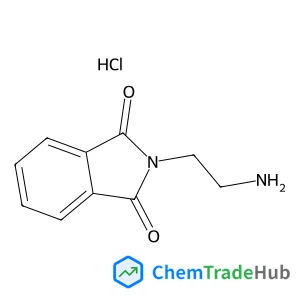
2-(2-Aminoethyl)-1H-isoindole-1,3(2H)-dione hydrochloride (1:1)
CAS Number:
30250-67-0
Molecular Formula:
C10H11ClN2O2
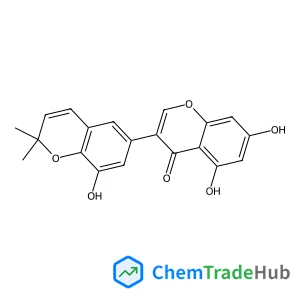
5,7,8'-Trihydroxy-2',2'-dimethyl-2'H,4H-3,6'-bichromen-4-one
CAS Number:
129280-33-7
Molecular Formula:
C20H16O6

4-(5-(4,4,5,5-tetramethyl-1,3,2-dioxaborolan-2-yl)pyridin-2-yl)morpholine
CAS Number:
485799-04-0
Molecular Formula:
C15H23BN2O3

Recommended Suppliers







Disclaimer
This page provides academic journal information for reference and research purposes only. We are not affiliated with any journal publishers and do not handle publication submissions. For publication-related inquiries, please contact the respective journal publishers directly.
If you notice any inaccuracies in the information displayed, please contact us at support@chemtradehub.com. We will promptly review and address your concerns.