













Experimental and modelling study of the multichannel thermal dissociations of CH3F and CH2F
Literature Information
Publication Date
2018-01-02
DOI
10.1039/C7CP07098E
Impact Factor
3.676
Authors
C. J. Cobos, G. Knight, L. Sölter, E. Tellbach
View Original
Abstract
The thermal unimolecular dissociation of CH3F was studied in shock waves by monitoring the UV absorption of a dissociation product identified as CH2F. It is concluded that, under conditions applied, the formation of this species corresponds to a minor, spin-allowed, dissociation channel of about 3% yield. Near to the low-pressure limit of the reaction, on the other hand, the energetically more favourable dissociation leads to 3CH2 + HF on a dominant, spin-forbidden, pathway. By considering the multichannel character of the reaction, it is shown that, in contrast to the low-pressure range, the high-pressure range of the reaction should be dominated by CH2F formation. The channel-switching probably takes place at pressures higher than those applied in the present work. In addition to the two dissociation channels of CH3F producing 3CH2 + HF and CH2F + H, a third, spin-allowed, dissociation channel leading to 1CHF + H2 was also considered and estimated to proceed with a yield smaller than 0.5%. Besides the dissociation of CH3F, the dissociation of CH2F was studied by monitoring the UV spectrum of CH2F. Details of this spectrum were investigated. Similar to CH3F, the dissociation of CH2F can proceed on several dissociation channels, under the present conditions either to CHF + H or to CF + H2. After modelling single-channel falloff curves for all reaction pathways, coupling effects of multichannel dissociations were interpreted in the framework of multichannel unimolecular rate theory.
Related Literature
One-pot synthesis of hybrid TiO2–polyaniline nanoparticles by self-catalyzed hydroamination and oxidative polymerization from TiO2–methacrylic acid nanoparticles
Woo Jin Bae, Andrew R. Davis, Jaewoong Jung, Won Ho Jo, Kenneth R. Carter, E. Bryan Coughlin
2011-09-05
Communication
DOI: 10.1039/C1CC13137K
The preparation of 2H-1,4-benzoxazin-3-(4H)-ones viapalladium-catalyzed intramolecular C–O bond formation
Kai E. O. Ylijoki, E. Peter Kündig
2011-08-24
Communication
DOI: 10.1039/C1CC14209G
Formation of polypseudorotaxane networks by cross-linking the quadruple hydrogen bonded linear supramolecular polymersviabisparaquat molecules
Shao-Lu Li, Tangxin Xiao, Bingjie Hu, Yajie Zhang, Feng Zhao, Ya Ji, Yihua Yu, Chen Lin, Leyong Wang
2011-08-26
Communication
DOI: 10.1039/C1CC14559B
Fluorescence sensing of caffeine in water with polysulfonated pyrenes
Sébastien Rochat, Stephan N. Steinmann, Clémence Corminboeuf, Kay Severin
2011-08-26
Communication
DOI: 10.1039/C1CC13927D
Determination of relative binding affinities of labeling molecules with amino acids by using scanning tunneling microscopy‡
Xiaobo Mao, Aihua Yang, Lin Niu, Shengnan Wang, Denghua Li, Yuanyuan Guo, Yibing Wang, Yanlian Yang, Chen Wang
2011-08-25
Communication
DOI: 10.1039/C1CC12380G
β-Cyclodextrin for design of alumina supported cobalt catalysts efficient in Fischer–Tropsch synthesis
Anne Griboval-Constant, Andrei Y. Khodakov, Fabrice Diehl
2011-08-26
Communication
DOI: 10.1039/C1CC13800F
Properties of ionic liquids on Au surfaces: non-conventional anion exchange reactions with carbonate
Mathieu Ratel, Mathieu Branca, Julien Breault-Turcot, Sandy Shuo Zhao, Pierre Chaurand, Andreea R. Schmitzer, Jean-Francois Masson
2011-08-30
Communication
DOI: 10.1039/C1CC13914B
Welcome to the first issue of Catalysis Science & Technology
2011-02-08
Editorial
DOI: 10.1039/C1CY90001C
Selective oxidation of biorenewable glycerol with molecular oxygen over Cu-containing layered double hydroxide-based catalysts
Jorge N. Beltramini, Chun-Xiang Lin, Zhi-Ping Xu, G. Q. (Max) Lu, A. Tanksale
2011-02-04
Paper
DOI: 10.1039/C0CY00018C
A highly efficient silver niobium alumina catalyst for the selective catalytic reduction of NO by n-decane
Hubert P. Mutin, Gérard Delahay
2011-08-24
Communication
DOI: 10.1039/C1CC12792F
You might also like
Compound Q&A
What industries use (1R,3S)-1,3-Cyclopentanediol (CAS: 16326-97-9)?
(1R,3S)-1,3-Cyclopentanediol finds applications in various industries. In the ph...
16326-97-9(1R,3S)-1,3-Cyclopen...
Compound Q&A
What precautions should be taken when handling N'-[4-(Dimethylamino)phenyl]-N,N-dimethyl-1,4-benzenediamine (CAS: 637-31-0)?
When handling N'-[4-(Dimethylamino)phenyl]-N,N-dimethyl-1,4-benzenediamine, it i...
637-31-0N'-[4-(Dimethylamino...
Compound Q&A
Are there alternatives to 5-(2,4-Difluorophenyl)-2-methoxypyrimidine (CAS: 1352318-16-1) in synthesis?
There are several alternatives to 5-(2,4-Difluorophenyl)-2-methoxypyrimidine in ...
1352318-16-15-(2,4-Difluoropheny...
Compound Q&A
What regulatory guidelines apply to 1-(3-Methoxyphenoxy)propan-2-ol (CAS: 382141-68-6)?
1-(3-Methoxyphenoxy)propan-2-ol (CAS: 382141-68-6) must comply with the Globally...
382141-68-61-(3-Methoxyphenoxy)...
Compound Q&A
Is Tetrodotoxin Citrate (CAS: 18660-81-6) safe?
Tetrodotoxin Citrate is extremely dangerous and should be handled with extreme c...
18660-81-6Tetrodotoxin Citrate
Compound Q&A
What are the main uses of 2-Methyl-2-propanyl [(1R,3S)-3-hydroxycyclopentyl]carbamate (CAS: 225641-84-9)?
2-Methyl-2-propanyl [(1R,3S)-3-hydroxycyclopentyl]carbamate (CAS: 225641-84-9) i...
225641-84-92-Methyl-2-propanyl ...
Compound Q&A
How should waste containing 4-(2-Hydroxyhexafluoroisopropyl)Benzoic Acid (CAS: 16261-80-6) be handled?
Waste containing 4-(2-Hydroxyhexafluoroisopropyl)Benzoic Acid (CAS: 16261-80-6) ...
16261-80-64-(2-Hydroxyhexafluo...
Compound Q&A
How is 2-Methyl-2-proanyl {(2S)-1-[(benzyloxy)amino]-3-hydroxy-3-methyl-1-oxo-2-butanyl}carbamate (CAS: 102507-19-7) typically synthesized?
2-Methyl-2-proanyl {(2S)-1-[(benzyloxy)amino]-3-hydroxy-3-methyl-1-oxo-2-butanyl...
102507-19-72-Methyl-2-propanyl ...
Compound Q&A
What is Benzeneethanamine, α-ethyl-, hydrochloride (1:1) (CAS: 20735-15-3)?
Benzeneethanamine, α-ethyl-, hydrochloride (1:1) is an organic compound with the...
20735-15-3Benzeneethanamine, α...
Compound Q&A
Are there alternatives to 3-{(E)-[4-(Dimethylamino)phenyl]diazenyl}benzoic acid (CAS: 20691-84-3) in synthesis?
In the synthesis of compounds similar to 3-{(E)-[4-(Dimethylamino)phenyl]diazeny...
20691-84-33-{(E)-[4-(Dimethyla...
Source Journal
Physical Chemistry Chemical Physics

CiteScore:
5.5
Self-citation Rate:
10.3%
Articles per Year:
3036
Physical Chemistry Chemical Physics (PCCP) is an international journal co-owned by 19 physical chemistry and physics societies from around the world. This journal publishes original, cutting-edge research in physical chemistry, chemical physics and biophysical chemistry. To be suitable for publication in PCCP, articles must include significant innovation and/or insight into physical chemistry; this is the most important criterion that reviewers and Editors will judge against when evaluating submissions. The journal has a broad scope and welcomes contributions spanning experiment, theory, computation and data science. Topical coverage includes spectroscopy, dynamics, kinetics, statistical mechanics, thermodynamics, electrochemistry, catalysis, surface science, quantum mechanics, quantum computing and machine learning. Interdisciplinary research areas such as polymers and soft matter, materials, nanoscience, energy, surfaces/interfaces, and biophysical chemistry are welcomed if they demonstrate significant innovation and/or insight into physical chemistry. Joined experimental/theoretical studies are particularly appreciated when complementary and based on up-to-date approaches.
Recommended Compounds
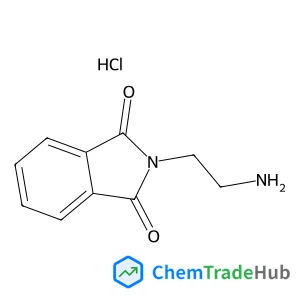
2-(2-Aminoethyl)-1H-isoindole-1,3(2H)-dione hydrochloride (1:1)
CAS Number:
30250-67-0
Molecular Formula:
C10H11ClN2O2

Recommended Suppliers







Disclaimer
This page provides academic journal information for reference and research purposes only. We are not affiliated with any journal publishers and do not handle publication submissions. For publication-related inquiries, please contact the respective journal publishers directly.
If you notice any inaccuracies in the information displayed, please contact us at support@chemtradehub.com. We will promptly review and address your concerns.