












Using molecular vibrations to probe exciton delocalization in films of perylene diimides with ultrafast mid-IR spectroscopy
Literature Information
Publication Date
2017-08-29
DOI
10.1039/C7CP04819J
Impact Factor
3.676
Authors
Eric R. Kennehan, Christopher Grieco, Alyssa N. Brigeman, Adam Rimshaw, Kayla Bisgaier, Noel C. Giebink
View Original
Abstract
Ultrafast vibrational spectroscopy in the mid-infrared was used to directly probe the delocalization of excitons in two different perylenediimide (PDI) derivatives that are predicted to preclude the formation of excimers, which can act as trap sites for excited state energy in organic semiconductors. We identified vibrational modes within the conjugated C–C stretch modes of PDI molecules whose frequencies reported the interactions of molecules within delocalized excitonic states. The vibrational linewidths of these modes, which we call intermolecular coordinate coupled (ICC) modes, provided a direct probe of the extent of exciton delocalization among the PDI molecules, which was confirmed using X-ray diffraction and electro-absorption spectroscopy. We show that a slip-stacked geometry among the PDI molecules in their crystals promotes delocalized charge-transfer (CT) excitons, while localized Frenkel excitons tend to form in crystals with helical, columnar stacking geometries. Because all molecules possess vibrational modes, the use of ultrafast mid-infrared spectroscopy to measure ICC vibrational modes offers a new approach to examine exciton delocalization in a variety of small molecule electron acceptors for optoelectronic and organic photovoltaic applications.
Related Literature
Facile polyisobutylene functionalization viathiol–ene click chemistry‡
Andrew J. D. Magenau, Justin W. Chan, Charles E. Hoyle, Robson F. Storey
2010-05-10
Communication
DOI: 10.1039/C0PY00094A
Investigation into thiol-(meth)acrylateMichael addition reactions using amine and phosphinecatalysts
Rajan K. Randev, Alexander H. Soeriyadi, Gregory Rees, Cyrille Boyer, Zhen Tong, Thomas P. Davis, C. Remzi Becer, David M. Haddleton
2010-06-07
Paper
DOI: 10.1039/C0PY00100G
Doxorubicin conjugated, crosslinked, PEGylated particles prepared via one-pot thiol-ene modification of a homopolymer scaffold: synthesis and in vitro evaluation
Maria Kavallaris, Volga Bulmus
2010-09-20
Paper
DOI: 10.1039/C0PY00256A
Self-healing and self-mendable polymers
Jay A. Syrett, C. Remzi Becer, David M. Haddleton
2010-05-13
Review Article
DOI: 10.1039/C0PY00104J
Effect of solvents on polymerization of N-propargylamide monomer and secondary structure of polymer
2010-08-27
Paper
DOI: 10.1039/C0PY00116C
Hydrophilization of poly(ether ether ketone) films by surface-initiated atom transfer radical polymerization
Charlotte Juel Fristrup, Katja Jankova, Søren Hvilsted
2010-09-13
Paper
DOI: 10.1039/C0PY00142B
New thioxanthone and xanthone photoinitiators based on silyl radical chemistry
Jacques Lalevée, Nicolas Blanchard, Mohamad Ali Tehfe, Cédric Fries, Fabrice Morlet-Savary, Didier Gigmes, Jean Pierre Fouassier
2011-02-28
Paper
DOI: 10.1039/C0PY00392A
Synthesis and evaluation of partly fluorinated polyelectrolytes as components in 19F MRI-detectable nanoparticles
Leena Nurmi, Hui Peng, Jukka Seppälä, David M. Haddleton, Idriss Blakey, Andrew K. Whittaker
2010-05-14
Paper
DOI: 10.1039/C0PY00035C
You might also like
Compound Q&A
Is 6-(3-Fluorophenyl)picolinic acid (CAS: 887982-40-3) safe?
6-(3-Fluorophenyl)picolinic acid is generally considered safe for laboratory use...
887982-40-36-(3-Fluorophenyl)pi...
Compound Q&A
What industries use (3R)-3-Pyrrolidinol (CAS: 2799-21-5)?
(3R)-3-Pyrrolidinol is used in the pharmaceutical industry as a precursor for dr...
2799-21-5(3R)-3-Pyrrolidinol
Compound Q&A
What precautions should be taken when handling (4R,5R)-4,5-Diethoxycarbonyl-2,2-dimethyldioxolane (CAS: 59779-75-8)?
When handling (4R,5R)-4,5-Diethoxycarbonyl-2,2-dimethyldioxolane (CAS: 59779-75-...
59779-75-8(4R,5R)-4,5-Diethoxy...
Compound Q&A
How is 1-(6-Chloroimidazo[1,2-b]pyridazin-3-yl)ethanone (CAS: 90734-71-7) typically synthesized?
1-(6-Chloroimidazo[1,2-b]pyridazin-3-yl)ethanone is often synthesized via a mult...
90734-71-71-(6-Chloroimidazo[1...
Compound Q&A
What is the market or research trend for N-Ethyl-3,4-dimethylbenzylamine (CAS: 39180-83-1)?
The market for N-Ethyl-3,4-dimethylbenzylamine (CAS: 39180-83-1) remains steady,...
39180-83-1N-Ethyl-3,4-dimethyl...
Compound Q&A
What is Tert-butyl 3-(pyrrolidin-1-yl)azetidine-1-carboxylate (CAS: 1019008-21-9)?
Tert-butyl 3-(pyrrolidin-1-yl)azetidine-1-carboxylate is a chemical compound wit...
1019008-21-9Tert-butyl 3-(pyrrol...
Compound Q&A
What regulatory guidelines apply to 1-Bromo-3-chloro-2,4-dimethoxybenzene (CAS: 1228956-93-1)?
1-Bromo-3-chloro-2,4-dimethoxybenzene (CAS: 1228956-93-1) falls under the classi...
1228956-93-11-Bromo-3-chloro-2,4...
Compound Q&A
Is 8-Bromo-2-methyl-3,4-dihydroisoquinolin-1(2H)-one (CAS: 1368622-07-4) safe?
The safety of 8-Bromo-2-methyl-3,4-dihydroisoquinolin-1(2H)-one (CAS: 1368622-07...
1368622-07-48-Bromo-2-methyl-3,4...
Compound Q&A
Is Benzyl [(3S)-2,6-dioxo-3-piperidinyl]carbamate (CAS: 22785-43-9) safe?
Benzyl [(3S)-2,6-dioxo-3-piperidinyl]carbamate is generally safe when handled wi...
22785-43-9Benzyl [(3S)-2,6-dio...
Compound Q&A
How should 1-{[4-(4,4,5,5-Tetramethyl-1,3,2-dioxaborolan-2-yl)phenyl]sulfonyl}pyrrolidine (CAS: 928657-21-0) be stored?
1-{[4-(4,4,5,5-Tetramethyl-1,3,2-dioxaborolan-2-yl)phenyl]sulfonyl}pyrrolidine s...
928657-21-01-{[4-(4,4,5,5-Tetra...
Source Journal
Physical Chemistry Chemical Physics

CiteScore:
5.5
Self-citation Rate:
10.3%
Articles per Year:
3036
Physical Chemistry Chemical Physics (PCCP) is an international journal co-owned by 19 physical chemistry and physics societies from around the world. This journal publishes original, cutting-edge research in physical chemistry, chemical physics and biophysical chemistry. To be suitable for publication in PCCP, articles must include significant innovation and/or insight into physical chemistry; this is the most important criterion that reviewers and Editors will judge against when evaluating submissions. The journal has a broad scope and welcomes contributions spanning experiment, theory, computation and data science. Topical coverage includes spectroscopy, dynamics, kinetics, statistical mechanics, thermodynamics, electrochemistry, catalysis, surface science, quantum mechanics, quantum computing and machine learning. Interdisciplinary research areas such as polymers and soft matter, materials, nanoscience, energy, surfaces/interfaces, and biophysical chemistry are welcomed if they demonstrate significant innovation and/or insight into physical chemistry. Joined experimental/theoretical studies are particularly appreciated when complementary and based on up-to-date approaches.
Recommended Compounds
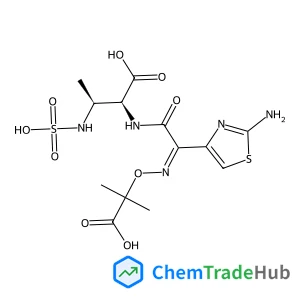
Aztreonam USP Related Compound A (Open-ring Aztreonam)
CAS Number:
87500-74-1
Molecular Formula:
C13H19N5O9S2

(11alpha,13E)-11-Hydroxy-9,15-dioxoprost-13-en-1-oic acid
CAS Number:
22973-19-9
Molecular Formula:
C20H32O5
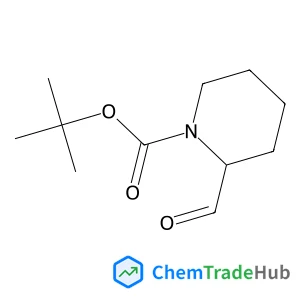
2-Methyl-2-propanyl (2R)-2-formyl-1-piperidinecarboxylate
CAS Number:
134526-69-5
Molecular Formula:
C11H19NO3
Recommended Suppliers




Disclaimer
This page provides academic journal information for reference and research purposes only. We are not affiliated with any journal publishers and do not handle publication submissions. For publication-related inquiries, please contact the respective journal publishers directly.
If you notice any inaccuracies in the information displayed, please contact us at support@chemtradehub.com. We will promptly review and address your concerns.