












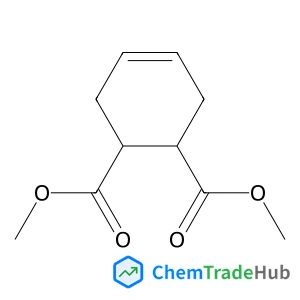
4-Cyclohexene-1,2-dicarboxylic acid, 1,2-dimethyl ester, (1R,2R)-rel-
CAS Number:
17673-68-6
Molecular Formula:
C10H14O4
Jacques Lalevée, Nicolas Blanchard, Mohamad Ali Tehfe, Cédric Fries, Fabrice Morlet-Savary, Didier Gigmes, Jean Pierre Fouassier
The ability of a new efficient photoinitiator (TX–Si), based on the well-known thioxanthonechromophore linked to a disilylacetylene moiety and exhibiting a red-shifted absorption, to initiate both free radical polymerization and cationic polymerization is checked. A comparison with the parent compound (isopropylthioxanthone) is provided. High rates of polymerization and high final conversions are obtained. The migration of TX–Si out of the polymer film is noticeably reduced (3-fold factor) compared to that observed with ITX. A similar modification of the xanthonechromophore (XT–Si) also leads to an efficient cleavable photoinitiator and opens a door for the design of a new class of potentially interesting compounds for UV curing applications. As characterized by ESR spin trapping, TX–Si and XT–Si generate silyl radicals under light irradiation evidencing a Type I photoinitiator character. The analysis of the excited state processes through laser flash photolysis and molecular orbital calculations allows explaining the observed photochemical behavior.
Jörg Baz, Christoph Held, Jürgen Pleiss, Niels Hansen
DOI: 10.1039/C9CP00036D
Takuya Uto, Satoshi Idenoue, Kazuya Yamamoto, Jun-ichi Kadokawa
DOI: 10.1039/C8CP02749H
Yue Gu, Mouyi Weng, Gaofeng Teng, Hua Zeng, Jianshu Jie, Weiji Xiao, Jiaxin Zheng, Feng Pan
DOI: 10.1039/C8CP06083E
Chungwei Lin, Andrew Knyazev, Keisuke Kojima, Joseph Katz, Koichi Akiyama, Eiji Nakai, Hiroyuki Kawahara
DOI: 10.1039/C9CP00122K
Jesús Carrete, Vu Ngoc Tuoc, Georg K. H. Madsen
DOI: 10.1039/C9CP00052F
Qing Lu, Yi-Ming Wen, Zhao-Yi Zeng, Xiang-Rong Chen, Qi-Feng Chen
DOI: 10.1039/C8CP07246A
Yi Li, Jian Liu, Ji-Chao Li, Yu-Fei Chen, Xin-Miao Zhang, Xue-Jin Wang, Fu-Ning Wang, Wen-Bin Su, Lan-Ling Zhao, Chun-Lei Wang
DOI: 10.1039/C8CP02783H
Andreas Hajduk, Mikhail V. Lebedev, Bernhard Kaiser, Wolfram Jaegermann
DOI: 10.1039/C8CP03337D
Noelia Faginas-Lago, Thierry Leininger, Stefano Evangelisti
DOI: 10.1039/C8CP07159D
6-(3-Fluorophenyl)picolinic acid is generally considered safe for laboratory use...
(3R)-3-Pyrrolidinol is used in the pharmaceutical industry as a precursor for dr...
When handling (4R,5R)-4,5-Diethoxycarbonyl-2,2-dimethyldioxolane (CAS: 59779-75-...
1-(6-Chloroimidazo[1,2-b]pyridazin-3-yl)ethanone is often synthesized via a mult...
The market for N-Ethyl-3,4-dimethylbenzylamine (CAS: 39180-83-1) remains steady,...
Tert-butyl 3-(pyrrolidin-1-yl)azetidine-1-carboxylate is a chemical compound wit...
1-Bromo-3-chloro-2,4-dimethoxybenzene (CAS: 1228956-93-1) falls under the classi...
The safety of 8-Bromo-2-methyl-3,4-dihydroisoquinolin-1(2H)-one (CAS: 1368622-07...
Benzyl [(3S)-2,6-dioxo-3-piperidinyl]carbamate is generally safe when handled wi...
1-{[4-(4,4,5,5-Tetramethyl-1,3,2-dioxaborolan-2-yl)phenyl]sulfonyl}pyrrolidine s...

Polymer Chemistry welcomes submissions in all areas of polymer science that have a strong focus on macromolecular chemistry. Manuscripts may cover a broad range of fields, yet no direct application focus is required.
![2-Methyl-2-propanyl [(2S)-1-hydroxy-3-(4-hydroxyphenyl)-2-propanyl]carbamate structure](https://static.chemtradehub.com/structs/833/83345-46-4-eec2.webp "2-Methyl-2-propanyl [(2S)-1-hydroxy-3-(4-hydroxyphenyl)-2-propanyl]carbamate structure")
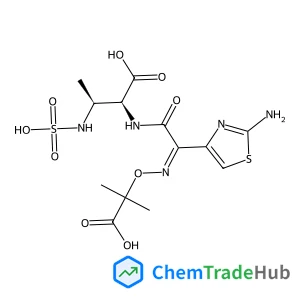
![2-[({[(2-Methyl-2-propanyl)oxy]carbonyl}amino)methyl]isonicotinic acid structure](https://static.chemtradehub.com/structs/473/473924-63-9-973b.webp "2-[({[(2-Methyl-2-propanyl)oxy]carbonyl}amino)methyl]isonicotinic acid structure")
![Benzyl spiro[indole-3,4'-piperidine]-1(2H)-carboxylate hydrochloride (1:1) structure](https://static.chemtradehub.com/structs/159/159635-46-8-8de0.webp "Benzyl spiro[indole-3,4'-piperidine]-1(2H)-carboxylate hydrochloride (1:1) structure")






