


Cu0-Loaded organo-montmorillonite with improved affinity towards hydrogen: an insight into matrix–metal and non-contact hydrogen–metal interactions
Literature Information
Publication Date
2017-10-13
DOI
10.1039/C7CP04784C
Impact Factor
3.676
Authors
Radia Sennour, Tze Chieh Shiao, M. Nazir Tahir, Nabil Bouazizi, René Roy, Abdelkrim Azzouz
View Original
Abstract
Copper-loaded organo-montmorillonite showed improved affinity towards hydrogen under ambient conditions. Clay ion exchange with a propargyl-ended cation followed by thiol–yne coupling with thioglycerol resulted in a porous structure with a 6 fold higher specific surface area, which dramatically decreased after copper incorporation. X-ray diffraction and photoelectron spectrometry, nuclear magnetic resonance (1H and 13C) and CO2-thermal programmed desorption revealed strong sulfur:Cu0 and oxygen:Cu0 interactions. This was explained in terms of structure compaction that ‘traps’ Cu0 nanoparticles (CuNPs) and reduces their mobility. Transmission electron microscopy showed predominant 1.0–1.5 nm CuNPs. Hydrogen capture appears to involve predominantly physical interaction, since differential scanning calorimetry measurements gave low desorption heat and almost complete gas release between 20 °C and 75 °C. Possible hydrogen condensation within the compacted structure should hinder gas diffusion inside CuNPs and prevent chemisorption. These results allow safe hydrogen storage with easy gas release to be envisaged even at room temperature under vacuum. The reversible capture of hydrogen can be even more attractive when using natural inorganic supports and commercial plant-derived dendrimers judiciously functionalized, even at the expense of porosity.
Recommended Journals

Anti-Corrosion Methods and Materials

Australian Journal of Chemistry

Carbon

Chemistry of Heterocyclic Compounds

Bulletin of the Chemical Society of Japan

Chemical & Pharmaceutical Bulletin

Journal of the Chinese Chemical Society

Analyst

Advances in Colloid and Interface Science

Journal of the American Chemical Society
Related Literature
Tunable polaron-induced coloration of tungsten oxide via a multi-step control of the physicochemical property for the detection of gaseous F
Sang Yeon Lee, Gowoon Shim, Jucheol Park
2018-04-04
Paper
DOI: 10.1039/C8CP00158H
Fragmentation of a dioxolanyl radical via nonstatistical reaction dynamics: characterization of the vinyloxy radical by ns time-resolved laser flash photolysis
Götz Bucher, Mukul Lal, Anup Rana, Michael Schmittel
2018-07-18
Paper
DOI: 10.1039/C8CP03311K
A general spin-complete spin-flip configuration interaction method
Joani Mato, Mark S. Gordon
2018-01-10
Paper
DOI: 10.1039/C7CP06837A
Theoretical investigation on the interaction between RhIII octaethylporphyrin and a graphite basal surface: a comparison study of DFT, DFT-D, and AFM
Kohei Tada, Yasushi Maeda, Hiroyuki Ozaki, Shingo Tanaka, Shin-ichi Yamazaki
2018-07-19
Paper
DOI: 10.1039/C8CP02923G
Double defects modified carbon nitride nanosheets with enhanced photocatalytic hydrogen evolution
Shumei Chen, Huabin Zhang, Jian Zhang
2018-05-30
Paper
DOI: 10.1039/C8CP01986J
Designing tri-branched multiple-site SO2 capture materials
Chenchen Li, Dongmei Lu, Chao Wu
2018-05-21
Paper
DOI: 10.1039/C8CP01285G
On the kinetic decomposition voltage of ternary oxides
Han-Ill Yoo
2018-01-08
Paper
DOI: 10.1039/C7CP06009B
Dynamic tailoring of electromagnetic behaviors of graphene plasmonic oligomers by local chemical potential
Junbo Ren, Wangqing Wang, Weibin Qiu, Pingping Qiu, Zeyu Wang, Zhili Lin, Jia-Xian Wang
2018-05-22
Paper
DOI: 10.1039/C8CP01281D
Efficient interfacial charge transfer through plasmon sensitized Ag@Bi2O3 hierarchical photoanodes for photoelectrocatalytic degradation of chlorinated phenols
Neerugatti KrishnaRao Eswar, Sangeeta Adhikari, Praveen C. Ramamurthy, Giridhar Madras
2018-01-02
Paper
DOI: 10.1039/C7CP04888B
You might also like
Compound Q&A
What industries use (1R,3S)-1,3-Cyclopentanediol (CAS: 16326-97-9)?
(1R,3S)-1,3-Cyclopentanediol finds applications in various industries. In the ph...
16326-97-9(1R,3S)-1,3-Cyclopen...
Compound Q&A
What precautions should be taken when handling N'-[4-(Dimethylamino)phenyl]-N,N-dimethyl-1,4-benzenediamine (CAS: 637-31-0)?
When handling N'-[4-(Dimethylamino)phenyl]-N,N-dimethyl-1,4-benzenediamine, it i...
637-31-0N'-[4-(Dimethylamino...
Compound Q&A
Are there alternatives to 5-(2,4-Difluorophenyl)-2-methoxypyrimidine (CAS: 1352318-16-1) in synthesis?
There are several alternatives to 5-(2,4-Difluorophenyl)-2-methoxypyrimidine in ...
1352318-16-15-(2,4-Difluoropheny...
Compound Q&A
What regulatory guidelines apply to 1-(3-Methoxyphenoxy)propan-2-ol (CAS: 382141-68-6)?
1-(3-Methoxyphenoxy)propan-2-ol (CAS: 382141-68-6) must comply with the Globally...
382141-68-61-(3-Methoxyphenoxy)...
Compound Q&A
Is Tetrodotoxin Citrate (CAS: 18660-81-6) safe?
Tetrodotoxin Citrate is extremely dangerous and should be handled with extreme c...
18660-81-6Tetrodotoxin Citrate
Compound Q&A
What are the main uses of 2-Methyl-2-propanyl [(1R,3S)-3-hydroxycyclopentyl]carbamate (CAS: 225641-84-9)?
2-Methyl-2-propanyl [(1R,3S)-3-hydroxycyclopentyl]carbamate (CAS: 225641-84-9) i...
225641-84-92-Methyl-2-propanyl ...
Compound Q&A
How should waste containing 4-(2-Hydroxyhexafluoroisopropyl)Benzoic Acid (CAS: 16261-80-6) be handled?
Waste containing 4-(2-Hydroxyhexafluoroisopropyl)Benzoic Acid (CAS: 16261-80-6) ...
16261-80-64-(2-Hydroxyhexafluo...
Compound Q&A
How is 2-Methyl-2-proanyl {(2S)-1-[(benzyloxy)amino]-3-hydroxy-3-methyl-1-oxo-2-butanyl}carbamate (CAS: 102507-19-7) typically synthesized?
2-Methyl-2-proanyl {(2S)-1-[(benzyloxy)amino]-3-hydroxy-3-methyl-1-oxo-2-butanyl...
102507-19-72-Methyl-2-propanyl ...
Compound Q&A
What is Benzeneethanamine, α-ethyl-, hydrochloride (1:1) (CAS: 20735-15-3)?
Benzeneethanamine, α-ethyl-, hydrochloride (1:1) is an organic compound with the...
20735-15-3Benzeneethanamine, α...
Compound Q&A
Are there alternatives to 3-{(E)-[4-(Dimethylamino)phenyl]diazenyl}benzoic acid (CAS: 20691-84-3) in synthesis?
In the synthesis of compounds similar to 3-{(E)-[4-(Dimethylamino)phenyl]diazeny...
20691-84-33-{(E)-[4-(Dimethyla...
Source Journal
Physical Chemistry Chemical Physics

CiteScore:
5.5
Self-citation Rate:
10.3%
Articles per Year:
3036
Physical Chemistry Chemical Physics (PCCP) is an international journal co-owned by 19 physical chemistry and physics societies from around the world. This journal publishes original, cutting-edge research in physical chemistry, chemical physics and biophysical chemistry. To be suitable for publication in PCCP, articles must include significant innovation and/or insight into physical chemistry; this is the most important criterion that reviewers and Editors will judge against when evaluating submissions. The journal has a broad scope and welcomes contributions spanning experiment, theory, computation and data science. Topical coverage includes spectroscopy, dynamics, kinetics, statistical mechanics, thermodynamics, electrochemistry, catalysis, surface science, quantum mechanics, quantum computing and machine learning. Interdisciplinary research areas such as polymers and soft matter, materials, nanoscience, energy, surfaces/interfaces, and biophysical chemistry are welcomed if they demonstrate significant innovation and/or insight into physical chemistry. Joined experimental/theoretical studies are particularly appreciated when complementary and based on up-to-date approaches.
Recommended Compounds

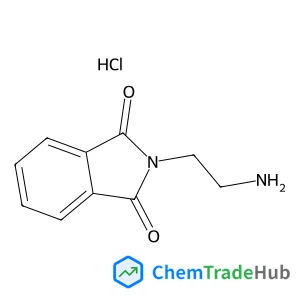
2-(2-Aminoethyl)-1H-isoindole-1,3(2H)-dione hydrochloride (1:1)
CAS Number:
30250-67-0
Molecular Formula:
C10H11ClN2O2
![Ethyl 3-((6-(4,5-dihydro-1H-benzo[d]azepin-3(2H)-yl)-2-(pyridin-2-yl)pyrimidin-4-yl)amino)propanoate structure](https://static.chemtradehub.com/structs/137/1373423-53-0-496a.webp "Ethyl 3-((6-(4,5-dihydro-1H-benzo[d]azepin-3(2H)-yl)-2-(pyridin-2-yl)pyrimidin-4-yl)amino)propanoate structure")
Ethyl 3-((6-(4,5-dihydro-1H-benzo[d]azepin-3(2H)-yl)-2-(pyridin-2-yl)pyrimidin-4-yl)amino)propanoate
CAS Number:
1373423-53-0
Molecular Formula:
C24H27N5O2
Recommended Suppliers






Disclaimer
This page provides academic journal information for reference and research purposes only. We are not affiliated with any journal publishers and do not handle publication submissions. For publication-related inquiries, please contact the respective journal publishers directly.
If you notice any inaccuracies in the information displayed, please contact us at support@chemtradehub.com. We will promptly review and address your concerns.