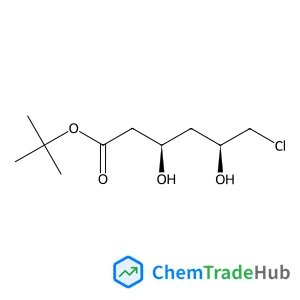
2-Methyl-2-propanyl (3R,5S)-6-chloro-3,5-dihydroxyhexanoate
CAS Number:
154026-93-4
Molecular Formula:
C10H19ClO4
Sieghard Albert, Irina Bolotova, Ziqiu Chen, Csaba Fábri, Hans Hollenstein, Martin Quack
We report a comparison of the analysis of the low energy spectrum of 13CHF3 and 12CHF3 from the THz (FIR) range to the ν1 fundamental at high resolution (δ < 0.001 cm−1 or otherwise Doppler limited) on the basis of FTIR spectra taken both with ordinary light sources and with the synchrotron radiation from the Swiss Light Source. Several vibrational levels are accurately determined including, in particular, the 2ν4 CH-bending overtone and the ν1 CH-stretching fundamental of 13CHF3. Comparison of experimental results with those from accurate full dimensional vibrational calculations allows for a study of the time-dependent quantum dynamics of intramolecular vibrational redistribution (IVR) in the CH chromophore both on short time scales (fs) and longer time scales (ps) when coupling to the lower frequency modes becomes important and where the 12C/13C isotope effects are very large.

Critical Reviews in Solid State and Materials Sciences

Herald of the Russian Academy of Sciences

Journal of Asian Natural Products Research

Journal of the Indian Institute of Science

Colloid Journal

Bioorganic & Medicinal Chemistry

Biocatalysis and Biotransformation

Cellulose

Main Group Chemistry

Topics in Catalysis
Xurong Xu, Joong Tark Han, Kilwon Cho
DOI: 10.1039/B300581J
Stefano Sforza, Tullia Tedeschi, Roberto Corradini, Arnaldo Dossena, Rosangela Marchelli
DOI: 10.1039/B212718K
Jiang Shen, Wei Shan, Yahong Zhang, Junming Du, Hualong Xu, Kangnian Fan, Wei Shen, Yi Tang
DOI: 10.1039/B412986E
Masaaki Suzuki, Ryuichiro Taniguchi
DOI: 10.1039/B410011E
Dong Joon Choo, Woo Ho Shim, Dong Hoon Lee, Eun Joo Roh, Sang-gi Lee, Choong Eui Song
DOI: 10.1039/B301490H
Paula Alvarez-Bercedo, Andrew D. Bond, Robert Haigh, Alexander D. Hopkins, Gavin T. Lawson, Mary McPartlin, David Moncrieff, Marta E. Gonzalez Mosquera, Jeremy M. Rawson, Anthony D. Woods, Dominic S. Wright
DOI: 10.1039/B300522D
Elizabeth A. Whitsitt, Andrew R. Barron
DOI: 10.1039/B212808J
Muhammad Nawaz Tahir, Patrick Théato, Werner E. G. Müller, Heinz C. Schröder, Andreas Janshoff, Jian Zhang, Joachim Huth, Wolfgang Tremel
DOI: 10.1039/B410283E
Alan Armstrong, James N. Scutt
DOI: 10.1039/B316142K
(1R,3S)-1,3-Cyclopentanediol finds applications in various industries. In the ph...
When handling N'-[4-(Dimethylamino)phenyl]-N,N-dimethyl-1,4-benzenediamine, it i...
There are several alternatives to 5-(2,4-Difluorophenyl)-2-methoxypyrimidine in ...
1-(3-Methoxyphenoxy)propan-2-ol (CAS: 382141-68-6) must comply with the Globally...
Tetrodotoxin Citrate is extremely dangerous and should be handled with extreme c...
2-Methyl-2-propanyl [(1R,3S)-3-hydroxycyclopentyl]carbamate (CAS: 225641-84-9) i...
Waste containing 4-(2-Hydroxyhexafluoroisopropyl)Benzoic Acid (CAS: 16261-80-6) ...
2-Methyl-2-proanyl {(2S)-1-[(benzyloxy)amino]-3-hydroxy-3-methyl-1-oxo-2-butanyl...
Benzeneethanamine, α-ethyl-, hydrochloride (1:1) is an organic compound with the...
In the synthesis of compounds similar to 3-{(E)-[4-(Dimethylamino)phenyl]diazeny...

Physical Chemistry Chemical Physics (PCCP) is an international journal co-owned by 19 physical chemistry and physics societies from around the world. This journal publishes original, cutting-edge research in physical chemistry, chemical physics and biophysical chemistry. To be suitable for publication in PCCP, articles must include significant innovation and/or insight into physical chemistry; this is the most important criterion that reviewers and Editors will judge against when evaluating submissions. The journal has a broad scope and welcomes contributions spanning experiment, theory, computation and data science. Topical coverage includes spectroscopy, dynamics, kinetics, statistical mechanics, thermodynamics, electrochemistry, catalysis, surface science, quantum mechanics, quantum computing and machine learning. Interdisciplinary research areas such as polymers and soft matter, materials, nanoscience, energy, surfaces/interfaces, and biophysical chemistry are welcomed if they demonstrate significant innovation and/or insight into physical chemistry. Joined experimental/theoretical studies are particularly appreciated when complementary and based on up-to-date approaches.