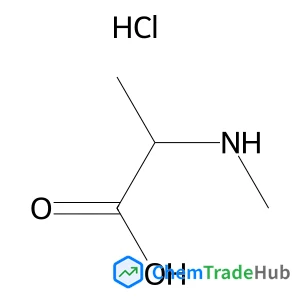
(R)-2-(Methylamino)propanoic acid hydrochloride
CAS Number:
1155878-14-0
Molecular Formula:
C4H10ClNO2
Devin G. Barrett, Wei Luo, Muhammad N. Yousaf
Soft polyester elastomers have emerged as a promising family of biodegradable materials for drug delivery and tissue engineering. Specifically referring to soft tissue engineering, potential biomaterials should be elastic and flexible, so as to mimic the mechanical properties of natural tissue. Herein, we report the design of several elastomers based on the polycondensation of erythritol, a sugar substitute that is approved for human consumption by the Food and Drug Administration, and one of eight dicarboxylic acids: glutaric, adipic, pimelic, suberic, azelaic, sebacic, dodecanedioic, and tetradecanedioic acids. By varying the length of the diacid and the curing conditions, several elastomers were designed with a range of physical and mechanical properties. Poly(erythritol glutarate), poly(erythritol adipate), poly(erythritol pimelate), poly(erythritol suberate), poly(erythritol azelate), poly(erythritol sebacate) poly(erythritol dodecanedioate), and poly(erythritol tetradecanedioate) achieved Young's modulus, ultimate tensile stress, and rupture strain values of 0.08–80.37 MPa, 0.14–16.65 MPa, and 22–466%, respectively. Additionally, as tissue engineering may require the use of complex 3-dimensional designs, embossed films and porous films were designed in order to demonstrate the ease of processing. Hydrolytic degradation rates ranging from 100% in 3 weeks to 6.4% in 6 weeks were obtained in phosphate-buffered saline solutions at 37 °C. Finally, in vitro cytotoxicity was studied with Swiss albino 3T3 fibroblasts and human mesenchymal stem cells. Based on these results, we believe that the poly(erythritol dicarboxylate) series are excellent candidates for potential soft biomaterials.
Jianna Bao, Huabo Fan, Xiaojia Xue, Qing Xie, Pengju Pan
DOI: 10.1039/C8CP05066J
Takuya Uto, Satoshi Idenoue, Kazuya Yamamoto, Jun-ichi Kadokawa
DOI: 10.1039/C8CP02749H
Shenli Zhang, Yihan Huang, Gulcin Tetiker, Saravanapriyan Sriraman, Alex Paterson, Roland Faller
DOI: 10.1039/C9CP00125E
Maaike Rump, Shantanu Maheshwari, Lei Bao
DOI: 10.1039/C8CP02353K
Andres Rojano Crisson, Enrique Wagemann, Harvey A. Zambrano
DOI: 10.1039/C8CP03186J
Ranganathan Krishnan, Shiuan-Yau Wu, Hsin-Tsung Chen
DOI: 10.1039/C8CP04745F
Mauro Boero, Kazuki Tamai
DOI: 10.1039/C8CP04314K
Darren M. Driscoll, Diego Troya, Pavel M. Usov, Andrew J. Maynes, Amanda J. Morris, John R. Morris
DOI: 10.1039/C8CP07778A
6-(3-Fluorophenyl)picolinic acid is generally considered safe for laboratory use...
(3R)-3-Pyrrolidinol is used in the pharmaceutical industry as a precursor for dr...
When handling (4R,5R)-4,5-Diethoxycarbonyl-2,2-dimethyldioxolane (CAS: 59779-75-...
1-(6-Chloroimidazo[1,2-b]pyridazin-3-yl)ethanone is often synthesized via a mult...
The market for N-Ethyl-3,4-dimethylbenzylamine (CAS: 39180-83-1) remains steady,...
Tert-butyl 3-(pyrrolidin-1-yl)azetidine-1-carboxylate is a chemical compound wit...
1-Bromo-3-chloro-2,4-dimethoxybenzene (CAS: 1228956-93-1) falls under the classi...
The safety of 8-Bromo-2-methyl-3,4-dihydroisoquinolin-1(2H)-one (CAS: 1368622-07...
Benzyl [(3S)-2,6-dioxo-3-piperidinyl]carbamate is generally safe when handled wi...
1-{[4-(4,4,5,5-Tetramethyl-1,3,2-dioxaborolan-2-yl)phenyl]sulfonyl}pyrrolidine s...

Polymer Chemistry welcomes submissions in all areas of polymer science that have a strong focus on macromolecular chemistry. Manuscripts may cover a broad range of fields, yet no direct application focus is required.
![4-[(2,4-Dihydroxyphenyl)diazenyl]-5-hydroxy-2,7-naphthalenedisulfonic acid structure](https://static.chemtradehub.com/structs/362/3627-01-8-79ac.webp "4-[(2,4-Dihydroxyphenyl)diazenyl]-5-hydroxy-2,7-naphthalenedisulfonic acid structure")
![2-[({[(2-Methyl-2-propanyl)oxy]carbonyl}amino)methyl]isonicotinic acid structure](https://static.chemtradehub.com/structs/473/473924-63-9-973b.webp "2-[({[(2-Methyl-2-propanyl)oxy]carbonyl}amino)methyl]isonicotinic acid structure")