


Photoexcitation dynamics of p-nitroaniline and N,N-dimethyl-p-nitroaniline in 1-alkyl-3-methylimidazolium-cation based ionic liquids with different alkyl-chain lengths
Literature Information
Publication Date
2017-08-10
DOI
10.1039/C7CP03610H
Impact Factor
3.676
Authors
Y. Kimura, S. Ibaraki, R. Hirano, Y. Sugita, Y. Yasaka, M. Ueno
View Original
Abstract
Photoexcitation dynamics of p-nitroaniline (pNA) and N,N-dimethyl-p-nitroaniline (DMpNA) in 1-alkyl-3-methylimidazolium bis(trifluoromethanesulfonyl)imide ([Cnmim][NTf2]) with different alkyl chain lengths (from C2 to C12) was investigated using transient absorption spectroscopy. The internal conversion rate from the excited state to the ground state was estimated from bleach recovery around the ground state absorption centre, and the successive vibrational cooling rate in the ground state was estimated from the decay of the hot band observed at the red-edge of ground state absorption. The internal conversion rate slightly decreased with an increase in the alkyl-chain length of the cation, while the dependence of DMpNA was more significant than that of pNA. The extent of change was correlated with the change of the reaction free energy and solvent reorganization energy estimated from the absorption spectrum assuming that the internal conversion process is modelled by a back-electron-transfer process. The vibrational cooling rate estimated from the decay of hot-band absorption slightly decreased with an increase in the alkyl-chain length of the cation for both solutes. The hot-band decay of pNA was about 1.5-times faster than that of DMpNA, irrespective of the alkyl-chain length.
Recommended Journals

Journal of Catalysis

Journal of Medicinal Chemistry

Nature

Journal of Physics and Chemistry of Solids

Proceedings of the National Academy of Sciences of the United States of America

Journal of Organometallic Chemistry

Journal of Heterocyclic Chemistry

Russian Chemical Reviews

Fibre Chemistry

Pure and Applied Chemistry
Related Literature
Platinum(ii)-catalyzed dehydrative C3-benzylation of electron-deficient indoles with benzyl alcohols
Hidemasa Hikawa, Yuuki Matsuura, Shoko Kikkawa, Isao Azumaya
2019-07-17
Research Article
DOI: 10.1039/C9QO00831D
Carbonylative transformation of benzyl formates into alkyl 2-arylacetates in organic carbonates
Xinxin Qi, Ming Lai
2019-08-15
Research Article
DOI: 10.1039/C9QO00917E
Clavipines A–C, antiproliferative meroterpenoids with a fused azepine skeleton from the basidiomycete Clitocybe clavipes
Zhaocui Sun, Nailiang Zhu, Man Zhou, Xiaowei Huo, Haifeng Wu, Yu Tian, Junshan Yang, Guoxu Ma, Yan-Long Yang, Xudong Xu
2019-09-30
Research Article
DOI: 10.1039/C9QO01005J
Efficient construction of pyrrolo[1′,2′:1,2]azocino[4,5-c]quinolines via cascade cycloaddition and annulation reaction
Wen-Tao Wu, Ying Han, Jing Sun, Chao-Guo Yan
2019-09-04
Research Article
DOI: 10.1039/C9QO00891H
Rh-Catalyzed C–C/C–N bond formation via C–H activation: synthesis of 2H-indazol-2-yl-benzo[a]carbazoles
Sundaravel Vivek Kumar, Sonbidya Banerjee, Tharmalingam Punniyamurthy
2019-10-14
Research Article
DOI: 10.1039/C9QO01120J
Cobalt-catalyzed condensation of sulfonyl azides with o-diisocyanoarenes and anilines: a new approach to N-sulfonyl guanidines
Jin-Ming Yang, Rong Zhang, Shun-Yi Wang, Shun-Jun Ji
2019-08-20
Research Article
DOI: 10.1039/C9QO00815B
C(sp3)–H hydroxylation of fluorenes, oxindoles and benzofuranones with a Mg(NO3)2–HP(O)Ph2 oxidation system
Chen Hu, Gang Hong, Pradip D. Nahide, Yuchen He, Chen Zhou, Marisa C. Kozlowski, Limin Wang
2019-07-19
Research Article
DOI: 10.1039/C9QO00778D
Synthesis of silacyclopent-2-en-4-ols via intramolecular [2 + 2] photocycloaddition of benzoyl(allyl)silanes
Arto Valkonen, Carlos A. M. Afonso, Nuno R. Candeias
2019-10-12
Research Article
DOI: 10.1039/C9QO01028A
You might also like
Compound Q&A
Is 6-(3-Fluorophenyl)picolinic acid (CAS: 887982-40-3) safe?
6-(3-Fluorophenyl)picolinic acid is generally considered safe for laboratory use...
887982-40-36-(3-Fluorophenyl)pi...
Compound Q&A
What industries use (3R)-3-Pyrrolidinol (CAS: 2799-21-5)?
(3R)-3-Pyrrolidinol is used in the pharmaceutical industry as a precursor for dr...
2799-21-5(3R)-3-Pyrrolidinol
Compound Q&A
What precautions should be taken when handling (4R,5R)-4,5-Diethoxycarbonyl-2,2-dimethyldioxolane (CAS: 59779-75-8)?
When handling (4R,5R)-4,5-Diethoxycarbonyl-2,2-dimethyldioxolane (CAS: 59779-75-...
59779-75-8(4R,5R)-4,5-Diethoxy...
Compound Q&A
How is 1-(6-Chloroimidazo[1,2-b]pyridazin-3-yl)ethanone (CAS: 90734-71-7) typically synthesized?
1-(6-Chloroimidazo[1,2-b]pyridazin-3-yl)ethanone is often synthesized via a mult...
90734-71-71-(6-Chloroimidazo[1...
Compound Q&A
What is the market or research trend for N-Ethyl-3,4-dimethylbenzylamine (CAS: 39180-83-1)?
The market for N-Ethyl-3,4-dimethylbenzylamine (CAS: 39180-83-1) remains steady,...
39180-83-1N-Ethyl-3,4-dimethyl...
Compound Q&A
What is Tert-butyl 3-(pyrrolidin-1-yl)azetidine-1-carboxylate (CAS: 1019008-21-9)?
Tert-butyl 3-(pyrrolidin-1-yl)azetidine-1-carboxylate is a chemical compound wit...
1019008-21-9Tert-butyl 3-(pyrrol...
Compound Q&A
What regulatory guidelines apply to 1-Bromo-3-chloro-2,4-dimethoxybenzene (CAS: 1228956-93-1)?
1-Bromo-3-chloro-2,4-dimethoxybenzene (CAS: 1228956-93-1) falls under the classi...
1228956-93-11-Bromo-3-chloro-2,4...
Compound Q&A
Is 8-Bromo-2-methyl-3,4-dihydroisoquinolin-1(2H)-one (CAS: 1368622-07-4) safe?
The safety of 8-Bromo-2-methyl-3,4-dihydroisoquinolin-1(2H)-one (CAS: 1368622-07...
1368622-07-48-Bromo-2-methyl-3,4...
Compound Q&A
Is Benzyl [(3S)-2,6-dioxo-3-piperidinyl]carbamate (CAS: 22785-43-9) safe?
Benzyl [(3S)-2,6-dioxo-3-piperidinyl]carbamate is generally safe when handled wi...
22785-43-9Benzyl [(3S)-2,6-dio...
Compound Q&A
How should 1-{[4-(4,4,5,5-Tetramethyl-1,3,2-dioxaborolan-2-yl)phenyl]sulfonyl}pyrrolidine (CAS: 928657-21-0) be stored?
1-{[4-(4,4,5,5-Tetramethyl-1,3,2-dioxaborolan-2-yl)phenyl]sulfonyl}pyrrolidine s...
928657-21-01-{[4-(4,4,5,5-Tetra...
Source Journal
Physical Chemistry Chemical Physics

CiteScore:
5.5
Self-citation Rate:
10.3%
Articles per Year:
3036
Physical Chemistry Chemical Physics (PCCP) is an international journal co-owned by 19 physical chemistry and physics societies from around the world. This journal publishes original, cutting-edge research in physical chemistry, chemical physics and biophysical chemistry. To be suitable for publication in PCCP, articles must include significant innovation and/or insight into physical chemistry; this is the most important criterion that reviewers and Editors will judge against when evaluating submissions. The journal has a broad scope and welcomes contributions spanning experiment, theory, computation and data science. Topical coverage includes spectroscopy, dynamics, kinetics, statistical mechanics, thermodynamics, electrochemistry, catalysis, surface science, quantum mechanics, quantum computing and machine learning. Interdisciplinary research areas such as polymers and soft matter, materials, nanoscience, energy, surfaces/interfaces, and biophysical chemistry are welcomed if they demonstrate significant innovation and/or insight into physical chemistry. Joined experimental/theoretical studies are particularly appreciated when complementary and based on up-to-date approaches.
Recommended Compounds
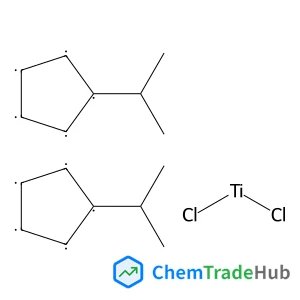
BIS(I-PROPYLCYCLOPENTADIENYL)TITANIUM DICHLORIDE
CAS Number:
12130-65-3
Molecular Formula:
C16H22Cl2Ti
![5-Bromo-3-isopropyl-1H-pyrrolo[2,3-b]pyridine structure](https://static.chemtradehub.com/structs/125/1256819-54-1-8620.webp "5-Bromo-3-isopropyl-1H-pyrrolo[2,3-b]pyridine structure")
Recommended Suppliers





Disclaimer
This page provides academic journal information for reference and research purposes only. We are not affiliated with any journal publishers and do not handle publication submissions. For publication-related inquiries, please contact the respective journal publishers directly.
If you notice any inaccuracies in the information displayed, please contact us at support@chemtradehub.com. We will promptly review and address your concerns.