












Self-assembly and functionalization of alternating copolymer vesicles
Literature Information
Publication Date
2017-07-10
DOI
10.1039/C7PY00908A
Impact Factor
5.582
Authors
Chuanlong Li, Chuanshuang Chen, Shanlong Li, Tahir Rasheed, Ping Huang, Tong Huang, Yinglin Zhang, Wei Huang, Yongfeng Zhou
View Original
Abstract
This work reports on the preparation and functionalization of novel alternating copolymer vesicles. An amphiphilic alternating copolymer was synthesized first by the epoxy-thiol click reaction of 1,7-octadienediepoxide and 1,4-dithiothreitol. Then its self-assembly in selective solvents was studied through a simple injection method. The size and morphology of the self-assemblies were investigated by dynamic light scattering (DLS) and transmission electron microscope (TEM), scanning electron microscope (SEM), atomic force microscope (AFM) and cryogenic transmission electron microscope (cryo-TEM) measurements. The results showed that the abovementioned alternating copolymers could self-assemble into vesicles with a monolayer structure. Then a modular click reaction was employed to functionalize the obtained vesicles. Two kinds of functional groups, including the carboxyl group and the amino group, were successively introduced into the vesicles through the facile click-copolymerization of the alternating copolymers, indicating that the modular click reaction is quite potent in functionalizing these vesicles. The combined advantages of facile synthesis, self-assembly and functionalization offer a promising perspective for the application of such alternating copolymer vesicles.
Recommended Journals
Related Literature
Electrogenerated chemiluminescence resonance energy transfer between luminol and MnO2 nanosheets decorated with Cu2O nanoparticles for sensitive detection of RNase H
Yahao Shi, Chunting Chen, Yahui Zhang, Yongping Dong, Shangbing Wang
2023-02-11
Paper
DOI: 10.1039/D3AN00002H
Cucurbituril-protected dual-readout gold nanoclusters for sensitive fentanyl detection
Kun Yan, Lancheng Wang, Zhihang Zhu, Shiqi Duan, Zhendong Hua, Peng Xu, Hui Xu, Chi Hu, Youmei Wang, Bin Di
2023-01-31
Paper
DOI: 10.1039/D2AN01748B
Online protein digestion in membranes between capillary electrophoresis and mass spectrometry
Kendall A. Ryan
2023-03-08
Paper
DOI: 10.1039/D3AN00106G
A carbon dot-based nanoscale covalent organic framework as a new emitter combined with a CRISPR/Cas12a-mediated electrochemiluminescence biosensor for ultrasensitive detection of bisphenol A
Rongxian Ma, Jiaxuan Jiang, Yanfei Ya, Yu Lin, Yuyi Zhou, Yeyu Wu, Xuecai Tan, KeJing Huang, Fangkai Du, Jingjuan Xu
2023-02-02
Paper
DOI: 10.1039/D3AN00024A
Solvent-regulated fluorescence off–on signaling of Ni(ii) and Zn(ii) with the formation of two mononuclear complexes with an ATP detection ability by Zn(ii) assembly
Subham Ray, Soumik Laha, Manik Das, Uttam Kumar Das, Arijit Bag, Indranil Choudhuri, Nandan Bhattacharya, Bidhan Chandra Samanta, Tithi Maity
2022-12-20
Paper
DOI: 10.1039/D2AN01938H
A dual-mode system based on molybdophosphoric heteropoly acid and fluorescent microspheres for the reliable and ultrasensitive detection of alkaline phosphatase
Qiannan Li, Yufei Wang, Qianqian Zhu, Haifang Liu, Jianbo Liu, Hong-Min Meng, Zhaohui Li
2023-02-03
Paper
DOI: 10.1039/D2AN02052A
A critical evaluation of compressed line-scan Raman imaging
Yajun Yu, Yichuan Dai, Xianli Wang, Kaiqin Chu, Zachary J. Smith
2023-05-08
Paper
DOI: 10.1039/D3AN00228D
Self-supervised learning for inter-laboratory variation minimization in surface-enhanced Raman scattering spectroscopy
Seongyong Park, Abdul Wahab
2023-02-10
Paper
DOI: 10.1039/D2AN01569B
Characterization of freeze-dried oxidized human red blood cells for pre-transfusion testing by synchrotron FTIR microspectroscopy live-cell analysis
Diana Alves, Jitraporn Vongsvivut, Rosemary L. Sparrow, Bayden R. Wood, Gil Garnier
2023-03-07
Paper
DOI: 10.1039/D2AN02001G
Rapid determination of serum amyloid A using an upconversion luminescent lateral flow immunochromatographic strip
Xinwen Sun, Xiaoru Dai, Shisheng Ling, Wenkun Dong, Dong Chen, Mengting Li, Xvsheng Qiao, Zhiyu Wang, Xianping Fan, Guodong Qian
2023-05-13
Paper
DOI: 10.1039/D3AN00482A
You might also like
Compound Q&A
What are the main uses of 4-Nitrophenyl phosphate disodium salt hexahydrate (CAS: 333338-18-4)?
4-Nitrophenyl phosphate disodium salt hexahydrate is primarily used as a substra...
333338-18-44-Nitrophenyl phosph...
Compound Q&A
What are the main uses of 2-(Trifluoromethyl)-1,3-oxazole-4-carboxylic Acid (CAS: 1060816-01-4)?
2-(Trifluoromethyl)-1,3-oxazole-4-carboxylic Acid (CAS: 1060816-01-4) is widely ...
1060816-01-42-(Trifluoromethyl)-...
Compound Q&A
How should 2-Fluoro-4-biphenylcarboxylic acid (CAS: 137045-30-8) be stored?
2-Fluoro-4-biphenylcarboxylic acid should be stored in a cool, dry place at room...
137045-30-82-Fluoro-4-biphenylc...
Compound Q&A
What industries use Prednisolone-21-Carboxylic Acid (CAS: 61549-70-0)?
Prednisolone-21-Carboxylic Acid is primarily used in the pharmaceutical industry...
61549-70-0Prednisolone-21-Carb...
Compound Q&A
How should 4-(Hydrazinomethyl)-1,2,3-benzenetriol (CAS: 3614-72-0) be stored?
4-(Hydrazinomethyl)-1,2,3-benzenetriol (CAS: 3614-72-0) should be stored in a co...
3614-72-04-(Hydrazinomethyl)-...
Compound Q&A
What industries use 4-Amino-1-methyl-1H-pyrazole-5-carboxylic acid hydrochloride (CAS: 92534-70-8)?
4-Amino-1-methyl-1H-pyrazole-5-carboxylic acid hydrochloride (CAS: 92534-70-8) i...
92534-70-84-Amino-1-methyl-1H-...
Compound Q&A
What regulatory guidelines apply to dehydropachymic acid (CAS: 77012-31-8)?
Dehydropachymic acid (CAS: 77012-31-8) is regulated by various agencies. It fall...
77012-31-8Dehydropachymic acid
Compound Q&A
What is the market or research trend for 6-[(2,2-Dimethylpropanoyl)amino]nicotinic acid (CAS: 898561-66-5)?
The market and research trends for 6-[(2,2-Dimethylpropanoyl)amino]nicotinic aci...
898561-66-56-[(2,2-Dimethylprop...
Compound Q&A
How should 1,10-Phenanthroline-2,9-dicarbaldehyde (CAS: 57709-62-3) be stored?
1,10-Phenanthroline-2,9-dicarbaldehyde should be stored in a cool, dry place awa...
57709-62-31,10-Phenanthroline-...
Compound Q&A
How is 5-Carbamoyl-11-oxo-10,11-dihydro-5H-dibenzo[b,f]azepin-10-yl acetate (CAS: 113952-21-9) typically synthesized?
5-Carbamoyl-11-oxo-10,11-dihydro-5H-dibenzo[b,f]azepin-10-yl acetate can be synt...
113952-21-95-Carbamoyl-11-oxo-1...
Source Journal
Polymer Chemistry

CiteScore:
8.6
Self-citation Rate:
7.3%
Articles per Year:
457
Polymer Chemistry welcomes submissions in all areas of polymer science that have a strong focus on macromolecular chemistry. Manuscripts may cover a broad range of fields, yet no direct application focus is required.
Recommended Compounds
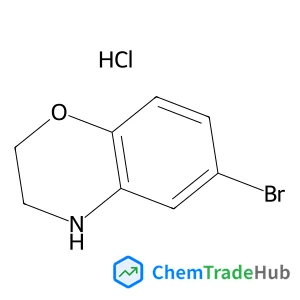
6-Bromo-3,4-dihydro-2H-1,4-benzoxazine hydrochloride (1:1)
CAS Number:
1260803-10-8
Molecular Formula:
C8H9BrClNO
![[(1S,2S,3R,4S,7R,9S,10S,12R,15S)-4,12-Diacetyloxy-15-[(2R,3S)-3-benzamido-3-phenyl-2-(2,2,2-trichloroethoxycarbonyloxy)propanoyl]oxy-1,9-dihydroxy-10,14,17,17-tetramethyl-11-oxo-6-oxatetracyclo[11.3.1.03,10.04,7]heptadec-13-en-2-yl] benzoate structure](https://static.chemtradehub.com/structs/100/100431-55-8-7104.webp "[(1S,2S,3R,4S,7R,9S,10S,12R,15S)-4,12-Diacetyloxy-15-[(2R,3S)-3-benzamido-3-phenyl-2-(2,2,2-trichloroethoxycarbonyloxy)propanoyl]oxy-1,9-dihydroxy-10,14,17,17-tetramethyl-11-oxo-6-oxatetracyclo[11.3.1.03,10.04,7]heptadec-13-en-2-yl] benzoate structure")


Recommended Suppliers






Disclaimer
This page provides academic journal information for reference and research purposes only. We are not affiliated with any journal publishers and do not handle publication submissions. For publication-related inquiries, please contact the respective journal publishers directly.
If you notice any inaccuracies in the information displayed, please contact us at support@chemtradehub.com. We will promptly review and address your concerns.