


Photoresponsive liquid crystalline polymer single-chain nanoparticles
Literature Information
Publication Date
2017-05-09
DOI
10.1039/C7PY00668C
Impact Factor
5.582
Authors
Weizheng Fan, Xia Tong, Guo Li, Yue Zhao
View Original
Abstract
A new type of multifunctional polymer single-chain nanoparticle (SCNP) is reported, which is prepared from a side-chain liquid crystalline polymer (LCP), namely, poly{6-[4-(4-methoxyphenylazo)phenoxy]hexylmethacrylate-co-4-methyl-[7-(methacryloyl)oxy-ethyl-oxy]coumarin} (PAzoMACMA). The polymer's side groups comprise photoisomerizable azobenzene in majority and photodimerizable coumarins in minority, with the former as mesogens and the latter for intra-chain photocrosslinking. Despite the sub-15 nm size, confinement and crosslinking, the liquid crystalline (LC) phases of bulk PAzoMACMA persist in SCLCPs. Such LC-SCNPs exhibit a number of interesting and peculiar properties. While their dispersion in THF is non-fluorescent, when dispersed in chloroform, the nanoparticles appear to agglomerate to a certain degree and display significant fluorescence that is different for SCNPs rich in the trans or cis isomer of azobenzene. The azobenzene LC-SCNPs also undergo photoinduced deformation, similar to azobenzene micro- or colloidal particles. However, the elongational deformation of the nanoparticles is dependent on the linearly polarized excitation wavelength. While under polarized 365 nm UV irradiation the SCNP stretching direction is perpendicular to the light polarization, under polarized 400–500 nm visible light irradiation, the stretching takes place along the light polarization direction. Finally, an all-polymer nanocomposite was prepared by dispersing the LC-SCNPs in poly(methyl methacrylate) (PMMA), and mechanically stretching-induced orientation of azobenzene mesogens developed along the chain direction. The interesting properties of LC-SCNPs unveiled in this study suggest new possibilities for applications.
Recommended Journals

Faraday Discussions

Nature Reviews Drug Discovery

Photochemical & Photobiological Sciences

Physical Chemistry Chemical Physics

Journal of Medical Biochemistry

Environmental Toxicology and Pharmacology

Contact Lens & Anterior Eye

Mini-Reviews in Medicinal Chemistry

Molecules

European Journal of Organic Chemistry
Related Literature
Single-cell infrared vibrational analysis by optical trapping mid-infrared photothermal microscopy
2023-02-17
Paper
DOI: 10.1039/D2AN01917E
A dichromatic plasmonic ELISA CD81 protein sensor for ultrasensitive detection of preeclampsia
Kexuan Chen, Nan Ma, Haobo Sun, Xueji Zhang, Jinming Kong
2023-02-21
Paper
DOI: 10.1039/D3AN00213F
The facile activation of graphite for the improved determination of dopamine, rutin and acetamidophenol
Yanxue Xu, Guihua Chen, Yunting Qin
2023-02-02
Paper
DOI: 10.1039/D2AN02074B
A molecularly imprinted electrochemical sensor for specific and ultrasensitive determination of an aminoglycoside drug: the role of copper ions in the determination
Alanazi A. Z., Khalid Alhazzani, Ali M. Alaseem, Abdullah R. Alanzi, Ahmad J. Obaidullah, Mohamed M. El-Wekil
2023-04-08
Paper
DOI: 10.1039/D3AN00251A
Development of a gold nanoparticle-based lateral-flow strip for the detection of cannabidiol in functional beverages
Shuai Lv, Xinxin Xu, Lingling Guo, Liguang Xu, Liqiang Liu, Chuanlai Xu
2023-02-21
Paper
DOI: 10.1039/D3AN00084B
Molecular simulation-guided aptasensor design of robust and sensitive lateral flow strip for cadmium ion detection
Muhammad Irfan, Ghulam Murtaza, Shangnan Fu, Ailiang Chen, Feng Qu, Xin Su
2023-03-20
Paper
DOI: 10.1039/D3AN00202K
Droplet microfluidics for CTC-based liquid biopsy: a review
Lin Jiang, Hang Yang, Weiqi Cheng, Zhonghua Ni, Nan Xiang
2022-11-25
Critical Review
DOI: 10.1039/D2AN01747D
Solvent effects of N,N-dimethylformamide and methanol on mass spectrometry imaging by tapping-mode scanning probe electrospray ionization
Nijiho Ote, Mengze Sun, Shuichi Shimma, Osamu Urakawa, Shinichi Yamaguchi, Tomoya Kudo
2023-02-20
Paper
DOI: 10.1039/D2AN01953A
You might also like
Compound Q&A
What are the main uses of 4-Nitrophenyl phosphate disodium salt hexahydrate (CAS: 333338-18-4)?
4-Nitrophenyl phosphate disodium salt hexahydrate is primarily used as a substra...
333338-18-44-Nitrophenyl phosph...
Compound Q&A
What are the main uses of 2-(Trifluoromethyl)-1,3-oxazole-4-carboxylic Acid (CAS: 1060816-01-4)?
2-(Trifluoromethyl)-1,3-oxazole-4-carboxylic Acid (CAS: 1060816-01-4) is widely ...
1060816-01-42-(Trifluoromethyl)-...
Compound Q&A
How should 2-Fluoro-4-biphenylcarboxylic acid (CAS: 137045-30-8) be stored?
2-Fluoro-4-biphenylcarboxylic acid should be stored in a cool, dry place at room...
137045-30-82-Fluoro-4-biphenylc...
Compound Q&A
What industries use Prednisolone-21-Carboxylic Acid (CAS: 61549-70-0)?
Prednisolone-21-Carboxylic Acid is primarily used in the pharmaceutical industry...
61549-70-0Prednisolone-21-Carb...
Compound Q&A
How should 4-(Hydrazinomethyl)-1,2,3-benzenetriol (CAS: 3614-72-0) be stored?
4-(Hydrazinomethyl)-1,2,3-benzenetriol (CAS: 3614-72-0) should be stored in a co...
3614-72-04-(Hydrazinomethyl)-...
Compound Q&A
What industries use 4-Amino-1-methyl-1H-pyrazole-5-carboxylic acid hydrochloride (CAS: 92534-70-8)?
4-Amino-1-methyl-1H-pyrazole-5-carboxylic acid hydrochloride (CAS: 92534-70-8) i...
92534-70-84-Amino-1-methyl-1H-...
Compound Q&A
What regulatory guidelines apply to dehydropachymic acid (CAS: 77012-31-8)?
Dehydropachymic acid (CAS: 77012-31-8) is regulated by various agencies. It fall...
77012-31-8Dehydropachymic acid
Compound Q&A
What is the market or research trend for 6-[(2,2-Dimethylpropanoyl)amino]nicotinic acid (CAS: 898561-66-5)?
The market and research trends for 6-[(2,2-Dimethylpropanoyl)amino]nicotinic aci...
898561-66-56-[(2,2-Dimethylprop...
Compound Q&A
How should 1,10-Phenanthroline-2,9-dicarbaldehyde (CAS: 57709-62-3) be stored?
1,10-Phenanthroline-2,9-dicarbaldehyde should be stored in a cool, dry place awa...
57709-62-31,10-Phenanthroline-...
Compound Q&A
How is 5-Carbamoyl-11-oxo-10,11-dihydro-5H-dibenzo[b,f]azepin-10-yl acetate (CAS: 113952-21-9) typically synthesized?
5-Carbamoyl-11-oxo-10,11-dihydro-5H-dibenzo[b,f]azepin-10-yl acetate can be synt...
113952-21-95-Carbamoyl-11-oxo-1...
Source Journal
Polymer Chemistry

CiteScore:
8.6
Self-citation Rate:
7.3%
Articles per Year:
457
Polymer Chemistry welcomes submissions in all areas of polymer science that have a strong focus on macromolecular chemistry. Manuscripts may cover a broad range of fields, yet no direct application focus is required.
Recommended Compounds
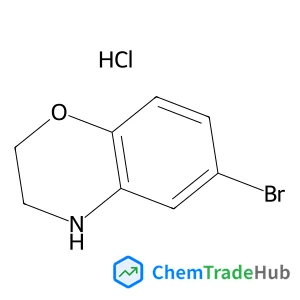
6-Bromo-3,4-dihydro-2H-1,4-benzoxazine hydrochloride (1:1)
CAS Number:
1260803-10-8
Molecular Formula:
C8H9BrClNO
![N-[2-(4-Hydroxyphenoxy)-4-nitrophenyl]methanesulfonamide structure](https://static.chemtradehub.com/structs/109/109032-22-6-7c88.webp "N-[2-(4-Hydroxyphenoxy)-4-nitrophenyl]methanesulfonamide structure")
N-[2-(4-Hydroxyphenoxy)-4-nitrophenyl]methanesulfonamide
CAS Number:
109032-22-6
Molecular Formula:
C13H12N2O6S
Recommended Suppliers






Disclaimer
This page provides academic journal information for reference and research purposes only. We are not affiliated with any journal publishers and do not handle publication submissions. For publication-related inquiries, please contact the respective journal publishers directly.
If you notice any inaccuracies in the information displayed, please contact us at support@chemtradehub.com. We will promptly review and address your concerns.