


Influence of the alkyl side-chain length on the ultrafast vibrational dynamics of 1-alkyl-3-methylimidazolium bis(trifluoromethylsulfonyl)amide (CnmimNTf2) ionic liquids
Literature Information
Publication Date
2017-05-31
DOI
10.1039/C7CP02686B
Impact Factor
3.676
Authors
Mehdi Mohammad Kazemi, Mahesh Namboodiri, Patrice Donfack, Arnulf Materny, Bernd Rathke
View Original
Abstract
Probing the vibrational dynamics of 1-alkyl-3-methylimidazolium bis(trifluoromethylsulfonyl)amide (CnmimNTf2) ionic liquids (ILs) using femtosecond time-resolved coherent anti-Stokes Raman scattering (fs-CARS) has indicated the ultrafast vibrational energy transfer between counter ions which is governed by interionic interactions and facilitated by hydrogen bonds. In this study, fs-CARS is used to investigate the ultrafast dynamics of the vibrational modes of the CnmimNTf2 ILs with n = 6, 8, 10, and 12 in a spectral region, which involves the imidazolium ring and the alkyl side-chain vibrations. The vibrational Raman modes with wavenumbers around 1418 cm−1 are excited through the CARS process and the ultrafast time evolution of the consequently excited vibrational modes is monitored. The investigation of the life times of the fs-CARS transient signals indicates that the time scale of the dynamics becomes much faster when the alkyl side-chain length of the CnmimNTf2 is longer than n = 8. This observation suggests an increase in the hydrogen bonding interactions due to the nano-structuring of the ionic liquids, which became evident with an increasing length of the alkyl side-chain. This behavior is also found in molecular dynamics simulations. There, an increase of the oxygen density around the C(2)–H moiety of the imidazolium ring, which is the predominant site for hydrogen bond formation, is observed. In other words, the longer the alkyl side-chain, the more reorganization of the ionic liquid into polar and non-polar domains occurs and the higher the probability of finding interionic hydrogen bonds at the C(2)–H position becomes.
Recommended Journals

Saudi Pharmaceutical Journal

Russian Journal of Bioorganic Chemistry

Organic Process Research & Development

New Journal of Chemistry

Russian Journal of Coordination Chemistry

Current Opinion in Colloid & Interface Science

Crystallography Reports

Nature Medicine

Journal of Saudi Chemical Society

Current Opinion in Solid State & Materials Science
Related Literature
Retrieval of the complex refractive index of aerosol droplets from optical tweezers measurements
Rachael E. H. Miles, Jim S. Walker, Daniel R. Burnham, Jonathan P. Reid
2012-01-11
Paper
DOI: 10.1039/C2CP23999J
Quantum-dot-encapsulated core–shell barcode particles from droplet microfluidics
Feika Bian, Huan Wang, Lingyu Sun, Yuxiao Liu, Yuanjin Zhao
2018-07-19
Paper
DOI: 10.1039/C8TB00946E
A DFT study of furan hydrogenation and ring opening on Pd(111)
Shengguang Wang, Vassili Vorotnikov, Dionisios G. Vlachos
2013-08-20
Paper
DOI: 10.1039/C3GC41183D
Measuring oxygen surface exchange kinetics on mixed-conducting composites by electrical conductivity relaxation
Bobing Hu, Yunlong Wang, Zhuoying Zhu, Changrong Xia
2015-04-15
Paper
DOI: 10.1039/C5TA00510H
Glyoxylamide-based self-assembly hydrogels for sustained ciprofloxacin delivery
Vina R. Aldilla, Shashidhar Nizalapur, Christopher E. Marjo, Anne M. Rich, Kitty K. K. Ho, David StC. Black
2018-08-28
Paper
DOI: 10.1039/C8TB01290C
Isoreticular zirconium-based metal–organic frameworks: discovering mechanical trends and elastic anomalies controlling chemical structure stability
Matthew R. Ryder, Bartolomeo Civalleri, Jin-Chong Tan
2016-03-04
Paper
DOI: 10.1039/C6CP00864J
Yb(NTf2)3/HFIP induced high isotacticity in atom transfer radical polymerization of methyl methacrylate
Sebastian Schaubach, Xiao-Yan Wang, Jun-Fang Li, Xiu-Li Sun, Sunewang R. Wang, Yong Tang
2018-08-31
Communication
DOI: 10.1039/C8PY00953H
You might also like
Compound Q&A
Are there alternatives to 1-(4-Chlorophenyl)-N-hydroxymethanimine (CAS: 3848-36-0) in synthesis?
When considering alternatives to 1-(4-Chlorophenyl)-N-hydroxymethanimine (CAS: 3...
3848-36-01-(4-Chlorophenyl)-N...
Compound Q&A
How should (1R,9S,10S,12S,14E,16S,19R,20R,21S,22R)-3,9,21-Trihydroxy-5,10,12,14,16,20,22-heptamethyl-23,24-dioxatetracyclo[17.3.1.1~6,9~.0~2,7~]tetracosa-2,5,7,14-tetraen-4-one (CAS: 183202-73-5) be stored?
This compound should be stored in a cool, dry place away from direct sunlight. I...
183202-73-5(1R,9S,10S,12S,14E,1...
Compound Q&A
How is 3-(4-Bromophenyl)-5-(2-fluorophenyl)-1,2,4-oxadiazole (CAS: 419553-16-5) typically synthesized?
3-(4-Bromophenyl)-5-(2-fluorophenyl)-1,2,4-oxadiazole is synthesized through a m...
419553-16-53-(4-Bromophenyl)-5-...
Compound Q&A
How is 5-Chloro-2-(4-chlorophenyl)-4-methyl-6-[3-(1-piperidinyl)propoxy]pyrimidine (CAS: 1639220-19-1) typically synthesized?
5-Chloro-2-(4-chlorophenyl)-4-methyl-6-[3-(1-piperidinyl)propoxy]pyrimidine (CAS...
1639220-19-15-Chloro-2-(4-chloro...
Compound Q&A
What industries use 2-Chloro-4-(difluoromethoxy)pyridine (CAS: 1206978-15-5)?
2-Chloro-4-(difluoromethoxy)pyridine is used in the pharmaceutical industry for ...
1206978-15-52-Chloro-4-(difluoro...
Compound Q&A
What regulatory guidelines apply to 3-Chloro-6-methylpyridazine (CAS: 1121-79-5)?
3-Chloro-6-methylpyridazine (CAS: 1121-79-5) is classified under the Globally Ha...
1121-79-53-Chloro-6-methylpyr...
Compound Q&A
Are there alternatives to Methyl 4,5-dimethyl-2-nitrobenzoate in synthesis?
Several alternatives can be used in the synthesis of Methyl 4,5-dimethyl-2-nitro...
90922-74-0Methyl 4,5-dimethyl-...
Compound Q&A
Are there alternatives to (2E,2'E)-3,3'-(1,4-Phenylene)bisacrylaldehyde in synthesis?
Alternatives to (2E,2'E)-3,3'-(1,4-Phenylene)bisacrylaldehyde include other acry...
63405-68-5(2E,2'E)-3,3'-(1,4-P...
Compound Q&A
What is 3-Amino-5-chloropyridin-2-ol hydrochloride (CAS: 1261906-29-9)?
3-Amino-5-chloropyridin-2-ol hydrochloride is an organic compound with the CAS n...
1261906-29-93-Amino-5-chloropyri...
Compound Q&A
What precautions should be taken when handling 6,7-Difluoro-2,3-dihydro-4H-chromen-4-one (CAS: 1092349-93-3)?
When handling 6,7-Difluoro-2,3-dihydro-4H-chromen-4-one, it is essential to wear...
1092349-93-36,7-Difluoro-2,3-dih...
Source Journal
Physical Chemistry Chemical Physics

CiteScore:
5.5
Self-citation Rate:
10.3%
Articles per Year:
3036
Physical Chemistry Chemical Physics (PCCP) is an international journal co-owned by 19 physical chemistry and physics societies from around the world. This journal publishes original, cutting-edge research in physical chemistry, chemical physics and biophysical chemistry. To be suitable for publication in PCCP, articles must include significant innovation and/or insight into physical chemistry; this is the most important criterion that reviewers and Editors will judge against when evaluating submissions. The journal has a broad scope and welcomes contributions spanning experiment, theory, computation and data science. Topical coverage includes spectroscopy, dynamics, kinetics, statistical mechanics, thermodynamics, electrochemistry, catalysis, surface science, quantum mechanics, quantum computing and machine learning. Interdisciplinary research areas such as polymers and soft matter, materials, nanoscience, energy, surfaces/interfaces, and biophysical chemistry are welcomed if they demonstrate significant innovation and/or insight into physical chemistry. Joined experimental/theoretical studies are particularly appreciated when complementary and based on up-to-date approaches.
Recommended Compounds
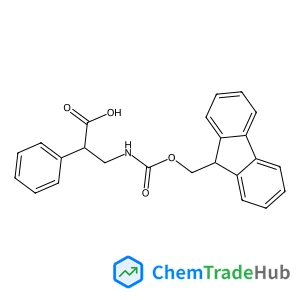
(S)-3-((((9H-Fluoren-9-yl)methoxy)carbonyl)amino)-2-phenylpropanoic acid
CAS Number:
1217663-60-9
Molecular Formula:
C24H21NO4
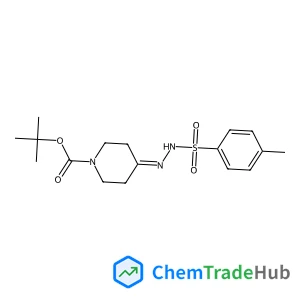
tert-Butyl 4-(2-(p-Tolylsulfonyl)hydrazono)piperidine-1-carboxylate
CAS Number:
1046478-89-0
Molecular Formula:
C17H25N3O4S
Recommended Suppliers







Disclaimer
This page provides academic journal information for reference and research purposes only. We are not affiliated with any journal publishers and do not handle publication submissions. For publication-related inquiries, please contact the respective journal publishers directly.
If you notice any inaccuracies in the information displayed, please contact us at support@chemtradehub.com. We will promptly review and address your concerns.