












Exciton transport in π-conjugated polymers with conjugation defects
Literature Information
Publication Date
2017-07-31
DOI
10.1039/C7CP02626A
Impact Factor
3.676
Authors
Ruixuan Meng, Yuan Li, Chong Li, Kun Gao, Sun Yin, Luxia Wang
View Original
Abstract
In π-conjugated polymers for photovoltaic applications, intrinsic conjugation defects are known to play crucial roles in impacting exciton transport after photoexcitation. However, the understanding of the associated microscopic processes still remains limited. Here, we present a theoretical investigation of the effects of different conjugation defects on the dynamics of exciton transport in two linearly coupled poly(p-phenylene vinylene) (PPV) molecules. The model system is constructed by employing an extended version of the Su–Schrieffer–Heeger model and the exciton behaviors are simulated by means of a quantum nonadiabatic dynamics. We identify two types of conjugation defects, i.e., weakening conjugation and strengthening conjugation, which are demonstrated to play different roles in impacting the dynamics of exciton transport in the system. The weakening conjugation acts as an energy well inclined to trap a moving exciton, while the strengthening conjugation acts as an energy barrier inclined to block the exciton. We also systematically simulate both intrachain and interchain dynamics of exciton transport, and find that an exciton could experience a “short-time delaying”, “trapping”, “blocking”, or “hopping” process, which is determined by the defect type, strength, and position. These findings provide a microscopic understanding of how the exciton transport dynamics can be impacted by conjugation defects in an actual polymer system.
Related Literature
Synthesis of thermoresponsive phenyl- and naphthyl-terminated poly(NIPAM) derivatives using RAFT and their complexation with cyclobis(paraquat-p-phenylene) derivatives in water
Graeme Cooke
2010-05-21
Paper
DOI: 10.1039/C0PY00085J
Synergistic temperature and pH effects on glass (Tg) and stimuli-responsive (TSR) transitions in poly(N-acryloyl-N′-propylpiperazine-co-2-ethoxyethyl methacrylate) copolymers
Fang Liu, William L. Jarrett, Marek W. Urban
2011-02-01
Paper
DOI: 10.1039/C0PY00366B
Synthetic polymers for biopharmaceutical delivery
Johannes Pall Magnusson, Aram Omer Saeed, Francisco Fernández-Trillo, Cameron Alexander
2010-10-04
Review Article
DOI: 10.1039/C0PY00210K
Bulk charge transport in liquid-crystalline polymer semiconductors based on poly(2,5-bis(3-alkylthiophen-2-yl)thieno[3,2-b]thiophene)
M. Baklar, S. Barard, D. Sparrowe, R. M. Wilson, T. Kreouzis
2010-07-08
Paper
DOI: 10.1039/C0PY00056F
E-beam irradiation and UV photocrosslinking of microemulsion-laden poly(N-vinyl-2-pyrrolidone) hydrogels for “in situ” encapsulation of volatile hydrophobic compounds
C. Dispenza, M. Ricca, C. LoPresti, G. Battaglia, M. La Valle, D. Giacomazza, D. Bulone
2010-09-23
Paper
DOI: 10.1039/C0PY00161A
New low-bandgap polymetallaynes of platinum functionalized with a triphenylamine-benzothiadiazole donor–acceptor unit for solar cell applications‡
Qiwei Wang, Wai-Yeung Wong
2010-12-01
Paper
DOI: 10.1039/C0PY00273A
Thermoresponsive behaviour of poly[(oligo(ethyleneglycol methacrylate)]s and their protein conjugates: importance of concentration and solvent system
Konstantinos Bebis, Mathew W. Jones, David M. Haddleton, Matthew I. Gibson
2011-02-07
Paper
DOI: 10.1039/C0PY00408A
Polymer–protein conjugates: an enzymatic activity perspective
Marc A. Gauthier, Harm-Anton Klok
2010-06-11
Review Article
DOI: 10.1039/C0PY90001J
You might also like
Compound Q&A
Is 6-(3-Fluorophenyl)picolinic acid (CAS: 887982-40-3) safe?
6-(3-Fluorophenyl)picolinic acid is generally considered safe for laboratory use...
887982-40-36-(3-Fluorophenyl)pi...
Compound Q&A
What industries use (3R)-3-Pyrrolidinol (CAS: 2799-21-5)?
(3R)-3-Pyrrolidinol is used in the pharmaceutical industry as a precursor for dr...
2799-21-5(3R)-3-Pyrrolidinol
Compound Q&A
What precautions should be taken when handling (4R,5R)-4,5-Diethoxycarbonyl-2,2-dimethyldioxolane (CAS: 59779-75-8)?
When handling (4R,5R)-4,5-Diethoxycarbonyl-2,2-dimethyldioxolane (CAS: 59779-75-...
59779-75-8(4R,5R)-4,5-Diethoxy...
Compound Q&A
How is 1-(6-Chloroimidazo[1,2-b]pyridazin-3-yl)ethanone (CAS: 90734-71-7) typically synthesized?
1-(6-Chloroimidazo[1,2-b]pyridazin-3-yl)ethanone is often synthesized via a mult...
90734-71-71-(6-Chloroimidazo[1...
Compound Q&A
What is the market or research trend for N-Ethyl-3,4-dimethylbenzylamine (CAS: 39180-83-1)?
The market for N-Ethyl-3,4-dimethylbenzylamine (CAS: 39180-83-1) remains steady,...
39180-83-1N-Ethyl-3,4-dimethyl...
Compound Q&A
What is Tert-butyl 3-(pyrrolidin-1-yl)azetidine-1-carboxylate (CAS: 1019008-21-9)?
Tert-butyl 3-(pyrrolidin-1-yl)azetidine-1-carboxylate is a chemical compound wit...
1019008-21-9Tert-butyl 3-(pyrrol...
Compound Q&A
What regulatory guidelines apply to 1-Bromo-3-chloro-2,4-dimethoxybenzene (CAS: 1228956-93-1)?
1-Bromo-3-chloro-2,4-dimethoxybenzene (CAS: 1228956-93-1) falls under the classi...
1228956-93-11-Bromo-3-chloro-2,4...
Compound Q&A
Is 8-Bromo-2-methyl-3,4-dihydroisoquinolin-1(2H)-one (CAS: 1368622-07-4) safe?
The safety of 8-Bromo-2-methyl-3,4-dihydroisoquinolin-1(2H)-one (CAS: 1368622-07...
1368622-07-48-Bromo-2-methyl-3,4...
Compound Q&A
Is Benzyl [(3S)-2,6-dioxo-3-piperidinyl]carbamate (CAS: 22785-43-9) safe?
Benzyl [(3S)-2,6-dioxo-3-piperidinyl]carbamate is generally safe when handled wi...
22785-43-9Benzyl [(3S)-2,6-dio...
Compound Q&A
How should 1-{[4-(4,4,5,5-Tetramethyl-1,3,2-dioxaborolan-2-yl)phenyl]sulfonyl}pyrrolidine (CAS: 928657-21-0) be stored?
1-{[4-(4,4,5,5-Tetramethyl-1,3,2-dioxaborolan-2-yl)phenyl]sulfonyl}pyrrolidine s...
928657-21-01-{[4-(4,4,5,5-Tetra...
Source Journal
Physical Chemistry Chemical Physics

CiteScore:
5.5
Self-citation Rate:
10.3%
Articles per Year:
3036
Physical Chemistry Chemical Physics (PCCP) is an international journal co-owned by 19 physical chemistry and physics societies from around the world. This journal publishes original, cutting-edge research in physical chemistry, chemical physics and biophysical chemistry. To be suitable for publication in PCCP, articles must include significant innovation and/or insight into physical chemistry; this is the most important criterion that reviewers and Editors will judge against when evaluating submissions. The journal has a broad scope and welcomes contributions spanning experiment, theory, computation and data science. Topical coverage includes spectroscopy, dynamics, kinetics, statistical mechanics, thermodynamics, electrochemistry, catalysis, surface science, quantum mechanics, quantum computing and machine learning. Interdisciplinary research areas such as polymers and soft matter, materials, nanoscience, energy, surfaces/interfaces, and biophysical chemistry are welcomed if they demonstrate significant innovation and/or insight into physical chemistry. Joined experimental/theoretical studies are particularly appreciated when complementary and based on up-to-date approaches.
Recommended Compounds
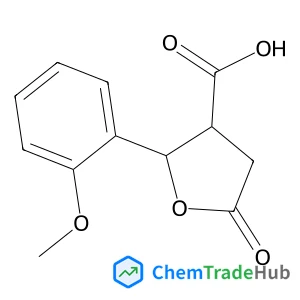
trans-2-(2-Methoxyphenyl)-5-oxotetrahydrofuran-3-carboxylic acid
CAS Number:
99226-02-5
Molecular Formula:
C12H12O5
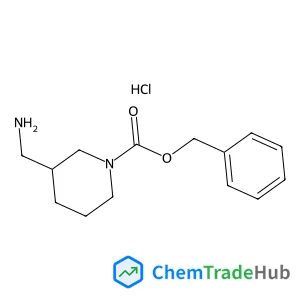
Benzyl 3-(aminomethyl)piperidine-1-carboxylate hydrochloride
CAS Number:
1186663-23-9
Molecular Formula:
C14H21ClN2O2
Recommended Suppliers





Disclaimer
This page provides academic journal information for reference and research purposes only. We are not affiliated with any journal publishers and do not handle publication submissions. For publication-related inquiries, please contact the respective journal publishers directly.
If you notice any inaccuracies in the information displayed, please contact us at support@chemtradehub.com. We will promptly review and address your concerns.