












Synergistic temperature and pH effects on glass (Tg) and stimuli-responsive (TSR) transitions in poly(N-acryloyl-N′-propylpiperazine-co-2-ethoxyethyl methacrylate) copolymers
Literature Information
Publication Date
2011-02-01
DOI
10.1039/C0PY00366B
Impact Factor
5.582
Authors
Fang Liu, William L. Jarrett, Marek W. Urban
View Original
Abstract
N-Acryloyl-N′-propylpiperazine (AcrNPP) and 2-ethoxyethyl methacrylate (EEMA) monomers were copolymerized to form random stimuli-responsive p(AcrNPP/EEMA) copolymers in a form of colloidal dispersions which upon coalesce form uniform films. The presence of AcrNPP units facilitates temperature and pH responsiveness, thus resulting in composition-dependent and pH–temperature sensitive endothermic transitions: the glass (Tg) and stimuli-responsive (TSR) transitions. These studies show that the relationship between the newly discovered TSR and known Tg relaxations can be predicted by the following formula: 1/TSR = [Tg1 × Tg2 × (Tbinary − T)]/[Tbinary × T × (Tg1 − Tg2) × Tg] + (Tg1 × T − Tbinary × Tg2)/[Tbinary × T × (Tg1 − Tg2)], where TSR is the stimuli-responsive transition temperature, Tg is the glass transition temperature of the copolymer; Tbinary is the temperature of stimuli-responsive homopolymer in a binary polymer–water equilibrium, Tg1 and Tg2 are the glass transition temperatures of stimuli-responsive and non-stimuli-responsive homopolymers, respectively, and T is the film formation temperature. Experimental spectroscopic and differential scanning calorimetry (DSC) evidence showed that dipole–dipole interactions are responsible for the molecular changes at the TSR for a non-protonated state, and the shift of the TSR under protonated conditions is attributed to the synergistic pH and temperature effects associated with H-bonding and conformational backbone and side chain rearrangements. Computer simulations also showed that the buckling of the copolymer backbone and collapse of propylpiperazine groups occur above TSR. The total energies (ΔEtotal) of the TSR transitions for protonated and non-protonated states are 159 and 132 kcal mol−1, respectively, and are in good agreement with the energy values determined experimentally (DSC).
Related Literature
Gold substrates of controlled roughness and electrokinetic properties formed by nanoparticle deposition
Maria Morga, Małgorzata Nattich-Rak, Magdalena Oćwieja, Zbigniew Adamczyk
2019-02-22
Paper
DOI: 10.1039/C9CP00440H
Quantitative analysis of 14N quadrupolar coupling using 1H detected 14N solid-state NMR
James A. Jarvis, Maria Concistre, Richard W. Bounds, Ilya Kuprov, Marina Carravetta, Philip T. F. Williamson
2019-02-27
Paper
DOI: 10.1039/C8CP06276E
Asymmetric abstraction of two chemically-equivalent methylene hydrogens: significant enantioselectivity of endoperoxide presented by fumitremorgin B endoperoxidase
Jian-Nan Ji, Shi-Lu Chen
2018-10-02
Paper
DOI: 10.1039/C8CP05637D
Band alignment in quantum wells from automatically tuned DFT+U
Chungwei Lin, Andrew Knyazev, Keisuke Kojima, Joseph Katz, Koichi Akiyama, Eiji Nakai, Hiroyuki Kawahara
2019-02-22
Paper
DOI: 10.1039/C9CP00122K
Growth of nanodroplets on a still microfiber under flow conditions
Maaike Rump, Shantanu Maheshwari, Lei Bao
2018-06-18
Paper
DOI: 10.1039/C8CP02353K
Effect of intermediate phases on the optical properties of PbI2-rich CH3NH3PbI3 organic–inorganic hybrid perovskite
Alonso W. P. Sanches, Marco A. T. da Silva, Neusmar J. A. Cordeiro, Alexandre Urbano, Sidney A. Lourenço
2019-02-11
Paper
DOI: 10.1039/C8CP06916F
Raising glass transition temperature of polymer nanofilms as a function of negative interface energy
Xue Yao, Yaru Wang, Xingyou Lang, Yongfu Zhu, Qing Jiang
2019-02-07
Paper
DOI: 10.1039/C8CP07267A
Excitation of singlet–triplet coherences in pairs of nearly-equivalent spins
Christian Bengs, Joseph T. Hill-Cousins, Lynda J. Brown, Richard C. D. Brown, Giuseppe Pileio, Malcolm H. Levitt
2019-02-18
Paper
DOI: 10.1039/C9CP00451C
Tuning the magnetic properties of beryllium chains
Noelia Faginas-Lago, Thierry Leininger, Stefano Evangelisti
2019-02-27
Paper
DOI: 10.1039/C8CP07159D
Extending the scope of the carbonyl facilitated triplet excited state towards visible light excitation
Shinaj K. Rajagopal, Nagaraj K., Somadrita Deb, Vinayak Bhat, Devika Sasikumar, Ebin Sebastian, Mahesh Hariharan
2018-06-18
Paper
DOI: 10.1039/C8CP01023D
You might also like
Compound Q&A
Is 6-(3-Fluorophenyl)picolinic acid (CAS: 887982-40-3) safe?
6-(3-Fluorophenyl)picolinic acid is generally considered safe for laboratory use...
887982-40-36-(3-Fluorophenyl)pi...
Compound Q&A
What industries use (3R)-3-Pyrrolidinol (CAS: 2799-21-5)?
(3R)-3-Pyrrolidinol is used in the pharmaceutical industry as a precursor for dr...
2799-21-5(3R)-3-Pyrrolidinol
Compound Q&A
What precautions should be taken when handling (4R,5R)-4,5-Diethoxycarbonyl-2,2-dimethyldioxolane (CAS: 59779-75-8)?
When handling (4R,5R)-4,5-Diethoxycarbonyl-2,2-dimethyldioxolane (CAS: 59779-75-...
59779-75-8(4R,5R)-4,5-Diethoxy...
Compound Q&A
How is 1-(6-Chloroimidazo[1,2-b]pyridazin-3-yl)ethanone (CAS: 90734-71-7) typically synthesized?
1-(6-Chloroimidazo[1,2-b]pyridazin-3-yl)ethanone is often synthesized via a mult...
90734-71-71-(6-Chloroimidazo[1...
Compound Q&A
What is the market or research trend for N-Ethyl-3,4-dimethylbenzylamine (CAS: 39180-83-1)?
The market for N-Ethyl-3,4-dimethylbenzylamine (CAS: 39180-83-1) remains steady,...
39180-83-1N-Ethyl-3,4-dimethyl...
Compound Q&A
What is Tert-butyl 3-(pyrrolidin-1-yl)azetidine-1-carboxylate (CAS: 1019008-21-9)?
Tert-butyl 3-(pyrrolidin-1-yl)azetidine-1-carboxylate is a chemical compound wit...
1019008-21-9Tert-butyl 3-(pyrrol...
Compound Q&A
What regulatory guidelines apply to 1-Bromo-3-chloro-2,4-dimethoxybenzene (CAS: 1228956-93-1)?
1-Bromo-3-chloro-2,4-dimethoxybenzene (CAS: 1228956-93-1) falls under the classi...
1228956-93-11-Bromo-3-chloro-2,4...
Compound Q&A
Is 8-Bromo-2-methyl-3,4-dihydroisoquinolin-1(2H)-one (CAS: 1368622-07-4) safe?
The safety of 8-Bromo-2-methyl-3,4-dihydroisoquinolin-1(2H)-one (CAS: 1368622-07...
1368622-07-48-Bromo-2-methyl-3,4...
Compound Q&A
Is Benzyl [(3S)-2,6-dioxo-3-piperidinyl]carbamate (CAS: 22785-43-9) safe?
Benzyl [(3S)-2,6-dioxo-3-piperidinyl]carbamate is generally safe when handled wi...
22785-43-9Benzyl [(3S)-2,6-dio...
Compound Q&A
How should 1-{[4-(4,4,5,5-Tetramethyl-1,3,2-dioxaborolan-2-yl)phenyl]sulfonyl}pyrrolidine (CAS: 928657-21-0) be stored?
1-{[4-(4,4,5,5-Tetramethyl-1,3,2-dioxaborolan-2-yl)phenyl]sulfonyl}pyrrolidine s...
928657-21-01-{[4-(4,4,5,5-Tetra...
Source Journal
Polymer Chemistry

CiteScore:
8.6
Self-citation Rate:
7.3%
Articles per Year:
457
Polymer Chemistry welcomes submissions in all areas of polymer science that have a strong focus on macromolecular chemistry. Manuscripts may cover a broad range of fields, yet no direct application focus is required.
Recommended Compounds
![2-[({[(2-Methyl-2-propanyl)oxy]carbonyl}amino)methyl]isonicotinic acid structure](https://static.chemtradehub.com/structs/473/473924-63-9-973b.webp "2-[({[(2-Methyl-2-propanyl)oxy]carbonyl}amino)methyl]isonicotinic acid structure")
2-[({[(2-Methyl-2-propanyl)oxy]carbonyl}amino)methyl]isonicotinic acid
CAS Number:
473924-63-9
Molecular Formula:
C12H16N2O4
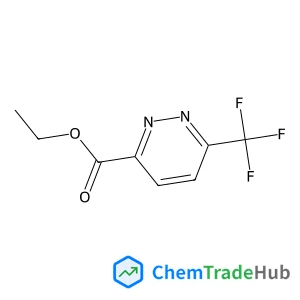
Ethyl 6-(trifluoromethyl)pyridazine-3-carboxylate
CAS Number:
1192155-06-8
Molecular Formula:
C8H7F3N2O2
Recommended Suppliers



Disclaimer
This page provides academic journal information for reference and research purposes only. We are not affiliated with any journal publishers and do not handle publication submissions. For publication-related inquiries, please contact the respective journal publishers directly.
If you notice any inaccuracies in the information displayed, please contact us at support@chemtradehub.com. We will promptly review and address your concerns.