












Ionic hydration-induced evolution of decane–water interfacial tension
Literature Information
Publication Date
2017-05-08
DOI
10.1039/C7CP01826F
Impact Factor
3.676
Authors
Boyao Wen, Chengzhen Sun, Bofeng Bai
View Original
Abstract
Building a connection between the variations in interfacial tension and the microstructure of the oil–water interface is still very challenging. Here, we employ a molecular dynamics method to study the effect of monovalent ions on the decane–water interfacial tension and reveal the relationship between ionic hydration and the variation of interfacial tension. Our results indicate that interfacial tension presents a non-monotonic dependence on the ionic concentrations owing to the distinctive adsorption characteristics of ions. At low ionic concentrations, the hydration of the discrete ions at the interface causes an enhancement in the virial term of the interfacial tension, resulting in an increase of the interfacial tension with increasing ionic concentrations. At high ionic concentrations, the ion pairs at the interface weaken the ionic hydration, thus the virial term of the interfacial tension decreases and the interfacial tension decreases slightly. In addition, the kinetic energy term of interfacial tension increases only with increasing temperature, while the virial term decreases with an increase in either temperature or pressure on account of the weakening ionic hydration; therefore, the increase of temperature and pressure induces different degrees of the decrease in the interfacial tension owing to the major contribution of the virial term, particularly at high ionic concentrations.
Related Literature
Elucidating the selectivity of dyotropic rearrangements of β-lactones: a computational survey
Jingyang Zhang, Yumiao Ma, Ke Qiu, Bo Li, Zhengwen Xue, Boxue Tian, Yefeng Tang
2021-11-25
Research Article
DOI: 10.1039/D1QO01591E
Palladium mediated deallylation in fully aqueous conditions for native chemical ligation at aspartic and glutamic acid sites
Muhammad Jbara, Emad Eid, Ashraf Brik
2018-05-07
Communication
DOI: 10.1039/C8OB00890F
Radical alkylation of para-quinone methides with 4-substituted Hantzsch esters/nitriles via organic photoredox catalysis
Qing-Yan Wu, Qing-Qiang Min, Gui-Zhen Ao
2018-08-20
Communication
DOI: 10.1039/C8OB01641K
Building of neomycin–nucleobase–amino acid conjugates for the inhibition of oncogenic miRNAs biogenesis
Duc Duy Vo, Cécile Becquart, Thi Phuong Anh Tran, Audrey Di Giorgio, Fabien Darfeuille, Cathy Staedel, Maria Duca
2018-08-13
Paper
DOI: 10.1039/C8OB01858H
Novel photoactivatable substrates for Renilla luciferase imaging in vitro and in vivo
Chaochao Zhang, Lin Cheng, Gaopan Dong, Guangxi Han, Xingye Yang, Chunchao Tang, Xiang Li, Yubin Zhou, Lupei Du
2018-06-13
Communication
DOI: 10.1039/C8OB01192C
Regioselective synthesis and biological evaluation of N-substituted 2-aminoquinazolin-4-ones
Zhen-Yuan Liao, Wen-Hsiung Yeh, Pen-Yuan Liao, Yu-Ting Liu, Ying-Cheng Chen, Yi-Hung Chen, Tsung-Han Hsieh, Chia-Chi Lin, Ming-Hsuan Lu, Yi-Song Chen, Ming-Chih Hsu, Tsai-Kun Li, Tun-Cheng Chien
2018-04-27
Paper
DOI: 10.1039/C8OB00624E
Synthesis of fused tricyclic systems by thermal Cope rearrangement of furan-substituted vinyl cyclopropanes
Verena Klaus, Stéphane Wittmann, Hans M. Senn, J. Stephen Clark
2018-05-15
Paper
DOI: 10.1039/C8OB00924D
Rh(iii)-Catalyzed C–H allylation/annulative Markovnikov addition with 5-methylene-1,3-dioxan-2-one: formation of isoquinolinones containing a C3 quaternary centre
Xinghua Li, Jintong Bai, Zhaoyu Huang, Minhai Yin, Jiarong Sheng
2021-10-05
Research Article
DOI: 10.1039/D1QO01232K
Synthesis of topologically constrained naphthalimide appended palladium(ii)–N-heterocyclic carbene complexes – insights into additive controlled product selectivity
Pradeep Kumar Reddy Panyam, Ramdas Sreedharan, Thirumanavelan Gandhi
2018-05-23
Paper
DOI: 10.1039/C8OB00616D
Rh(iii)-Catalyzed tandem C(sp2)–H allylation/N-alkylation annulation of arene amides with 2-alkylidenetrimethylene carbonates
Hui Xie, Jin-Yi Liang, Zhuo-Jun Huang, Bing Shu, Yi-Chuan Zheng, Yan-Zhi Liu, Shao-Yong Chen, Xu-Ge Liu, Shang-Shi Zhang
2021-10-08
Research Article
DOI: 10.1039/D1QO01129D
You might also like
Compound Q&A
What industries use (1R,3S)-1,3-Cyclopentanediol (CAS: 16326-97-9)?
(1R,3S)-1,3-Cyclopentanediol finds applications in various industries. In the ph...
16326-97-9(1R,3S)-1,3-Cyclopen...
Compound Q&A
What precautions should be taken when handling N'-[4-(Dimethylamino)phenyl]-N,N-dimethyl-1,4-benzenediamine (CAS: 637-31-0)?
When handling N'-[4-(Dimethylamino)phenyl]-N,N-dimethyl-1,4-benzenediamine, it i...
637-31-0N'-[4-(Dimethylamino...
Compound Q&A
Are there alternatives to 5-(2,4-Difluorophenyl)-2-methoxypyrimidine (CAS: 1352318-16-1) in synthesis?
There are several alternatives to 5-(2,4-Difluorophenyl)-2-methoxypyrimidine in ...
1352318-16-15-(2,4-Difluoropheny...
Compound Q&A
What regulatory guidelines apply to 1-(3-Methoxyphenoxy)propan-2-ol (CAS: 382141-68-6)?
1-(3-Methoxyphenoxy)propan-2-ol (CAS: 382141-68-6) must comply with the Globally...
382141-68-61-(3-Methoxyphenoxy)...
Compound Q&A
Is Tetrodotoxin Citrate (CAS: 18660-81-6) safe?
Tetrodotoxin Citrate is extremely dangerous and should be handled with extreme c...
18660-81-6Tetrodotoxin Citrate
Compound Q&A
What are the main uses of 2-Methyl-2-propanyl [(1R,3S)-3-hydroxycyclopentyl]carbamate (CAS: 225641-84-9)?
2-Methyl-2-propanyl [(1R,3S)-3-hydroxycyclopentyl]carbamate (CAS: 225641-84-9) i...
225641-84-92-Methyl-2-propanyl ...
Compound Q&A
How should waste containing 4-(2-Hydroxyhexafluoroisopropyl)Benzoic Acid (CAS: 16261-80-6) be handled?
Waste containing 4-(2-Hydroxyhexafluoroisopropyl)Benzoic Acid (CAS: 16261-80-6) ...
16261-80-64-(2-Hydroxyhexafluo...
Compound Q&A
How is 2-Methyl-2-proanyl {(2S)-1-[(benzyloxy)amino]-3-hydroxy-3-methyl-1-oxo-2-butanyl}carbamate (CAS: 102507-19-7) typically synthesized?
2-Methyl-2-proanyl {(2S)-1-[(benzyloxy)amino]-3-hydroxy-3-methyl-1-oxo-2-butanyl...
102507-19-72-Methyl-2-propanyl ...
Compound Q&A
What is Benzeneethanamine, α-ethyl-, hydrochloride (1:1) (CAS: 20735-15-3)?
Benzeneethanamine, α-ethyl-, hydrochloride (1:1) is an organic compound with the...
20735-15-3Benzeneethanamine, α...
Compound Q&A
Are there alternatives to 3-{(E)-[4-(Dimethylamino)phenyl]diazenyl}benzoic acid (CAS: 20691-84-3) in synthesis?
In the synthesis of compounds similar to 3-{(E)-[4-(Dimethylamino)phenyl]diazeny...
20691-84-33-{(E)-[4-(Dimethyla...
Source Journal
Physical Chemistry Chemical Physics

CiteScore:
5.5
Self-citation Rate:
10.3%
Articles per Year:
3036
Physical Chemistry Chemical Physics (PCCP) is an international journal co-owned by 19 physical chemistry and physics societies from around the world. This journal publishes original, cutting-edge research in physical chemistry, chemical physics and biophysical chemistry. To be suitable for publication in PCCP, articles must include significant innovation and/or insight into physical chemistry; this is the most important criterion that reviewers and Editors will judge against when evaluating submissions. The journal has a broad scope and welcomes contributions spanning experiment, theory, computation and data science. Topical coverage includes spectroscopy, dynamics, kinetics, statistical mechanics, thermodynamics, electrochemistry, catalysis, surface science, quantum mechanics, quantum computing and machine learning. Interdisciplinary research areas such as polymers and soft matter, materials, nanoscience, energy, surfaces/interfaces, and biophysical chemistry are welcomed if they demonstrate significant innovation and/or insight into physical chemistry. Joined experimental/theoretical studies are particularly appreciated when complementary and based on up-to-date approaches.
Recommended Compounds
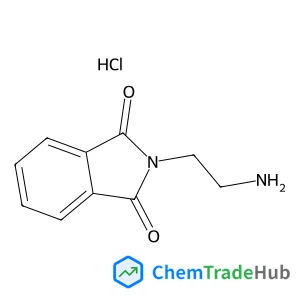
2-(2-Aminoethyl)-1H-isoindole-1,3(2H)-dione hydrochloride (1:1)
CAS Number:
30250-67-0
Molecular Formula:
C10H11ClN2O2
Recommended Suppliers






Disclaimer
This page provides academic journal information for reference and research purposes only. We are not affiliated with any journal publishers and do not handle publication submissions. For publication-related inquiries, please contact the respective journal publishers directly.
If you notice any inaccuracies in the information displayed, please contact us at support@chemtradehub.com. We will promptly review and address your concerns.