












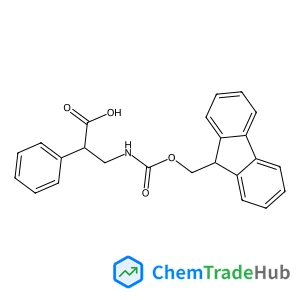
(S)-3-((((9H-Fluoren-9-yl)methoxy)carbonyl)amino)-2-phenylpropanoic acid
CAS Number:
1217663-60-9
Molecular Formula:
C24H21NO4
In this manuscript, we combine high-level ab initio calculations on some small complexes and a CSD survey to analyze the existence of unprecedented noncovalent carbon bonds in X2CCH2⋯Y systems (Y = electron-rich atom or group). The methylene group is usually seen as a weak hydrogen bond donor when interacting with an electron-rich atom. However, we demonstrate that when the electron-rich atom is located equidistant from the two H atoms and along the CC bond a σ-hole noncovalent carbon-bonding interaction is established, instead of a bifurcated hydrogen bond, as derived from Atoms-in-Molecules (AIM) and Natural bond orbital (NBO) analyses. The physical nature of the interaction has been analyzed using the Symmetry Adapted Perturbation Theory (SAPT) method. The results indicate that electrostatics is very important followed by either the induction or dispersion terms in anionic and neutral complexes, respectively. In addition the CSD analysis reveals the existence of such interactions, giving reliability to our calculations, which are much more numerous for neutral than for anionic Y systems.
Leian Bartolome, Muhammad Imran, Kyoung G. Lee, Arvin Sangalang, Jeong Keun Ahn, Do Hyun Kim
DOI: 10.1039/C3GC41834K
Christophe Detrembleur, Antoine Debuigne, Ozcan Altintas, Matthias Conradi, Edgar H. H. Wong, Christine Jérôme, Christopher Barner-Kowollik, Tanja Junkers
DOI: 10.1039/C1PY00297J
Xiaoyun Li, Yi-Chen Li, Mingjie Chen, Qingshan Shi, Runcang Sun, Xiaoying Wang
DOI: 10.1039/C8TB01085D
Bingkun Yan, Jiaqian Hou, Chao Wei, Yan Xiao, Meidong Lang, Farong Huang
DOI: 10.1039/D0PY00031K
Pengcheng Jiang, Shanping Chen, Hongrui Qi, Guo-Jun Deng
DOI: 10.1039/C3GC41671B
Ryousuke Hara, Kangcheng Chen, Nobutaka Endo, Mitsuru Higa, Ken-ichi Okamoto, Lianjun Wang
DOI: 10.1039/C3TA11190C
Shiyu Yao, Pengfei Li, Ji Bian, Qingfeng Dong, Chan Im, Wenjing Tian
DOI: 10.1039/C3TA11972F
Zhangping Shi, Yangxia Wang, Huanlei Lin, Hongbin Zhang, Meikun Shen, Songhai Xie, Yahong Zhang, Qingsheng Gao, Yi Tang
DOI: 10.1039/C6TA01900E
Yunlong Guo, Jianhua Zhang, Peile Xie, Xiang Gao, Yingwu Luo
DOI: 10.1039/C4PY00003J
When considering alternatives to 1-(4-Chlorophenyl)-N-hydroxymethanimine (CAS: 3...
This compound should be stored in a cool, dry place away from direct sunlight. I...
3-(4-Bromophenyl)-5-(2-fluorophenyl)-1,2,4-oxadiazole is synthesized through a m...
5-Chloro-2-(4-chlorophenyl)-4-methyl-6-[3-(1-piperidinyl)propoxy]pyrimidine (CAS...
2-Chloro-4-(difluoromethoxy)pyridine is used in the pharmaceutical industry for ...
3-Chloro-6-methylpyridazine (CAS: 1121-79-5) is classified under the Globally Ha...
Several alternatives can be used in the synthesis of Methyl 4,5-dimethyl-2-nitro...
Alternatives to (2E,2'E)-3,3'-(1,4-Phenylene)bisacrylaldehyde include other acry...
3-Amino-5-chloropyridin-2-ol hydrochloride is an organic compound with the CAS n...
When handling 6,7-Difluoro-2,3-dihydro-4H-chromen-4-one, it is essential to wear...

Physical Chemistry Chemical Physics (PCCP) is an international journal co-owned by 19 physical chemistry and physics societies from around the world. This journal publishes original, cutting-edge research in physical chemistry, chemical physics and biophysical chemistry. To be suitable for publication in PCCP, articles must include significant innovation and/or insight into physical chemistry; this is the most important criterion that reviewers and Editors will judge against when evaluating submissions. The journal has a broad scope and welcomes contributions spanning experiment, theory, computation and data science. Topical coverage includes spectroscopy, dynamics, kinetics, statistical mechanics, thermodynamics, electrochemistry, catalysis, surface science, quantum mechanics, quantum computing and machine learning. Interdisciplinary research areas such as polymers and soft matter, materials, nanoscience, energy, surfaces/interfaces, and biophysical chemistry are welcomed if they demonstrate significant innovation and/or insight into physical chemistry. Joined experimental/theoretical studies are particularly appreciated when complementary and based on up-to-date approaches.
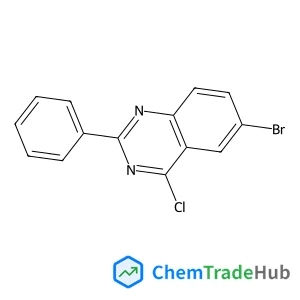
![(2S)-2-{[(9H-Fluoren-9-ylmethoxy)carbonyl]amino}-4-(methylselanyl)butanoic acid structure](https://static.chemtradehub.com/structs/121/1217852-49-7-f252.webp "(2S)-2-{[(9H-Fluoren-9-ylmethoxy)carbonyl]amino}-4-(methylselanyl)butanoic acid structure")
![6-Bromo-2,3-dihydro-1H-pyrido[2,3-b][1,4]oxazine structure](https://static.chemtradehub.com/structs/120/1203499-17-5-b4d1.webp "6-Bromo-2,3-dihydro-1H-pyrido[2,3-b][1,4]oxazine structure")
![[4-(Isobutyrylamino)phenyl]boronic acid structure](https://static.chemtradehub.com/structs/874/874219-50-8-6ab5.webp "[4-(Isobutyrylamino)phenyl]boronic acid structure")




