


Origin of cooperativity in hydrogen bonding
Literature Information
Publication Date
2017-05-15
DOI
10.1039/C7CP01695F
Impact Factor
3.676
Authors
Jorge Nochebuena, Cristina Cuautli, Joel Ireta
View Original
Abstract
The origin of non-additivity in hydrogen bonds (H-bonds), usually termed as H-bond cooperativity, is investigated in H-bonded linear chains. It is shown that H-bond cooperativity originates solely from classical electrostatics. The latter is corroborated by comparing the H-bond cooperativity in infinitely-long H-bonded hydrogen cyanide, 4-pyridone and formamide chains, assessed using density functional theory (DFT), against the strengthening of the dipole–dipole interaction upon the formation of an infinite chain of effective point-dipoles. It is found that the magnitude of these effective point-dipoles is a consequence of mutual polarization and additional effects beyond a polarizable point-dipole model. Nevertheless, the effective point-dipoles are fully determined once a single H-bond is formed, indicating that quantum effects involved in H-bonding are circumscribed to nearest-neighbor interactions only; i.e. in a linear chain of H-bonds, quantum effects do not contribute to the H-bond non-additivity. This finding is verified by estimating cooperativity along the dissociation path of H-bonds in the infinite chains, using two empirical parameters that account for polarizability, together with DFT association energies and molecular dipoles of solely monomers and dimers.
Recommended Journals

Bioorganic & Medicinal Chemistry Letters

Journal of Chemical Sciences

Colloid Journal

Biocatalysis and Biotransformation

Heteroatom Chemistry

Journal of Asian Natural Products Research

Polycyclic Aromatic Compounds

Acta Metallurgica Sinica-English Letters

Main Group Chemistry

Journal of the Indian Institute of Science
Related Literature
Insight into the mechanism of the arylation of arenes via norbornene relay palladation through meta- to para-selectivity
Shengnan Liu, Qiong Wang, Fang Huang, Wenjuan Wang, Chong Yang, Jianbiao Liu, Dezhan Chen
2021-11-09
Research Article
DOI: 10.1039/D1QO01500A
Tetra-substituted furans by a gold-catalysed tandem C(sp3)–H alkynylation/oxy-alkynylation reaction
Chunyu Han, Xianhai Tian, Lina Song, Yaowen Liu
2021-10-05
Research Article
DOI: 10.1039/D1QO01401C
Chemical tools for the generation and detection of singlet oxygen
2018-04-24
Review Article
DOI: 10.1039/C8OB00504D
Fissisternoids A and B, two 2′,5′-quinodihydrochalcone-based meroterpenoid enantiomers with unusual carbon skeletons from Fissistigma bracteolatum
Gui-Min Xue, Chen-Guang Zhao, Jin-Feng Xue, Hui Chen, Zhen-Zhu Zhao, Ying-Ying Si, Kun Du, Yan-Le Zhi, Wei-Sheng Feng
2021-11-19
Research Article
DOI: 10.1039/D1QO01404H
Key role of a π–π complex in diaryl cross-coupling between aryldiazonium salts and arylboronic acids using photosensitizer-free gold/photoredox catalysis
Yanhong Liu, Rongxiu Zhu, Chengbu Liu, Dongju Zhang
2021-11-17
Research Article
DOI: 10.1039/D1QO01464A
Synthesis of functionalized diarylbenzofurans via Ru-catalyzed C–H activation and cyclization under air: rapid access to the polycyclic scaffold of diptoindonesin G
Lufeng Ouyang, Zhigeng Lin, Shiqi Li, Baoyin Chen, Jidan Liu, Wen-Jing Shi, Liyao Zheng
2021-11-04
Research Article
DOI: 10.1039/D1QO01242H
Chelation-assisted C–N cross-coupling of phosphinamides and aryl boronic acids with copper powder at room temperature
Yao Peng, Jian Lei, Renhua Qiu, Lingteng Peng, Chak-Tong Au, Shuang-Feng Yin
2018-05-10
Communication
DOI: 10.1039/C8OB00907D
Rapid and reversible hydrazone bioconjugation in cells without the use of extraneous catalysts
Rahul Nisal, Gregor P. Jose, Chitra Shanbhag, Jeet Kalia
2018-05-18
Paper
DOI: 10.1039/C8OB00946E
Nickel-catalyzed cascade carbonylative synthesis of N-benzoyl indoles from 2-nitroalkynes and aryl iodides
Lingyun Yao, Jun Ying
2021-10-05
Research Article
DOI: 10.1039/D1QO01284C
Mild and efficient synthesis of indoles and isoquinolones via a nickel-catalyzed Larock-type heteroannulation reaction
Wei-Zhi Weng, Jian Xie, Bo Zhang
2018-05-04
Paper
DOI: 10.1039/C8OB00795K
You might also like
Compound Q&A
What industries use (1R,3S)-1,3-Cyclopentanediol (CAS: 16326-97-9)?
(1R,3S)-1,3-Cyclopentanediol finds applications in various industries. In the ph...
16326-97-9(1R,3S)-1,3-Cyclopen...
Compound Q&A
What precautions should be taken when handling N'-[4-(Dimethylamino)phenyl]-N,N-dimethyl-1,4-benzenediamine (CAS: 637-31-0)?
When handling N'-[4-(Dimethylamino)phenyl]-N,N-dimethyl-1,4-benzenediamine, it i...
637-31-0N'-[4-(Dimethylamino...
Compound Q&A
Are there alternatives to 5-(2,4-Difluorophenyl)-2-methoxypyrimidine (CAS: 1352318-16-1) in synthesis?
There are several alternatives to 5-(2,4-Difluorophenyl)-2-methoxypyrimidine in ...
1352318-16-15-(2,4-Difluoropheny...
Compound Q&A
What regulatory guidelines apply to 1-(3-Methoxyphenoxy)propan-2-ol (CAS: 382141-68-6)?
1-(3-Methoxyphenoxy)propan-2-ol (CAS: 382141-68-6) must comply with the Globally...
382141-68-61-(3-Methoxyphenoxy)...
Compound Q&A
Is Tetrodotoxin Citrate (CAS: 18660-81-6) safe?
Tetrodotoxin Citrate is extremely dangerous and should be handled with extreme c...
18660-81-6Tetrodotoxin Citrate
Compound Q&A
What are the main uses of 2-Methyl-2-propanyl [(1R,3S)-3-hydroxycyclopentyl]carbamate (CAS: 225641-84-9)?
2-Methyl-2-propanyl [(1R,3S)-3-hydroxycyclopentyl]carbamate (CAS: 225641-84-9) i...
225641-84-92-Methyl-2-propanyl ...
Compound Q&A
How should waste containing 4-(2-Hydroxyhexafluoroisopropyl)Benzoic Acid (CAS: 16261-80-6) be handled?
Waste containing 4-(2-Hydroxyhexafluoroisopropyl)Benzoic Acid (CAS: 16261-80-6) ...
16261-80-64-(2-Hydroxyhexafluo...
Compound Q&A
How is 2-Methyl-2-proanyl {(2S)-1-[(benzyloxy)amino]-3-hydroxy-3-methyl-1-oxo-2-butanyl}carbamate (CAS: 102507-19-7) typically synthesized?
2-Methyl-2-proanyl {(2S)-1-[(benzyloxy)amino]-3-hydroxy-3-methyl-1-oxo-2-butanyl...
102507-19-72-Methyl-2-propanyl ...
Compound Q&A
What is Benzeneethanamine, α-ethyl-, hydrochloride (1:1) (CAS: 20735-15-3)?
Benzeneethanamine, α-ethyl-, hydrochloride (1:1) is an organic compound with the...
20735-15-3Benzeneethanamine, α...
Compound Q&A
Are there alternatives to 3-{(E)-[4-(Dimethylamino)phenyl]diazenyl}benzoic acid (CAS: 20691-84-3) in synthesis?
In the synthesis of compounds similar to 3-{(E)-[4-(Dimethylamino)phenyl]diazeny...
20691-84-33-{(E)-[4-(Dimethyla...
Source Journal
Physical Chemistry Chemical Physics

CiteScore:
5.5
Self-citation Rate:
10.3%
Articles per Year:
3036
Physical Chemistry Chemical Physics (PCCP) is an international journal co-owned by 19 physical chemistry and physics societies from around the world. This journal publishes original, cutting-edge research in physical chemistry, chemical physics and biophysical chemistry. To be suitable for publication in PCCP, articles must include significant innovation and/or insight into physical chemistry; this is the most important criterion that reviewers and Editors will judge against when evaluating submissions. The journal has a broad scope and welcomes contributions spanning experiment, theory, computation and data science. Topical coverage includes spectroscopy, dynamics, kinetics, statistical mechanics, thermodynamics, electrochemistry, catalysis, surface science, quantum mechanics, quantum computing and machine learning. Interdisciplinary research areas such as polymers and soft matter, materials, nanoscience, energy, surfaces/interfaces, and biophysical chemistry are welcomed if they demonstrate significant innovation and/or insight into physical chemistry. Joined experimental/theoretical studies are particularly appreciated when complementary and based on up-to-date approaches.
Recommended Compounds
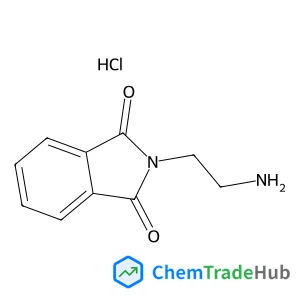
2-(2-Aminoethyl)-1H-isoindole-1,3(2H)-dione hydrochloride (1:1)
CAS Number:
30250-67-0
Molecular Formula:
C10H11ClN2O2
Recommended Suppliers





Disclaimer
This page provides academic journal information for reference and research purposes only. We are not affiliated with any journal publishers and do not handle publication submissions. For publication-related inquiries, please contact the respective journal publishers directly.
If you notice any inaccuracies in the information displayed, please contact us at support@chemtradehub.com. We will promptly review and address your concerns.