


Decoupling diffusion from the bimolecular photoinduced electron transfer reaction: a combined ultrafast spectroscopic and kinetic analysis
Literature Information
Publication Date
2017-03-31
DOI
10.1039/C7CP01387F
Impact Factor
3.676
Authors
Puspal Mukherjee, Pratik Sen
View Original
Abstract
We have studied the bimolecular photoinduced electron transfer (PET) reaction between benzophenone (Bp) and DABCO using femtosecond broadband transient absorption spectroscopy in different compositions of acetonitrile/1-butanol binary solvent mixtures. With the increase in the 1-butanol percentage in the mixture, we have observed an increase in the onset delay time of Bp˙−, which is the product of the reaction. As 1-butanol is more viscous than acetonitrile, we related the onset time to the change in medium viscosity. Moreover, we undertook a complete kinetic analysis of the bimolecular PET reaction under different conditions to show that from transient absorption spectroscopy, we can get the exact rate of electron transfer. This kind of kinetic analysis along with the experimental data is the first of its kind to prove that transient absorption spectroscopy is probably the most useful tool in studying the PET reaction.
Recommended Journals

Crystallography Reports

Russian Journal of Bioorganic Chemistry

Russian Journal of Applied Chemistry

Russian Chemical Bulletin

Chemistry Education Research and Practice

Journal of Saudi Chemical Society

Saudi Pharmaceutical Journal

Russian Journal of Organic Chemistry

Nature Medicine

Journal of Natural Medicines
Related Literature
Simultaneous and controlled release of two different bioactive small molecules from nature inspired single material
Adil M. Rather, Arpita Shome, Bibhas K. Bhunia, Aparna Panuganti, Biman B. Mandal, Uttam Manna
2018-10-22
Paper
DOI: 10.1039/C8TB02406E
Effects of melt aging and off-stoichiometric melts on CsSrI3:Eu2+ single crystal scintillators
Merry Koschan
2016-02-26
Paper
DOI: 10.1039/C6CP00271D
Macromolecular structure evolution toward giant molecules of complex structure: tandem synthesis of asymmetric giant gemini surfactants
Hao Su, Yiwen Li, Kan Yue, Zhao Wang, Pengtao Lu, Xueyan Feng, Xue-Hui Dong, Shuo Zhang, Stephen Z. D. Cheng
2014-03-24
Paper
DOI: 10.1039/C4PY00107A
Poly(phenylene) block copolymers bearing tri-sulfonated aromatic pendant groups for polymer electrolyte fuel cell applications
Ryousuke Hara, Kangcheng Chen, Nobutaka Endo, Mitsuru Higa, Ken-ichi Okamoto, Lianjun Wang
2013-05-08
Paper
DOI: 10.1039/C3TA11190C
Rapid Wolff–Kishner reductions in a silicon carbide microreactor
Stephen G. Newman, Lei Gu, Christoph Lesniak, Georg Victor, Frank Meschke, Lahbib Abahmane, Klavs F. Jensen
2013-11-12
Paper
DOI: 10.1039/C3GC41942H
SiC–Fe3O4 dielectric–magnetic hybrid nanowires: controllable fabrication, characterization and electromagnetic wave absorption
Caiyun Liang, Chenyu Liu, Huan Wang, Lina Wu, Zhaohua Jiang, Yongjun Xu, Baozhong Shen, Zhijiang Wang
2014-08-13
Paper
DOI: 10.1039/C4TA02907K
Encapsulating nanoscale zero-valent iron with a soluble Mg(OH)2 shell for improved mobility and controlled reactivity release
Yi-bo Hu, Xiao-yan Li
2017-11-30
Paper
DOI: 10.1039/C7TA08605A
Common processes drive the thermochemical pretreatment of lignocellulosic biomass
Marcus Foston, Yoshiharu Nishiyama, B. Leif Hanson, Shane Harton, William T. Heller, Barbara R. Evans, S. Gnanakaran, Arthur J. Ragauskas, Brian H. Davison
2013-10-29
Communication
DOI: 10.1039/C3GC41962B
You might also like
Compound Q&A
Are there alternatives to 1-(4-Chlorophenyl)-N-hydroxymethanimine (CAS: 3848-36-0) in synthesis?
When considering alternatives to 1-(4-Chlorophenyl)-N-hydroxymethanimine (CAS: 3...
3848-36-01-(4-Chlorophenyl)-N...
Compound Q&A
How should (1R,9S,10S,12S,14E,16S,19R,20R,21S,22R)-3,9,21-Trihydroxy-5,10,12,14,16,20,22-heptamethyl-23,24-dioxatetracyclo[17.3.1.1~6,9~.0~2,7~]tetracosa-2,5,7,14-tetraen-4-one (CAS: 183202-73-5) be stored?
This compound should be stored in a cool, dry place away from direct sunlight. I...
183202-73-5(1R,9S,10S,12S,14E,1...
Compound Q&A
How is 3-(4-Bromophenyl)-5-(2-fluorophenyl)-1,2,4-oxadiazole (CAS: 419553-16-5) typically synthesized?
3-(4-Bromophenyl)-5-(2-fluorophenyl)-1,2,4-oxadiazole is synthesized through a m...
419553-16-53-(4-Bromophenyl)-5-...
Compound Q&A
How is 5-Chloro-2-(4-chlorophenyl)-4-methyl-6-[3-(1-piperidinyl)propoxy]pyrimidine (CAS: 1639220-19-1) typically synthesized?
5-Chloro-2-(4-chlorophenyl)-4-methyl-6-[3-(1-piperidinyl)propoxy]pyrimidine (CAS...
1639220-19-15-Chloro-2-(4-chloro...
Compound Q&A
What industries use 2-Chloro-4-(difluoromethoxy)pyridine (CAS: 1206978-15-5)?
2-Chloro-4-(difluoromethoxy)pyridine is used in the pharmaceutical industry for ...
1206978-15-52-Chloro-4-(difluoro...
Compound Q&A
What regulatory guidelines apply to 3-Chloro-6-methylpyridazine (CAS: 1121-79-5)?
3-Chloro-6-methylpyridazine (CAS: 1121-79-5) is classified under the Globally Ha...
1121-79-53-Chloro-6-methylpyr...
Compound Q&A
Are there alternatives to Methyl 4,5-dimethyl-2-nitrobenzoate in synthesis?
Several alternatives can be used in the synthesis of Methyl 4,5-dimethyl-2-nitro...
90922-74-0Methyl 4,5-dimethyl-...
Compound Q&A
Are there alternatives to (2E,2'E)-3,3'-(1,4-Phenylene)bisacrylaldehyde in synthesis?
Alternatives to (2E,2'E)-3,3'-(1,4-Phenylene)bisacrylaldehyde include other acry...
63405-68-5(2E,2'E)-3,3'-(1,4-P...
Compound Q&A
What is 3-Amino-5-chloropyridin-2-ol hydrochloride (CAS: 1261906-29-9)?
3-Amino-5-chloropyridin-2-ol hydrochloride is an organic compound with the CAS n...
1261906-29-93-Amino-5-chloropyri...
Compound Q&A
What precautions should be taken when handling 6,7-Difluoro-2,3-dihydro-4H-chromen-4-one (CAS: 1092349-93-3)?
When handling 6,7-Difluoro-2,3-dihydro-4H-chromen-4-one, it is essential to wear...
1092349-93-36,7-Difluoro-2,3-dih...
Source Journal
Physical Chemistry Chemical Physics

CiteScore:
5.5
Self-citation Rate:
10.3%
Articles per Year:
3036
Physical Chemistry Chemical Physics (PCCP) is an international journal co-owned by 19 physical chemistry and physics societies from around the world. This journal publishes original, cutting-edge research in physical chemistry, chemical physics and biophysical chemistry. To be suitable for publication in PCCP, articles must include significant innovation and/or insight into physical chemistry; this is the most important criterion that reviewers and Editors will judge against when evaluating submissions. The journal has a broad scope and welcomes contributions spanning experiment, theory, computation and data science. Topical coverage includes spectroscopy, dynamics, kinetics, statistical mechanics, thermodynamics, electrochemistry, catalysis, surface science, quantum mechanics, quantum computing and machine learning. Interdisciplinary research areas such as polymers and soft matter, materials, nanoscience, energy, surfaces/interfaces, and biophysical chemistry are welcomed if they demonstrate significant innovation and/or insight into physical chemistry. Joined experimental/theoretical studies are particularly appreciated when complementary and based on up-to-date approaches.
Recommended Compounds
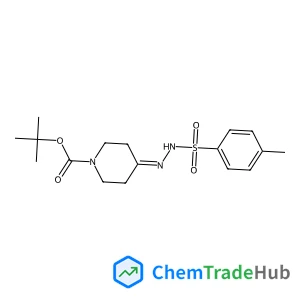
tert-Butyl 4-(2-(p-Tolylsulfonyl)hydrazono)piperidine-1-carboxylate
CAS Number:
1046478-89-0
Molecular Formula:
C17H25N3O4S
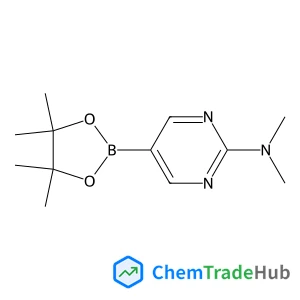
N,N-Dimethyl-5-(4,4,5,5-tetramethyl-1,3,2-dioxaborolan-2-yl)-2-pyrimidinamine
CAS Number:
1032759-30-0
Molecular Formula:
C12H20BN3O2
Recommended Suppliers








Disclaimer
This page provides academic journal information for reference and research purposes only. We are not affiliated with any journal publishers and do not handle publication submissions. For publication-related inquiries, please contact the respective journal publishers directly.
If you notice any inaccuracies in the information displayed, please contact us at support@chemtradehub.com. We will promptly review and address your concerns.