












Time-resolved measurements of product formation in the low-temperature (550–675 K) oxidation of neopentane: a probe to investigate chain-branching mechanism
Literature Information
Publication Date
2017-05-03
DOI
10.1039/C7CP01366C
Impact Factor
3.676
Authors
Ivan O. Antonov, Leonid Sheps, John D. Savee, David L. Osborn, Craig A. Taatjes
View Original
Abstract
Product formation, in particular ketohydroperoxide formation and decomposition, were investigated in time-resolved, Cl-atom initiated neopentane oxidation experiments in the temperature range 550–675 K using a photoionization time-of-flight mass spectrometer. Ionization light was provided either by Advanced Light Source tunable synchrotron radiation or ∼10.2 eV fixed energy radiation from a H2-discharge lamp. Experiments were performed both at 1–2 atm pressure using a high-pressure reactor and also at ∼9 Torr pressure employing a low-pressure reactor for comparison. Because of the highly symmetric structure of neopentane, ketohydroperoxide signal can be attributed to a 3-hydroperoxy-2,2-dimethylpropanal isomer, i.e. from a γ-ketohydroperoxide (γ-KHP). The photoionization spectra of the γ-KHP measured at low- and high pressures and varying oxygen concentrations agree well with each other, further supporting they originate from the single isomer. Measurements performed in this work also suggest that the “Korcek” mechanism may play an important role in the decomposition of 3-hydroperoxy-2,2-dimethylpropanal, especially at lower temperatures. However, at higher temperatures where γ-KHP decomposition to hydroxyl radical and oxy-radical dominates, oxidation of the oxy-radical yields a new important channel leading to acetone, carbon monoxide, and OH radical. Starting from the initial neopentyl + O2 reaction, this channel releases altogether three OH radicals. A strongly temperature-dependent reaction product is observed at m/z = 100, likely attributable to 2,2-dimethylpropanedial.
Related Literature
Kinetic mixture effects in diffusion gradients in thin films (DGT)
Jaume Puy, Joan Cecília, Josep Galceran
2013-05-09
Paper
DOI: 10.1039/C3CP51038G
Biopolymer coated gold nanocrystals prepared using the green chemistry approach and their shape-dependent catalytic and surface-enhanced Raman scattering properties
Hui-Hsuan Hsieh, You-Cheng Hseu, Ko-Shao Chen, Gou-Jen Wang, Yi-Syuan Wei, Ko Hsin Chang, Yeu-Wei Harn
2013-05-07
Paper
DOI: 10.1039/C3CP50956G
Molecular rheometry: direct determination of viscosity in Lo and Ldlipid phases via fluorescence lifetime imaging
Yilei Wu, Agnieszka Olzyńska, Martin Hof, Gokhan Yahioglu, Duncan R. Casey, Oscar Ces, Jana Humpolíčková, Marina K. Kuimova
2013-07-09
Paper
DOI: 10.1039/C3CP51953H
Propagation of nanopores during anodic etching of n-InP in KOH
Robert P. Lynch, Nathan Quill, Shohei Nakahara, D. Noel Buckley
2013-07-31
Paper
DOI: 10.1039/C3CP52253A
1-Propanol probing methodology: two-dimensional characterization of the effect of solute on H2O
2013-06-04
Perspective
DOI: 10.1039/C3CP51650D
A low-cost bio-inspired integrated carbon counter electrode for high conversion efficiency dye-sensitized solar cells
Chunlei Wang, Fanning Meng, Mingxing Wu, Xiao Lin, Tonghua Wang, Jieshan Qiu, Tingli Ma
2013-06-27
Communication
DOI: 10.1039/C3CP52525B
CH4combustion cycles at Pd/Al2O3 – important role of support and oxygen access
Izabela Czekaj, Katarzyna A. Kacprzak, John Mantzaras
2013-05-16
Paper
DOI: 10.1039/C3CP51085A
A microiterative intrinsic reaction coordinate method for large QM/MM systems
Iakov Polyak, Eliot Boulanger, Kakali Sen, Walter Thiel
2013-05-31
Paper
DOI: 10.1039/C3CP51669E
Binding energy determination in a π-stacked aromatic cluster: the anisole dimer
2013-05-02
Paper
DOI: 10.1039/C3CP50191D
You might also like
Compound Q&A
How should waste containing N-Methoxy-N-methyl-1,3-thiazole-5-carboxamide (CAS: 898825-89-3) be handled?
Waste containing N-Methoxy-N-methyl-1,3-thiazole-5-carboxamide (CAS: 898825-89-3...
898825-89-3N-Methoxy-N-methyl-1...
Compound Q&A
How should N-(4-Biphenylyl)dibenzo[b,d]furan-4-amine (CAS: 1318338-47-4) be stored?
N-(4-Biphenylyl)dibenzo[b,d]furan-4-amine should be stored in a tightly sealed c...
1318338-47-4N-(4-Biphenylyl)dibe...
Compound Q&A
What is the market or research trend for 3-Acetamido-5-amino-2,4,6-triiodobenzoic acid (CAS: 1713-07-1)?
The market for 3-Acetamido-5-amino-2,4,6-triiodobenzoic acid (CAS: 1713-07-1) is...
1713-07-13-Acetamido-5-amino-...
Compound Q&A
How should Benzyl 2-O-acetyl-3,4,6-tri-O-benzyl-beta-D-galactopyranoside (CAS: 61820-03-9) be stored?
Benzyl 2-O-acetyl-3,4,6-tri-O-benzyl-beta-D-galactopyranoside (CAS: 61820-03-9) ...
61820-03-9Benzyl 2-O-acetyl-3,...
Compound Q&A
What regulatory guidelines apply to 2-Ethylpiperazine dihydrochloride (CAS: 438050-52-3)?
2-Ethylpiperazine dihydrochloride (CAS: 438050-52-3) is regulated under the Glob...
438050-52-32-Ethylpiperazine di...
Compound Q&A
What regulatory guidelines apply to 1,1'-[1,3-Phenylenebis(methylene)]bis(3-methyl-1H-pyrrole-2,5-dione) (CAS: 119462-56-5)?
1,1'-[1,3-Phenylenebis(methylene)]bis(3-methyl-1H-pyrrole-2,5-dione) (CAS: 11946...
119462-56-51,1'-[1,3-Phenyleneb...
Compound Q&A
Are there alternatives to 5-Fluoro-2-(1-pyrrolidinyl)pyridine (CAS: 1287217-79-1) in synthesis?
Several alternatives can be used in the synthesis of 5-Fluoro-2-(1-pyrrolidinyl)...
1287217-79-15-Fluoro-2-(1-pyrrol...
Compound Q&A
What precautions should be taken when handling 1-((2R,3R,4R,5R)-5-((bis(4-methoxyphenyl)(phenyl)methoxy)methyl)-4-hydroxy-3-methoxytetrahydrofuran-2-yl)-5-methylpyrimidine-2,4(1H,3H)-dione (CAS: 153631-19-7)?
Proper personal protective equipment (PPE) must be worn when handling this compo...
153631-19-71-((2R,3R,4R,5R)-5-(...
Compound Q&A
What precautions should be taken when handling 6-Bromoimidazo[1,2-a]pyridin-8-amine (CAS: 676371-00-9)?
When handling 6-Bromoimidazo[1,2-a]pyridin-8-amine, it is important to wear appr...
676371-00-96-Bromoimidazo[1,2-a...
Compound Q&A
Are there alternatives to (2S,4R)-4-(4-Nitrobenzyl)pyrrolidine-2-carboxylic acid hydrochloride (CAS: 1049740-22-8) in synthesis?
Alternatives to (2S,4R)-4-(4-Nitrobenzyl)pyrrolidine-2-carboxylic acid hydrochlo...
1049740-22-8(2S,4R)-4-(4-Nitrobe...
Source Journal
Physical Chemistry Chemical Physics

CiteScore:
5.5
Self-citation Rate:
10.3%
Articles per Year:
3036
Physical Chemistry Chemical Physics (PCCP) is an international journal co-owned by 19 physical chemistry and physics societies from around the world. This journal publishes original, cutting-edge research in physical chemistry, chemical physics and biophysical chemistry. To be suitable for publication in PCCP, articles must include significant innovation and/or insight into physical chemistry; this is the most important criterion that reviewers and Editors will judge against when evaluating submissions. The journal has a broad scope and welcomes contributions spanning experiment, theory, computation and data science. Topical coverage includes spectroscopy, dynamics, kinetics, statistical mechanics, thermodynamics, electrochemistry, catalysis, surface science, quantum mechanics, quantum computing and machine learning. Interdisciplinary research areas such as polymers and soft matter, materials, nanoscience, energy, surfaces/interfaces, and biophysical chemistry are welcomed if they demonstrate significant innovation and/or insight into physical chemistry. Joined experimental/theoretical studies are particularly appreciated when complementary and based on up-to-date approaches.
Recommended Compounds
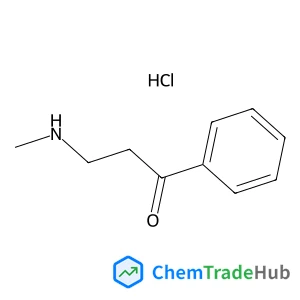
3-(Methylamino)-1-phenyl-1-propanone hydrochloride (1:1)
CAS Number:
2538-50-3
Molecular Formula:
C10H14ClNO
![N-[(Benzyloxy)carbonyl]serine structure](https://static.chemtradehub.com/structs/276/2768-56-1-77f7.webp "N-[(Benzyloxy)carbonyl]serine structure")
![[4-Amino-2-(methylsulfanyl)-5-pyrimidinyl]methanol structure](https://static.chemtradehub.com/structs/588/588-36-3-fc73.webp "[4-Amino-2-(methylsulfanyl)-5-pyrimidinyl]methanol structure")
Recommended Suppliers






Disclaimer
This page provides academic journal information for reference and research purposes only. We are not affiliated with any journal publishers and do not handle publication submissions. For publication-related inquiries, please contact the respective journal publishers directly.
If you notice any inaccuracies in the information displayed, please contact us at support@chemtradehub.com. We will promptly review and address your concerns.