












![[4-(Isobutyrylamino)phenyl]boronic acid structure](https://static.chemtradehub.com/structs/874/874219-50-8-6ab5.webp "[4-(Isobutyrylamino)phenyl]boronic acid structure")
Propagation of nanopores during anodic etching of n-InP in KOH
Literature Information
Publication Date
2013-07-31
DOI
10.1039/C3CP52253A
Impact Factor
3.676
Authors
Robert P. Lynch, Nathan Quill, Shohei Nakahara, D. Noel Buckley
View Original
Abstract
We propose a three-step model of electrochemical nanopore formation in n-InP in KOH that explains how crystallographically oriented etching can occur even though the rate-determining process (hole generation) occurs only at pore tips. The model shows that competition in kinetics between hole diffusion and electrochemical reaction determines the average diffusion distance of holes along the semiconductor surface and this, in turn, determines whether etching is crystallographic. If the kinetics of reaction are slow relative to diffusion, etching can occur at preferred crystallographic sites within a zone in the vicinity of the pore tip, leading to pore propagation in preferential directions. Symmetrical etching of three {111}A faces forming the pore tip causes it to propagate in the (remaining) 〈111〉A direction. As a pore etches, propagating atomic ledges can meet to form sites that can become new pore tips and this enables branching of pores along any of the 〈111〉A directions. The model explains the observed uniform width of pores and its variation with temperature, carrier concentration and electrolyte concentration. It also explains pore wall thickness, and deviations of pore propagation from the 〈111〉A directions. We believe that the model is generally applicable to electrochemical pore formation in III–V semiconductors.
Related Literature
A dual-mode biosensor combining transition metal carbonyl-based SERS and a colorimetric readout for thiol detection
Duo Lin, Jiahui Zhou, Yun Yu, Weiwei Chen, Pei-Hsuan Liao, Hao Huang, Kien Voon Kong
2019-10-03
Communication
DOI: 10.1039/C9AY01466G
Simultaneous multiple enantioseparation with a one-pot imprinted microfluidic channel by microchip capillary electrochromatography
Ping Qu, Jianping Lei, Jin Sheng, Lei Zhang, Huangxian Ju
2010-11-29
Paper
DOI: 10.1039/C0AN00559B
A simple and rapid chemosensor for colorimetric detection of dimethoate pesticide based on the peroxidase-mimicking catalytic activity of gold nanoparticles
Yang Hu, Jinlong Wang
2019-10-02
Paper
DOI: 10.1039/C9AY01506J
A microfluidic platform integrating pressure-driven and electroosmotic-driven flow with inline filters for affinity separations
Weijia Leng, Kimberly Evans, Michael G. Roper
2019-10-29
Paper
DOI: 10.1039/C9AY01758E
A sensitive lanthanide label array method for rapid fingerprint analysis of plant polyphenols based on time-resolved luminescence
Iqbal Bin Imran
2019-09-03
Paper
DOI: 10.1039/C9AY01067J
Differentiating intrinsic SERS spectra from a mixture by sampling induced composition gradient and independent component analysis
Justin L. Abell, Joonsang Lee, Qun Zhao, Harold Szu, Yiping Zhao
2011-11-02
Communication
DOI: 10.1039/C1AN15623C
You might also like
Compound Q&A
Are there alternatives to 1-(4-Chlorophenyl)-N-hydroxymethanimine (CAS: 3848-36-0) in synthesis?
When considering alternatives to 1-(4-Chlorophenyl)-N-hydroxymethanimine (CAS: 3...
3848-36-01-(4-Chlorophenyl)-N...
Compound Q&A
How should (1R,9S,10S,12S,14E,16S,19R,20R,21S,22R)-3,9,21-Trihydroxy-5,10,12,14,16,20,22-heptamethyl-23,24-dioxatetracyclo[17.3.1.1~6,9~.0~2,7~]tetracosa-2,5,7,14-tetraen-4-one (CAS: 183202-73-5) be stored?
This compound should be stored in a cool, dry place away from direct sunlight. I...
183202-73-5(1R,9S,10S,12S,14E,1...
Compound Q&A
How is 3-(4-Bromophenyl)-5-(2-fluorophenyl)-1,2,4-oxadiazole (CAS: 419553-16-5) typically synthesized?
3-(4-Bromophenyl)-5-(2-fluorophenyl)-1,2,4-oxadiazole is synthesized through a m...
419553-16-53-(4-Bromophenyl)-5-...
Compound Q&A
How is 5-Chloro-2-(4-chlorophenyl)-4-methyl-6-[3-(1-piperidinyl)propoxy]pyrimidine (CAS: 1639220-19-1) typically synthesized?
5-Chloro-2-(4-chlorophenyl)-4-methyl-6-[3-(1-piperidinyl)propoxy]pyrimidine (CAS...
1639220-19-15-Chloro-2-(4-chloro...
Compound Q&A
What industries use 2-Chloro-4-(difluoromethoxy)pyridine (CAS: 1206978-15-5)?
2-Chloro-4-(difluoromethoxy)pyridine is used in the pharmaceutical industry for ...
1206978-15-52-Chloro-4-(difluoro...
Compound Q&A
What regulatory guidelines apply to 3-Chloro-6-methylpyridazine (CAS: 1121-79-5)?
3-Chloro-6-methylpyridazine (CAS: 1121-79-5) is classified under the Globally Ha...
1121-79-53-Chloro-6-methylpyr...
Compound Q&A
Are there alternatives to Methyl 4,5-dimethyl-2-nitrobenzoate in synthesis?
Several alternatives can be used in the synthesis of Methyl 4,5-dimethyl-2-nitro...
90922-74-0Methyl 4,5-dimethyl-...
Compound Q&A
Are there alternatives to (2E,2'E)-3,3'-(1,4-Phenylene)bisacrylaldehyde in synthesis?
Alternatives to (2E,2'E)-3,3'-(1,4-Phenylene)bisacrylaldehyde include other acry...
63405-68-5(2E,2'E)-3,3'-(1,4-P...
Compound Q&A
What is 3-Amino-5-chloropyridin-2-ol hydrochloride (CAS: 1261906-29-9)?
3-Amino-5-chloropyridin-2-ol hydrochloride is an organic compound with the CAS n...
1261906-29-93-Amino-5-chloropyri...
Compound Q&A
What precautions should be taken when handling 6,7-Difluoro-2,3-dihydro-4H-chromen-4-one (CAS: 1092349-93-3)?
When handling 6,7-Difluoro-2,3-dihydro-4H-chromen-4-one, it is essential to wear...
1092349-93-36,7-Difluoro-2,3-dih...
Source Journal
Physical Chemistry Chemical Physics

CiteScore:
5.5
Self-citation Rate:
10.3%
Articles per Year:
3036
Physical Chemistry Chemical Physics (PCCP) is an international journal co-owned by 19 physical chemistry and physics societies from around the world. This journal publishes original, cutting-edge research in physical chemistry, chemical physics and biophysical chemistry. To be suitable for publication in PCCP, articles must include significant innovation and/or insight into physical chemistry; this is the most important criterion that reviewers and Editors will judge against when evaluating submissions. The journal has a broad scope and welcomes contributions spanning experiment, theory, computation and data science. Topical coverage includes spectroscopy, dynamics, kinetics, statistical mechanics, thermodynamics, electrochemistry, catalysis, surface science, quantum mechanics, quantum computing and machine learning. Interdisciplinary research areas such as polymers and soft matter, materials, nanoscience, energy, surfaces/interfaces, and biophysical chemistry are welcomed if they demonstrate significant innovation and/or insight into physical chemistry. Joined experimental/theoretical studies are particularly appreciated when complementary and based on up-to-date approaches.
Recommended Compounds
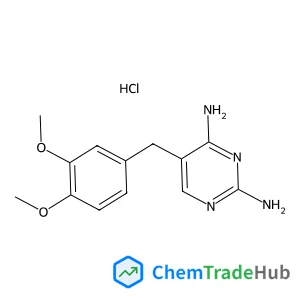
5-(3,4-Dimethoxybenzyl)-2,4-pyrimidinediamine hydrochloride (1:1)
CAS Number:
2507-23-5
Molecular Formula:
C13H17ClN4O2
Recommended Suppliers



Disclaimer
This page provides academic journal information for reference and research purposes only. We are not affiliated with any journal publishers and do not handle publication submissions. For publication-related inquiries, please contact the respective journal publishers directly.
If you notice any inaccuracies in the information displayed, please contact us at support@chemtradehub.com. We will promptly review and address your concerns.