












Biopolymer coated gold nanocrystals prepared using the green chemistry approach and their shape-dependent catalytic and surface-enhanced Raman scattering properties
Literature Information
Publication Date
2013-05-07
DOI
10.1039/C3CP50956G
Impact Factor
3.676
Authors
Hui-Hsuan Hsieh, You-Cheng Hseu, Ko-Shao Chen, Gou-Jen Wang, Yi-Syuan Wei, Ko Hsin Chang, Yeu-Wei Harn
View Original
Abstract
This study deals with the preparation of multi-shaped nanoscale gold crystals under synthetically simple, green, and efficient conditions using a seed-mediated growth approach in the presence of hyaluronic acid (HA). These highly biocompatible multi-shaped gold nanocrystals were examined to evaluate their catalytic and surface enhanced Raman scattering (SERS) properties. The results show that the size and shape of the nanocrystals are mainly correlated to the amount of seed, seed size, HA concentration, and reaction temperature. Gold seeds accelerate the reduction of the gold precursor to form gold nanocrystals using HA. The HA serves as a reducing agent and a growth template for the reduction of Au(III) and nanocrystal stabilization. The multi-shaped gold nanocrystals showed superior catalytic properties and higher SERS performance. The simple, green approach efficiently controls the nanocrystals and creates many opportunities for future applications.
Related Literature
Switchable 19F MRI polymer theranostics: towards in situ quantifiable drug release
A. P. Bapat, G. J. Cowin
2017-04-20
Paper
DOI: 10.1039/C7PY00345E
CO Tolerance of Pt alloy electrocatalysts for polymer electrolyte fuel cells and the detoxification mechanism
Hiroshi Igarashi, Takeshi Fujino, Yimin Zhu, Hiroyuki Uchida, Masahiro Watanabe
2001-01-08
Paper
DOI: 10.1039/B007768M
Retracted Article: A polyurethane–chitosan brush as an injectable hydrogel for controlled drug delivery and tissue engineering
Arun Kumar Mahanta, Sudipta Senapati, Pralay Maiti
2017-09-19
Paper
DOI: 10.1039/C7PY01218G
Analysis of the nonlinear dynamics of a direct methanol fuel cell
Thorsten Schultz
2000-11-23
Paper
DOI: 10.1039/B007283O
The effect of conjugated π-bridge and fluorination on the properties of asymmetric-building-block-containing polymers (ABC polymers) based on dithienopyran donor and benzothiadiazole acceptors
Xiaochen Wang, Ailing Tang
2017-07-26
Paper
DOI: 10.1039/C7PY00964J
Synthesis of clay-armored poly(vinylidene chloride-co-methyl acrylate) latexes by Pickering emulsion polymerization and their film-forming properties
Laura Delafresnaye, Pierre-Yves Dugas, Pierre-Emmanuel Dufils, Isabelle Chaduc, Jérôme Vinas, Muriel Lansalot, Elodie Bourgeat-Lami
2017-08-14
Paper
DOI: 10.1039/C7PY00902J
1,2,3-Triazolium-based linear ionic polyurethanes
Antoine Jourdain, Iurii Antoniuk, Anatoli Serghei, Eliane Espuche, Eric Drockenmuller
2017-03-31
Paper
DOI: 10.1039/C7PY00406K
Dehydrogenation of cyclohexene over carbon deposited on alumina
Hidefumi Amano, Satoshi Sato, Ryoji Takahashi, Toshiaki Sodesawa
2001-02-05
Paper
DOI: 10.1039/B008895L
Tunable intramolecular H-bonding promotes benzoic acid activity in polymerization: inspiration from nature
Jiaxi Xu, Kun Yang, Jingjing Liu, Herui Sun, Songquan Xu, Haixin Wang, Tianfo Guo, He Dong
2017-09-27
Paper
DOI: 10.1039/C7PY01451A
Conductance studies of 1-1 electrolytes in N,N-dimethylformamide at various temperatures
Lubov P. Safonova, Dmitrii V. Sakharov, Ludmila E. Shmukler, Arkadii M. Kolker
2001-02-06
Paper
DOI: 10.1039/B006029L
You might also like
Compound Q&A
Are there alternatives to 1-(4-Chlorophenyl)-N-hydroxymethanimine (CAS: 3848-36-0) in synthesis?
When considering alternatives to 1-(4-Chlorophenyl)-N-hydroxymethanimine (CAS: 3...
3848-36-01-(4-Chlorophenyl)-N...
Compound Q&A
How should (1R,9S,10S,12S,14E,16S,19R,20R,21S,22R)-3,9,21-Trihydroxy-5,10,12,14,16,20,22-heptamethyl-23,24-dioxatetracyclo[17.3.1.1~6,9~.0~2,7~]tetracosa-2,5,7,14-tetraen-4-one (CAS: 183202-73-5) be stored?
This compound should be stored in a cool, dry place away from direct sunlight. I...
183202-73-5(1R,9S,10S,12S,14E,1...
Compound Q&A
How is 3-(4-Bromophenyl)-5-(2-fluorophenyl)-1,2,4-oxadiazole (CAS: 419553-16-5) typically synthesized?
3-(4-Bromophenyl)-5-(2-fluorophenyl)-1,2,4-oxadiazole is synthesized through a m...
419553-16-53-(4-Bromophenyl)-5-...
Compound Q&A
How is 5-Chloro-2-(4-chlorophenyl)-4-methyl-6-[3-(1-piperidinyl)propoxy]pyrimidine (CAS: 1639220-19-1) typically synthesized?
5-Chloro-2-(4-chlorophenyl)-4-methyl-6-[3-(1-piperidinyl)propoxy]pyrimidine (CAS...
1639220-19-15-Chloro-2-(4-chloro...
Compound Q&A
What industries use 2-Chloro-4-(difluoromethoxy)pyridine (CAS: 1206978-15-5)?
2-Chloro-4-(difluoromethoxy)pyridine is used in the pharmaceutical industry for ...
1206978-15-52-Chloro-4-(difluoro...
Compound Q&A
What regulatory guidelines apply to 3-Chloro-6-methylpyridazine (CAS: 1121-79-5)?
3-Chloro-6-methylpyridazine (CAS: 1121-79-5) is classified under the Globally Ha...
1121-79-53-Chloro-6-methylpyr...
Compound Q&A
Are there alternatives to Methyl 4,5-dimethyl-2-nitrobenzoate in synthesis?
Several alternatives can be used in the synthesis of Methyl 4,5-dimethyl-2-nitro...
90922-74-0Methyl 4,5-dimethyl-...
Compound Q&A
Are there alternatives to (2E,2'E)-3,3'-(1,4-Phenylene)bisacrylaldehyde in synthesis?
Alternatives to (2E,2'E)-3,3'-(1,4-Phenylene)bisacrylaldehyde include other acry...
63405-68-5(2E,2'E)-3,3'-(1,4-P...
Compound Q&A
What is 3-Amino-5-chloropyridin-2-ol hydrochloride (CAS: 1261906-29-9)?
3-Amino-5-chloropyridin-2-ol hydrochloride is an organic compound with the CAS n...
1261906-29-93-Amino-5-chloropyri...
Compound Q&A
What precautions should be taken when handling 6,7-Difluoro-2,3-dihydro-4H-chromen-4-one (CAS: 1092349-93-3)?
When handling 6,7-Difluoro-2,3-dihydro-4H-chromen-4-one, it is essential to wear...
1092349-93-36,7-Difluoro-2,3-dih...
Source Journal
Physical Chemistry Chemical Physics

CiteScore:
5.5
Self-citation Rate:
10.3%
Articles per Year:
3036
Physical Chemistry Chemical Physics (PCCP) is an international journal co-owned by 19 physical chemistry and physics societies from around the world. This journal publishes original, cutting-edge research in physical chemistry, chemical physics and biophysical chemistry. To be suitable for publication in PCCP, articles must include significant innovation and/or insight into physical chemistry; this is the most important criterion that reviewers and Editors will judge against when evaluating submissions. The journal has a broad scope and welcomes contributions spanning experiment, theory, computation and data science. Topical coverage includes spectroscopy, dynamics, kinetics, statistical mechanics, thermodynamics, electrochemistry, catalysis, surface science, quantum mechanics, quantum computing and machine learning. Interdisciplinary research areas such as polymers and soft matter, materials, nanoscience, energy, surfaces/interfaces, and biophysical chemistry are welcomed if they demonstrate significant innovation and/or insight into physical chemistry. Joined experimental/theoretical studies are particularly appreciated when complementary and based on up-to-date approaches.
Recommended Compounds
![(2S)-2-{[(9H-Fluoren-9-ylmethoxy)carbonyl]amino}-4-(methylselanyl)butanoic acid structure](https://static.chemtradehub.com/structs/121/1217852-49-7-f252.webp "(2S)-2-{[(9H-Fluoren-9-ylmethoxy)carbonyl]amino}-4-(methylselanyl)butanoic acid structure")
(2S)-2-{[(9H-Fluoren-9-ylmethoxy)carbonyl]amino}-4-(methylselanyl)butanoic acid
CAS Number:
1217852-49-7
Molecular Formula:
C20H21NO4Se
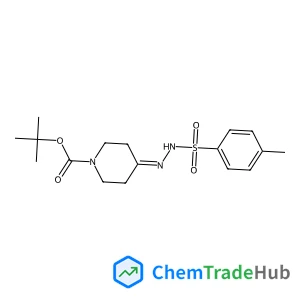
tert-Butyl 4-(2-(p-Tolylsulfonyl)hydrazono)piperidine-1-carboxylate
CAS Number:
1046478-89-0
Molecular Formula:
C17H25N3O4S
Recommended Suppliers






Disclaimer
This page provides academic journal information for reference and research purposes only. We are not affiliated with any journal publishers and do not handle publication submissions. For publication-related inquiries, please contact the respective journal publishers directly.
If you notice any inaccuracies in the information displayed, please contact us at support@chemtradehub.com. We will promptly review and address your concerns.