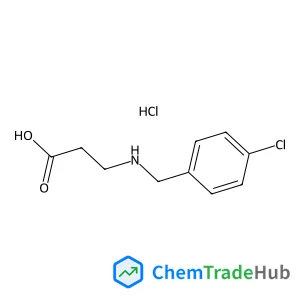
N-(4-Chlorobenzyl)-beta-alanine hydrochloride (1:1)
CAS Number:
1172479-10-5
Molecular Formula:
C10H13Cl2NO2
Lhoussain Khrouz, Yi Zhou, Bin Shen, Chunyang Dong, Mingyang Xing, Shashank Mishra, Stéphane Daniele, Jinlong Zhang
The preparation of reduced TiO2 photocatalysts with high Ti3+ concentration is a great challenge due to their instability in air. Here we report a new approach for the synthesis of reduced TiO2 with {001} facets exposed via a hydrothermal process. By the introduction of fluoride atoms, {001} and {101} facets are formed, which act as hole and electron collectors, respectively, for charge separation. By adjusting the volume of HF added, a rutile–anatase transition is observed for the first time. EPR spectra confirm the generation of Ti3+ species in the bulk of TiO2, and Ti3+ signals are studied in the anatase and rutile phases separately. The quantified EPR shows that reduced TiO2 samples present 14 000-fold more spins compared to the pristine TiO2, and the intensity can reach as high as 24.6 × 10¹⁹ spins per g. The obtained samples also have a unique disordered layer with a thickness of 1–2 nm on their surfaces, which contributes to the stabilization of the formed Ti3+ species by preventing their oxidation in air. In addition, the synthesized reduced TiO2 samples also exhibit wide-spectrum solar light absorption, especially in the near-infrared region. Owing to their enhanced solar light absorption, improved electron–hole separation and special facet exposure, these samples exhibit enhanced photocatalytic CO2 reduction performance and high CH4 selectivity under solar light irradiation, in the absence of a noble metal Pt as a co-catalyst.
Jukka Jokisaari, Juha Vaara
DOI: 10.1039/C3CP50625H
G. Ramos-Sanchez, P. B. Balbuena
DOI: 10.1039/C3CP51791H
Harry L. Tuller, Melanie Kuhn, Guido Ciampi, William Higgins, Kanai S. Shah
DOI: 10.1039/C3CP51043C
Jhenny F. Galan, Chi Ngong Tang, Shubhashis Chakrabarty, Zhiwei Liu, Vojislava Pophristic
DOI: 10.1039/C3CP50353D
Imre Bakó, Ákos Bencsura, Kersti Hermannson, Szabolcs Bálint, Tamás Grósz, Julianna Oláh
DOI: 10.1039/C3CP52271G
Robert P. Lynch, Nathan Quill, Shohei Nakahara, D. Noel Buckley
DOI: 10.1039/C3CP52253A
Yilei Wu, Agnieszka Olzyńska, Martin Hof, Gokhan Yahioglu, Duncan R. Casey, Oscar Ces, Jana Humpolíčková, Marina K. Kuimova
DOI: 10.1039/C3CP51953H
Dima Vingurt, David Fuks, Miron V. Landau, Roxana Vidruk, Moti Herskowitz
DOI: 10.1039/C3CP51086G
Waste containing N-Methoxy-N-methyl-1,3-thiazole-5-carboxamide (CAS: 898825-89-3...
N-(4-Biphenylyl)dibenzo[b,d]furan-4-amine should be stored in a tightly sealed c...
The market for 3-Acetamido-5-amino-2,4,6-triiodobenzoic acid (CAS: 1713-07-1) is...
Benzyl 2-O-acetyl-3,4,6-tri-O-benzyl-beta-D-galactopyranoside (CAS: 61820-03-9) ...
2-Ethylpiperazine dihydrochloride (CAS: 438050-52-3) is regulated under the Glob...
1,1'-[1,3-Phenylenebis(methylene)]bis(3-methyl-1H-pyrrole-2,5-dione) (CAS: 11946...
Several alternatives can be used in the synthesis of 5-Fluoro-2-(1-pyrrolidinyl)...
Proper personal protective equipment (PPE) must be worn when handling this compo...
When handling 6-Bromoimidazo[1,2-a]pyridin-8-amine, it is important to wear appr...
Alternatives to (2S,4R)-4-(4-Nitrobenzyl)pyrrolidine-2-carboxylic acid hydrochlo...

Physical Chemistry Chemical Physics (PCCP) is an international journal co-owned by 19 physical chemistry and physics societies from around the world. This journal publishes original, cutting-edge research in physical chemistry, chemical physics and biophysical chemistry. To be suitable for publication in PCCP, articles must include significant innovation and/or insight into physical chemistry; this is the most important criterion that reviewers and Editors will judge against when evaluating submissions. The journal has a broad scope and welcomes contributions spanning experiment, theory, computation and data science. Topical coverage includes spectroscopy, dynamics, kinetics, statistical mechanics, thermodynamics, electrochemistry, catalysis, surface science, quantum mechanics, quantum computing and machine learning. Interdisciplinary research areas such as polymers and soft matter, materials, nanoscience, energy, surfaces/interfaces, and biophysical chemistry are welcomed if they demonstrate significant innovation and/or insight into physical chemistry. Joined experimental/theoretical studies are particularly appreciated when complementary and based on up-to-date approaches.