












Nuclear spin–spin coupling anisotropy in the van der Waals-bonded 129Xe dimer
Literature Information
Publication Date
2013-05-13
DOI
10.1039/C3CP50625H
Impact Factor
3.676
Authors
Jukka Jokisaari, Juha Vaara
View Original
Abstract
The spin–spin coupling constant, J, in the van der Waals-bonded 129Xe–129Xe dimer cannot be determined experimentally because of the magnetic equivalence of the two nuclei. In contrast, the anisotropy of the coupling tensor, ΔJ, can be obtained from the so called effective dipole–dipole coupling determined in a solid state inclusion compound whose cages accommodate two xenon atoms. For the determination of the experimental ΔJ(129Xe, 129Xe) we exploited the data reported earlier in this journal. [D. H. Brouwer et al., Phys. Chem. Chem. Phys., 2007, 9, 1093.] The experimental value and the value obtained from relativistic first-principles computation are in perfect agreement. To the best of our knowledge this is the first investigation of spin–spin coupling anisotropy in a van der Waals-bonded system.
Related Literature
Introducing a 1,1-diphenylethylene analogue for vinylpyridine: anionic copolymerisation of 3-(1-phenylvinyl)pyridine (m-PyPE)
Marcel Fickenscher, Tom Reimers, Holger Frey
2021-05-31
Paper
DOI: 10.1039/D1PY00302J
Polyolefin graft copolymers through a ring-opening metathesis grafting through approach
Huiqun Wang, Sebla Onbulak, Steven Weigand, Frank S. Bates, Marc A. Hillmyer
2021-03-15
Paper
DOI: 10.1039/D0PY01728K
Correction: Synthesis and structural characterization of bio-based bis(cyclic carbonate)s for the preparation of non-isocyanate polyurethanes
Kamila Błażek, Hynek Beneš, Zuzana Walterová, Sabina Abbrent, Arantxa Eceiza, Tamara Calvo-Correas, Janusz Datta
2021-03-31
Correction
DOI: 10.1039/D1PY90040D
Heterobimetallic Au(i)/Y(iii) single chain nanoparticles as recyclable homogenous catalysts
Josina L. Bohlen, Bragavie Kulendran, Hannah Rothfuss, Peter W. Roesky
2021-06-28
Paper
DOI: 10.1039/D1PY00552A
Improved enantioselectivity in thiol–ene photopolymerization of sulphur-containing polymers with circularly polarized luminescence
Chen-Lu He, Zeyu Feng, Yan Li, Manman Zhou, Liyang Zhao, Sizhen Shan, Mengqiao Wang, Xin Chen, Xi-Sheng Wang, Gang Zou
2021-03-31
Paper
DOI: 10.1039/D1PY00082A
Initiator-dependent kinetics of lyotropic liquid crystal-templated thermal polymerization
Younes Saadat, Kyungtae Kim, Reza Foudazi
2021-03-11
Paper
DOI: 10.1039/D1PY00127B
Organic–inorganic nanohybrids based on an AIE luminogen-functional polymer and CdTe/ZnS QDs: morphologies, optical properties, and applications
Bingfeng Shi, Jianhua Lü, Ying Liu, Yang Xiao, Changli Lü
2021-06-02
Paper
DOI: 10.1039/D1PY00308A
A pillar[5]arene-based 3D polymer network for efficient iodine capture in aqueous solution
Jiajun Cao, Huangtianzhi Zhu, Liqing Shangguan, Yuezhou Liu, Peiren Liu, Qi Li, Yitao Wu
2021-05-27
Communication
DOI: 10.1039/D1PY00535A
Towards scalable, low dispersity, and dimensionally tunable 2D platelets using living crystallization-driven self-assembly
Charlotte E. Ellis, Tomoya Fukui, Cristina Cordoba, Arthur Blackburn, Ian Manners
2021-05-27
Paper
DOI: 10.1039/D1PY00571E
Hierarchical ordering and multilayer structure of poly(ε-caprolactone) end-functionalized by a liquid crystalline unit: role of polymer crystallization
Wenqing Xu, Xing Li, Wenhua Yuan, Jian Zhou
2021-07-05
Paper
DOI: 10.1039/D1PY00702E
You might also like
Compound Q&A
What industries use (1R,3S)-1,3-Cyclopentanediol (CAS: 16326-97-9)?
(1R,3S)-1,3-Cyclopentanediol finds applications in various industries. In the ph...
16326-97-9(1R,3S)-1,3-Cyclopen...
Compound Q&A
What precautions should be taken when handling N'-[4-(Dimethylamino)phenyl]-N,N-dimethyl-1,4-benzenediamine (CAS: 637-31-0)?
When handling N'-[4-(Dimethylamino)phenyl]-N,N-dimethyl-1,4-benzenediamine, it i...
637-31-0N'-[4-(Dimethylamino...
Compound Q&A
Are there alternatives to 5-(2,4-Difluorophenyl)-2-methoxypyrimidine (CAS: 1352318-16-1) in synthesis?
There are several alternatives to 5-(2,4-Difluorophenyl)-2-methoxypyrimidine in ...
1352318-16-15-(2,4-Difluoropheny...
Compound Q&A
What regulatory guidelines apply to 1-(3-Methoxyphenoxy)propan-2-ol (CAS: 382141-68-6)?
1-(3-Methoxyphenoxy)propan-2-ol (CAS: 382141-68-6) must comply with the Globally...
382141-68-61-(3-Methoxyphenoxy)...
Compound Q&A
Is Tetrodotoxin Citrate (CAS: 18660-81-6) safe?
Tetrodotoxin Citrate is extremely dangerous and should be handled with extreme c...
18660-81-6Tetrodotoxin Citrate
Compound Q&A
What are the main uses of 2-Methyl-2-propanyl [(1R,3S)-3-hydroxycyclopentyl]carbamate (CAS: 225641-84-9)?
2-Methyl-2-propanyl [(1R,3S)-3-hydroxycyclopentyl]carbamate (CAS: 225641-84-9) i...
225641-84-92-Methyl-2-propanyl ...
Compound Q&A
How should waste containing 4-(2-Hydroxyhexafluoroisopropyl)Benzoic Acid (CAS: 16261-80-6) be handled?
Waste containing 4-(2-Hydroxyhexafluoroisopropyl)Benzoic Acid (CAS: 16261-80-6) ...
16261-80-64-(2-Hydroxyhexafluo...
Compound Q&A
How is 2-Methyl-2-proanyl {(2S)-1-[(benzyloxy)amino]-3-hydroxy-3-methyl-1-oxo-2-butanyl}carbamate (CAS: 102507-19-7) typically synthesized?
2-Methyl-2-proanyl {(2S)-1-[(benzyloxy)amino]-3-hydroxy-3-methyl-1-oxo-2-butanyl...
102507-19-72-Methyl-2-propanyl ...
Compound Q&A
What is Benzeneethanamine, α-ethyl-, hydrochloride (1:1) (CAS: 20735-15-3)?
Benzeneethanamine, α-ethyl-, hydrochloride (1:1) is an organic compound with the...
20735-15-3Benzeneethanamine, α...
Compound Q&A
Are there alternatives to 3-{(E)-[4-(Dimethylamino)phenyl]diazenyl}benzoic acid (CAS: 20691-84-3) in synthesis?
In the synthesis of compounds similar to 3-{(E)-[4-(Dimethylamino)phenyl]diazeny...
20691-84-33-{(E)-[4-(Dimethyla...
Source Journal
Physical Chemistry Chemical Physics

CiteScore:
5.5
Self-citation Rate:
10.3%
Articles per Year:
3036
Physical Chemistry Chemical Physics (PCCP) is an international journal co-owned by 19 physical chemistry and physics societies from around the world. This journal publishes original, cutting-edge research in physical chemistry, chemical physics and biophysical chemistry. To be suitable for publication in PCCP, articles must include significant innovation and/or insight into physical chemistry; this is the most important criterion that reviewers and Editors will judge against when evaluating submissions. The journal has a broad scope and welcomes contributions spanning experiment, theory, computation and data science. Topical coverage includes spectroscopy, dynamics, kinetics, statistical mechanics, thermodynamics, electrochemistry, catalysis, surface science, quantum mechanics, quantum computing and machine learning. Interdisciplinary research areas such as polymers and soft matter, materials, nanoscience, energy, surfaces/interfaces, and biophysical chemistry are welcomed if they demonstrate significant innovation and/or insight into physical chemistry. Joined experimental/theoretical studies are particularly appreciated when complementary and based on up-to-date approaches.
Recommended Compounds
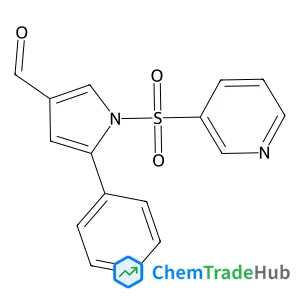
5-Phenyl-1-(pyridin-3-ylsulfonyl)-1H-pyrrole-3-carbaldehyde
CAS Number:
881676-90-0
Molecular Formula:
C16H12N2O3S
Recommended Suppliers






Disclaimer
This page provides academic journal information for reference and research purposes only. We are not affiliated with any journal publishers and do not handle publication submissions. For publication-related inquiries, please contact the respective journal publishers directly.
If you notice any inaccuracies in the information displayed, please contact us at support@chemtradehub.com. We will promptly review and address your concerns.