


Specific DNA sequences allosterically enhance protein–protein interaction in a transcription factor through modulation of protein dynamics: implications for specificity of gene regulation
Literature Information
Publication Date
2017-05-26
DOI
10.1039/C7CP01193H
Impact Factor
3.676
Authors
Abhishek Mazumder, Subrata Batabyal, Manas Mondal, Tanumoy Mondol, Susobhan Choudhury, Raka Ghosh, Tanaya Chatterjee, Dhananjay Bhattacharyya, Samir Kumar Pal, Siddhartha Roy
View Original
Abstract
Most genes are regulated by multiple transcription factors, often assembling into multi-protein complexes in the gene regulatory region. Understanding of the molecular origin of specificity of gene regulatory complex formation in the context of the whole genome is currently inadequate. A phage transcription factor λ-CI forms repressive multi-protein complexes by binding to multiple binding sites in the genome to regulate the lifecycle of the phage. The protein–protein interaction between two DNA-bound λ-CI molecules is stronger when they are bound to the correct pair of binding sites, suggesting allosteric transmission of recognition of correct DNA sequences to the protein–protein interaction interface. Exploration of conformation and dynamics by time-resolved fluorescence anisotropy decay and molecular dynamics suggests a change in protein dynamics to be a crucial factor in mediating allostery. A lattice-based model suggests that DNA-sequence induced allosteric effects could be crucial underlying factors in differentially stabilizing the correct site-specific gene regulatory complexes. We conclude that transcription factors have evolved multiple mechanisms to augment the specificity of DNA–protein interactions in order to achieve an extraordinarily high degree of spatial and temporal specificities of gene regulatory complexes, and DNA-sequence induced allostery plays an important role in the formation of sequence-specific gene regulatory complexes.
Recommended Journals

Journal of Peptide Science

Russian Journal of Bioorganic Chemistry

Russian Journal of General Chemistry

Nature Medicine

Journal of Natural Medicines

Current Opinion in Solid State & Materials Science

Journal of Saudi Chemical Society

New Journal of Chemistry

Chemistry Education Research and Practice

Current Opinion in Colloid & Interface Science
Related Literature
Macromolecular structure evolution toward giant molecules of complex structure: tandem synthesis of asymmetric giant gemini surfactants
Hao Su, Yiwen Li, Kan Yue, Zhao Wang, Pengtao Lu, Xueyan Feng, Xue-Hui Dong, Shuo Zhang, Stephen Z. D. Cheng
2014-03-24
Paper
DOI: 10.1039/C4PY00107A
Microwave-assisted simultaneous reduction and titanate treatment of graphene oxide
Jing Li, Zhenzhen Yang, Hanxun Qiu, Yigang Dai, Qingbin Zheng, Guang-Ping Zheng, Junhe Yang
2013-07-25
Paper
DOI: 10.1039/C3TA12228J
Retrieval of the complex refractive index of aerosol droplets from optical tweezers measurements
Rachael E. H. Miles, Jim S. Walker, Daniel R. Burnham, Jonathan P. Reid
2012-01-11
Paper
DOI: 10.1039/C2CP23999J
Use of poly(methyl methacrylate) with an unsaturated chain end as a macroinitiator precursor in organocatalyzed living radical block polymerization
Jun Jie Chang, Longqiang Xiao, Chen-Gang Wang, Hiroshi Niino, Shunsuke Chatani, Atsushi Goto
2018-09-05
Paper
DOI: 10.1039/C8PY01066H
Self-assembled hybrid tinphosphonate nanoparticles with bimodal porosity: an insight towards the efficient and selective catalytic process for the synthesis of bioactive 1,4-dihydropyridines under solvent-free conditions
Malay Pramanik, Asim Bhaumik
2013-07-12
Paper
DOI: 10.1039/C3TA12476B
Chirality-dependent balance between hydrogen bonding and London dispersion in isolated (±)-1-indanol clusters
Jonas Altnöder, Juhyon J. Lee, Katharina E. Otto, Martin A. Suhm
2013-05-13
Paper
DOI: 10.1039/C3CP50708D
The structure of chromophore-grafted amyloid-β12–28 dimers in the gas-phase: FRET-experiment guided modelling
2016-02-19
Paper
DOI: 10.1039/C6CP00263C
In situ confocal microscopic observation on inhibiting the dendrite formation of a-CNx/Li electrode
Yi-jun Zhang, Wen-qi Bai, Xiu-li Wang, Xin-hui Xia, Chang-dong Gu, Jiang-ping Tu
2016-09-12
Paper
DOI: 10.1039/C6TA06612G
Design of equidistant and revert type precipitation patterns in reaction–diffusion systems
Ferenc Molnár Jr
2008-03-06
Paper
DOI: 10.1039/B715775D
Film morphology evolution during solvent vapor annealing of highly efficient small molecule donor/acceptor blends
Sebastian Engmann, Hyun Wook Ro, Andrew Herzing, Chad R. Snyder, Lee J. Richter, Paul B. Geraghty, David J. Jones
2016-09-15
Paper
DOI: 10.1039/C6TA05056E
You might also like
Compound Q&A
Are there alternatives to 1-(4-Chlorophenyl)-N-hydroxymethanimine (CAS: 3848-36-0) in synthesis?
When considering alternatives to 1-(4-Chlorophenyl)-N-hydroxymethanimine (CAS: 3...
3848-36-01-(4-Chlorophenyl)-N...
Compound Q&A
How should (1R,9S,10S,12S,14E,16S,19R,20R,21S,22R)-3,9,21-Trihydroxy-5,10,12,14,16,20,22-heptamethyl-23,24-dioxatetracyclo[17.3.1.1~6,9~.0~2,7~]tetracosa-2,5,7,14-tetraen-4-one (CAS: 183202-73-5) be stored?
This compound should be stored in a cool, dry place away from direct sunlight. I...
183202-73-5(1R,9S,10S,12S,14E,1...
Compound Q&A
How is 3-(4-Bromophenyl)-5-(2-fluorophenyl)-1,2,4-oxadiazole (CAS: 419553-16-5) typically synthesized?
3-(4-Bromophenyl)-5-(2-fluorophenyl)-1,2,4-oxadiazole is synthesized through a m...
419553-16-53-(4-Bromophenyl)-5-...
Compound Q&A
How is 5-Chloro-2-(4-chlorophenyl)-4-methyl-6-[3-(1-piperidinyl)propoxy]pyrimidine (CAS: 1639220-19-1) typically synthesized?
5-Chloro-2-(4-chlorophenyl)-4-methyl-6-[3-(1-piperidinyl)propoxy]pyrimidine (CAS...
1639220-19-15-Chloro-2-(4-chloro...
Compound Q&A
What industries use 2-Chloro-4-(difluoromethoxy)pyridine (CAS: 1206978-15-5)?
2-Chloro-4-(difluoromethoxy)pyridine is used in the pharmaceutical industry for ...
1206978-15-52-Chloro-4-(difluoro...
Compound Q&A
What regulatory guidelines apply to 3-Chloro-6-methylpyridazine (CAS: 1121-79-5)?
3-Chloro-6-methylpyridazine (CAS: 1121-79-5) is classified under the Globally Ha...
1121-79-53-Chloro-6-methylpyr...
Compound Q&A
Are there alternatives to Methyl 4,5-dimethyl-2-nitrobenzoate in synthesis?
Several alternatives can be used in the synthesis of Methyl 4,5-dimethyl-2-nitro...
90922-74-0Methyl 4,5-dimethyl-...
Compound Q&A
Are there alternatives to (2E,2'E)-3,3'-(1,4-Phenylene)bisacrylaldehyde in synthesis?
Alternatives to (2E,2'E)-3,3'-(1,4-Phenylene)bisacrylaldehyde include other acry...
63405-68-5(2E,2'E)-3,3'-(1,4-P...
Compound Q&A
What is 3-Amino-5-chloropyridin-2-ol hydrochloride (CAS: 1261906-29-9)?
3-Amino-5-chloropyridin-2-ol hydrochloride is an organic compound with the CAS n...
1261906-29-93-Amino-5-chloropyri...
Compound Q&A
What precautions should be taken when handling 6,7-Difluoro-2,3-dihydro-4H-chromen-4-one (CAS: 1092349-93-3)?
When handling 6,7-Difluoro-2,3-dihydro-4H-chromen-4-one, it is essential to wear...
1092349-93-36,7-Difluoro-2,3-dih...
Source Journal
Physical Chemistry Chemical Physics

CiteScore:
5.5
Self-citation Rate:
10.3%
Articles per Year:
3036
Physical Chemistry Chemical Physics (PCCP) is an international journal co-owned by 19 physical chemistry and physics societies from around the world. This journal publishes original, cutting-edge research in physical chemistry, chemical physics and biophysical chemistry. To be suitable for publication in PCCP, articles must include significant innovation and/or insight into physical chemistry; this is the most important criterion that reviewers and Editors will judge against when evaluating submissions. The journal has a broad scope and welcomes contributions spanning experiment, theory, computation and data science. Topical coverage includes spectroscopy, dynamics, kinetics, statistical mechanics, thermodynamics, electrochemistry, catalysis, surface science, quantum mechanics, quantum computing and machine learning. Interdisciplinary research areas such as polymers and soft matter, materials, nanoscience, energy, surfaces/interfaces, and biophysical chemistry are welcomed if they demonstrate significant innovation and/or insight into physical chemistry. Joined experimental/theoretical studies are particularly appreciated when complementary and based on up-to-date approaches.
Recommended Compounds
![6-Bromo-2,3-dihydro-1H-pyrido[2,3-b][1,4]oxazine structure](https://static.chemtradehub.com/structs/120/1203499-17-5-b4d1.webp "6-Bromo-2,3-dihydro-1H-pyrido[2,3-b][1,4]oxazine structure")
6-Bromo-2,3-dihydro-1H-pyrido[2,3-b][1,4]oxazine
CAS Number:
1203499-17-5
Molecular Formula:
C7H7BrN2O
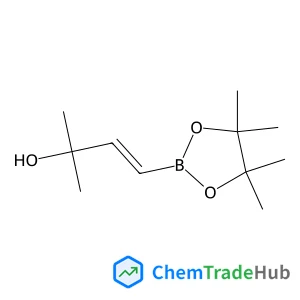
(E)-2-methyl-4-(4,4,5,5-tetramethyl-1,3,2-dioxaborolan-2-yl)but-3-en-2-ol
CAS Number:
581802-26-8
Molecular Formula:
C11H21BO3
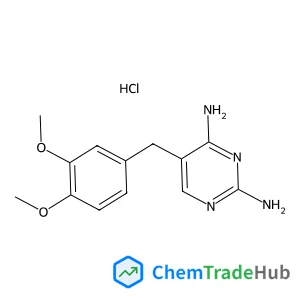
5-(3,4-Dimethoxybenzyl)-2,4-pyrimidinediamine hydrochloride (1:1)
CAS Number:
2507-23-5
Molecular Formula:
C13H17ClN4O2
Recommended Suppliers




Disclaimer
This page provides academic journal information for reference and research purposes only. We are not affiliated with any journal publishers and do not handle publication submissions. For publication-related inquiries, please contact the respective journal publishers directly.
If you notice any inaccuracies in the information displayed, please contact us at support@chemtradehub.com. We will promptly review and address your concerns.