












Self-assembled hybrid tinphosphonate nanoparticles with bimodal porosity: an insight towards the efficient and selective catalytic process for the synthesis of bioactive 1,4-dihydropyridines under solvent-free conditions
Literature Information
Publication Date
2013-07-12
DOI
10.1039/C3TA12476B
Impact Factor
12.732
Authors
Malay Pramanik, Asim Bhaumik
View Original
Abstract
Self-assembled ordered mesoporous organic–inorganic hybrid tinphosphonate nanomaterial (HSnP-2) with crystalline framework structure has been synthesized through the reaction of benzene-1,3,5-triphosphonic acid (BTPA) and Sn(IV) chloride under hydrothermal conditions at 453 K in the absence of any structure directing agent. Powder XRD, FE-SEM, HR-TEM, N2 sorption, solid state 13C CP-MAS and 31P MAS NMR, TG-DTA analysis and FT-IR spectroscopic techniques are employed to characterize the material. The hexagonal crystal phase of the material is established through REFLEX and CELSIZ unit cell refinement programs. The calculated unit cell parameters of HSnP-2 are a = b = 17.515 Å and c = 10.254 Å. The material is composed of hexagonally ordered tiny nanocrystals of dimensions of ca. 4.0 nm and exhibits high BET surface area (380 m2 g−1), good thermal stability along with uniform supermicropores (ca. 1.3 nm) and an ordered assembly of mesopores. HSnP-2 shows outstanding catalytic activity and high recycling efficiency for the green and efficient one-pot three component coupling reaction for the synthesis of bioactive 1,4-dihydropyridines with excellent yields under solvent-free conditions. The novelty of this eco-friendly catalytic system is further manifested from the mild reaction temperature (333 K) and short reaction time (20 min), together with exclusive selectivity for the desired 1,4-dihydropyridines over 2-arylpyridines or 1,2-dihydopyridines.
Related Literature
Visible-light-mediated hydrodehalogenation and Br/D exchange of inactivated aryl and alkyl halides with a palladium complex
Jia-Hui Zhao, Xue-Ya Gou, Xi-Meng Chen, Yong-Min Liang
2019-03-28
Research Article
DOI: 10.1039/C9QO00240E
Computational and experimental studies on Cu/Au-catalyzed stereoselective synthesis of 1,3-disubstituted allenes
María Magdalena Cid, María Lago-Silva, Marta González Comesaña, Olalla Nieto Faza, Carlos Silva López
2019-04-16
Research Article
DOI: 10.1039/C9QO00364A
Facile synthesis of 2-(2-aminobenzoyl)benzoic acids via a base-promoted aerobic cascade reaction
Yangxin Chen, Ting Chen, Zhongai Zou, Yadong Feng, Qihua You
2019-03-05
Research Article
DOI: 10.1039/C9QO00101H
Palladium-catalyzed arene C–H activation/ketone C–H functionalization reaction: route to spirodihydroindenones
Bo-Sheng Zhang, Hui-Liang Hua, Lu-Yao Gao, Ce Liu, Yi-Feng Qiu, Ping-Xin Zhou, Zhao-Zhao Zhou, Jia-Hui Zhao, Yong-Min Liang
2017-04-12
Research Article
DOI: 10.1039/C7QO00164A
Asymmetric synthesis of highly functionalized furanones via direct Michael reactions mediated by a bulky primary amine
Huicai Huang, Xue Lu, Yukang Mao, Jinxing Ye
2018-11-22
Research Article
DOI: 10.1039/C8QO01132J
Application of dialkyl azodicarboxylate frameworks featuring multi-functional properties
Xiao-Wen Zhang, Di Wu, Zheng-Hui Guan, Wen-Bo Liu
2019-04-04
Review Article
DOI: 10.1039/C9QO00017H
Why electrostatically enhanced thiourea is better than Schreiner's thiourea in both catalytic activity and regioselectivity?
Chao-Xian Yan, Rui-Zhi Wu, Ka Lu, Fang-Ling Yang, Xiao-Shan Yang, Rui Wang, Xing Yang, Pan-Pan Zhou, Xiangfeng Shao
2019-04-04
Research Article
DOI: 10.1039/C9QO00251K
A modular approach to highly functionalized 3-sulfonylfurans via conjugate addition of 3-cyclopropylideneprop-2-en-1-ones with sodium sulfinates and sequential 5-endo-trig iodocyclization
Maozhong Miao, Huaping Xu, Yi Luo, Mengchao Jin, Zhengkai Chen, Jianfeng Xu, Hongjun Ren
2017-06-14
Research Article
DOI: 10.1039/C7QO00362E
Bifunctional Brønsted base catalyzed inverse-electron-demand aza-Diels–Alder reactions of saccharin-derived 1-azadienes with azlactones
Xiao-Rui Ren, Jun-Bing Lin, Xiu-Qin Hu, Peng-Fei Xu
2019-05-09
Research Article
DOI: 10.1039/C9QO00357F
You might also like
Compound Q&A
Are there alternatives to 1-(4-Chlorophenyl)-N-hydroxymethanimine (CAS: 3848-36-0) in synthesis?
When considering alternatives to 1-(4-Chlorophenyl)-N-hydroxymethanimine (CAS: 3...
3848-36-01-(4-Chlorophenyl)-N...
Compound Q&A
How should (1R,9S,10S,12S,14E,16S,19R,20R,21S,22R)-3,9,21-Trihydroxy-5,10,12,14,16,20,22-heptamethyl-23,24-dioxatetracyclo[17.3.1.1~6,9~.0~2,7~]tetracosa-2,5,7,14-tetraen-4-one (CAS: 183202-73-5) be stored?
This compound should be stored in a cool, dry place away from direct sunlight. I...
183202-73-5(1R,9S,10S,12S,14E,1...
Compound Q&A
How is 3-(4-Bromophenyl)-5-(2-fluorophenyl)-1,2,4-oxadiazole (CAS: 419553-16-5) typically synthesized?
3-(4-Bromophenyl)-5-(2-fluorophenyl)-1,2,4-oxadiazole is synthesized through a m...
419553-16-53-(4-Bromophenyl)-5-...
Compound Q&A
How is 5-Chloro-2-(4-chlorophenyl)-4-methyl-6-[3-(1-piperidinyl)propoxy]pyrimidine (CAS: 1639220-19-1) typically synthesized?
5-Chloro-2-(4-chlorophenyl)-4-methyl-6-[3-(1-piperidinyl)propoxy]pyrimidine (CAS...
1639220-19-15-Chloro-2-(4-chloro...
Compound Q&A
What industries use 2-Chloro-4-(difluoromethoxy)pyridine (CAS: 1206978-15-5)?
2-Chloro-4-(difluoromethoxy)pyridine is used in the pharmaceutical industry for ...
1206978-15-52-Chloro-4-(difluoro...
Compound Q&A
What regulatory guidelines apply to 3-Chloro-6-methylpyridazine (CAS: 1121-79-5)?
3-Chloro-6-methylpyridazine (CAS: 1121-79-5) is classified under the Globally Ha...
1121-79-53-Chloro-6-methylpyr...
Compound Q&A
Are there alternatives to Methyl 4,5-dimethyl-2-nitrobenzoate in synthesis?
Several alternatives can be used in the synthesis of Methyl 4,5-dimethyl-2-nitro...
90922-74-0Methyl 4,5-dimethyl-...
Compound Q&A
Are there alternatives to (2E,2'E)-3,3'-(1,4-Phenylene)bisacrylaldehyde in synthesis?
Alternatives to (2E,2'E)-3,3'-(1,4-Phenylene)bisacrylaldehyde include other acry...
63405-68-5(2E,2'E)-3,3'-(1,4-P...
Compound Q&A
What is 3-Amino-5-chloropyridin-2-ol hydrochloride (CAS: 1261906-29-9)?
3-Amino-5-chloropyridin-2-ol hydrochloride is an organic compound with the CAS n...
1261906-29-93-Amino-5-chloropyri...
Compound Q&A
What precautions should be taken when handling 6,7-Difluoro-2,3-dihydro-4H-chromen-4-one (CAS: 1092349-93-3)?
When handling 6,7-Difluoro-2,3-dihydro-4H-chromen-4-one, it is essential to wear...
1092349-93-36,7-Difluoro-2,3-dih...
Source Journal
Journal of Materials Chemistry A

CiteScore:
19.5
Self-citation Rate:
4.7%
Articles per Year:
2211
Journal of Materials Chemistry A, B & C cover high quality studies across all fields of materials chemistry. The journals focus on those theoretical or experimental studies that report new understanding, applications, properties and synthesis of materials. The journals have a strong history of publishing quality reports of interest to interdisciplinary communities and providing an efficient and rigorous service through peer review and publication. The journals are led by an international team of Editors-in-Chief and Associate Editors who are all active researchers in their fields. Journal of Materials Chemistry A, B & C are separated by the intended application of the material studied. Broadly, applications in energy and sustainability are of interest to Journal of Materials Chemistry A, applications in biology and medicine are of interest to Journal of Materials Chemistry B, and applications in optical, magnetic and electronic devices are of interest to Journal of Materials Chemistry C. More than one Journal of Materials Chemistry journal may be suitable for certain fields and researchers are encouraged to submit their paper to the journal that they feel best fits for their particular article. Example topic areas within the scope of Journal of Materials Chemistry A are listed below. This list is neither exhaustive nor exclusive. Artificial photosynthesis Batteries Carbon dioxide conversion Catalysis Fuel cells Gas capture/separation/storage Green/sustainable materials Hydrogen generation Hydrogen storage Photocatalysis Photovoltaics Self-cleaning materials Self-healing materials Sensors Supercapacitors Thermoelectrics Water splitting Water treatment
Recommended Compounds
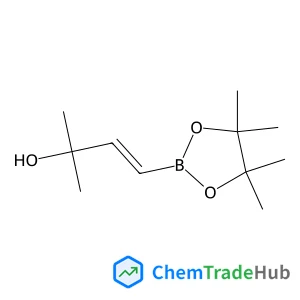
(E)-2-methyl-4-(4,4,5,5-tetramethyl-1,3,2-dioxaborolan-2-yl)but-3-en-2-ol
CAS Number:
581802-26-8
Molecular Formula:
C11H21BO3
Recommended Suppliers






Disclaimer
This page provides academic journal information for reference and research purposes only. We are not affiliated with any journal publishers and do not handle publication submissions. For publication-related inquiries, please contact the respective journal publishers directly.
If you notice any inaccuracies in the information displayed, please contact us at support@chemtradehub.com. We will promptly review and address your concerns.