












The behavior of a paramagnetic system in electric and magnetic fields as exemplified by revisiting Li@B10H14‡
Literature Information
Publication Date
2017-04-07
DOI
10.1039/C7CP00658F
Impact Factor
3.676
Authors
Taye B. Demissie, Michael L. McKee, Drahomír Hnyk
View Original
Abstract
The electric and magnetic properties of the Li@B10H14 complex, considered as a novel inorganic electride-type system with potential for second-order non-linear optical (NLO) applications, have already been studied. However, the reported C2v structure is not the global energy minimum and therefore its electronic and magnetic properties need to be revisited. Moreover, by applying more accurate computational protocols (ROHF-CCSD/CCSD(T) and larger basis sets) we show that the model chemistry used earlier (UMP2/6-31+G(d)) is not sufficient for reliable description of the NLO responses of this open-shell doublet complex. The global minimum based on the Cs symmetry is significantly (by ca. 25 kcal mol−1) more stable than the C2v structure and it should be viewed as a system with moderate NLO responses. An excess of unpaired electron density is also responsible for the contact and pseudo-contact contributions to the magnetic properties, which was not considered in the earlier work.
Recommended Journals
Related Literature
Polymeric engineering of AIEgens for NIR-II fluorescence imaging and detection of abdominal metastases of ovarian cancer in vivo
Xiaobo Zhou, Yuhan Zeng, Shijie Li, Ke Zhang, Lingfeng Zhao, Guo Li, Qi Wang, Haiwei Ji, Mingmin Wu, Jinxia Liu, Yuling Qin, Wei Feng, Li Wu
2023-10-10
Communication
DOI: 10.1039/D3TB01750H
Co–MnO/C nanoparticles derived from MOFs with improved conductivity and reduced volume change for lithium-ion batteries
Yiting Wang, Jie Zheng, Changjian He, Xiaochun Li, Yichuan Rui, Bohejin Tang
2023-11-21
Paper
DOI: 10.1039/D3NJ04872A
2023 Journal of Materials Chemistry Lectureship winner: Dr Jovana Milić, University of Fribourg, Switzerland
2023-11-14
Editorial
DOI: 10.1039/D3TB90200E
Simple devising of N-doped carbon dots (N-CDs) as a low-cost probe for selective environmental toxin detection and security applications
Kumaresan Annamalai, Arun Annamalai, Ramya Ravichandran, Anandhavalli Jeevarathinam, Padmanaban Annamalai, Hector Valdes, Sundaravadivel Elumalai
2023-11-17
Paper
DOI: 10.1039/D3NJ04571D
The construction of hierarchical assemblies with in situ generation of chemotherapy drugs to enhance the efficacy of chemodynamic therapy for multi-modal anti-tumor treatments
Wei-Nan Zhao, Hongjuan Li, Shiguo Sun, Yongqian Xu
2023-10-25
Paper
DOI: 10.1039/D3TB01564E
A tetrasulfide bond-bridged mesoporous organosilica-based nanoplatform for triple-enhanced chemodynamic therapy combined with chemotherapy and H2S therapy
Mingzhe Liu, Hui Xu, FangFang Zhou, Xiyu Gong, Songwen Tan, Yongju He
2023-10-25
Paper
DOI: 10.1039/D3TB02147E
Flexible electrochemical sensor for highly sensitive and selective non-enzymatic detection of creatinine via electrodeposited copper over polymelamine formaldehyde
Daisy Mehta, Alankar Kafle, Tharamani C. Nagaiah
2023-10-11
Paper
DOI: 10.1039/D3TB01528A
You might also like
Compound Q&A
Is 6-(3-Fluorophenyl)picolinic acid (CAS: 887982-40-3) safe?
6-(3-Fluorophenyl)picolinic acid is generally considered safe for laboratory use...
887982-40-36-(3-Fluorophenyl)pi...
Compound Q&A
What industries use (3R)-3-Pyrrolidinol (CAS: 2799-21-5)?
(3R)-3-Pyrrolidinol is used in the pharmaceutical industry as a precursor for dr...
2799-21-5(3R)-3-Pyrrolidinol
Compound Q&A
What precautions should be taken when handling (4R,5R)-4,5-Diethoxycarbonyl-2,2-dimethyldioxolane (CAS: 59779-75-8)?
When handling (4R,5R)-4,5-Diethoxycarbonyl-2,2-dimethyldioxolane (CAS: 59779-75-...
59779-75-8(4R,5R)-4,5-Diethoxy...
Compound Q&A
How is 1-(6-Chloroimidazo[1,2-b]pyridazin-3-yl)ethanone (CAS: 90734-71-7) typically synthesized?
1-(6-Chloroimidazo[1,2-b]pyridazin-3-yl)ethanone is often synthesized via a mult...
90734-71-71-(6-Chloroimidazo[1...
Compound Q&A
What is the market or research trend for N-Ethyl-3,4-dimethylbenzylamine (CAS: 39180-83-1)?
The market for N-Ethyl-3,4-dimethylbenzylamine (CAS: 39180-83-1) remains steady,...
39180-83-1N-Ethyl-3,4-dimethyl...
Compound Q&A
What is Tert-butyl 3-(pyrrolidin-1-yl)azetidine-1-carboxylate (CAS: 1019008-21-9)?
Tert-butyl 3-(pyrrolidin-1-yl)azetidine-1-carboxylate is a chemical compound wit...
1019008-21-9Tert-butyl 3-(pyrrol...
Compound Q&A
What regulatory guidelines apply to 1-Bromo-3-chloro-2,4-dimethoxybenzene (CAS: 1228956-93-1)?
1-Bromo-3-chloro-2,4-dimethoxybenzene (CAS: 1228956-93-1) falls under the classi...
1228956-93-11-Bromo-3-chloro-2,4...
Compound Q&A
Is 8-Bromo-2-methyl-3,4-dihydroisoquinolin-1(2H)-one (CAS: 1368622-07-4) safe?
The safety of 8-Bromo-2-methyl-3,4-dihydroisoquinolin-1(2H)-one (CAS: 1368622-07...
1368622-07-48-Bromo-2-methyl-3,4...
Compound Q&A
Is Benzyl [(3S)-2,6-dioxo-3-piperidinyl]carbamate (CAS: 22785-43-9) safe?
Benzyl [(3S)-2,6-dioxo-3-piperidinyl]carbamate is generally safe when handled wi...
22785-43-9Benzyl [(3S)-2,6-dio...
Compound Q&A
How should 1-{[4-(4,4,5,5-Tetramethyl-1,3,2-dioxaborolan-2-yl)phenyl]sulfonyl}pyrrolidine (CAS: 928657-21-0) be stored?
1-{[4-(4,4,5,5-Tetramethyl-1,3,2-dioxaborolan-2-yl)phenyl]sulfonyl}pyrrolidine s...
928657-21-01-{[4-(4,4,5,5-Tetra...
Source Journal
Physical Chemistry Chemical Physics

CiteScore:
5.5
Self-citation Rate:
10.3%
Articles per Year:
3036
Physical Chemistry Chemical Physics (PCCP) is an international journal co-owned by 19 physical chemistry and physics societies from around the world. This journal publishes original, cutting-edge research in physical chemistry, chemical physics and biophysical chemistry. To be suitable for publication in PCCP, articles must include significant innovation and/or insight into physical chemistry; this is the most important criterion that reviewers and Editors will judge against when evaluating submissions. The journal has a broad scope and welcomes contributions spanning experiment, theory, computation and data science. Topical coverage includes spectroscopy, dynamics, kinetics, statistical mechanics, thermodynamics, electrochemistry, catalysis, surface science, quantum mechanics, quantum computing and machine learning. Interdisciplinary research areas such as polymers and soft matter, materials, nanoscience, energy, surfaces/interfaces, and biophysical chemistry are welcomed if they demonstrate significant innovation and/or insight into physical chemistry. Joined experimental/theoretical studies are particularly appreciated when complementary and based on up-to-date approaches.
Recommended Compounds
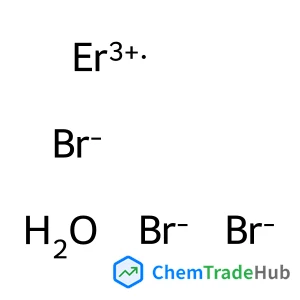

2,3,6-Tri-O-acetyl-4-O-(2,3,4,6-tetra-O-acetyl-beta-D-galactopyranosyl)-alpha-D-glucopyranosyl bromide
CAS Number:
4753-07-5
Molecular Formula:
C26H35BrO17
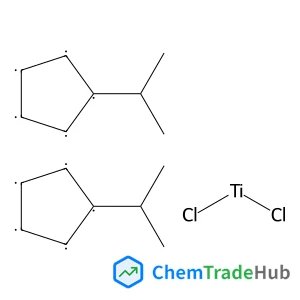
BIS(I-PROPYLCYCLOPENTADIENYL)TITANIUM DICHLORIDE
CAS Number:
12130-65-3
Molecular Formula:
C16H22Cl2Ti
Recommended Suppliers




Disclaimer
This page provides academic journal information for reference and research purposes only. We are not affiliated with any journal publishers and do not handle publication submissions. For publication-related inquiries, please contact the respective journal publishers directly.
If you notice any inaccuracies in the information displayed, please contact us at support@chemtradehub.com. We will promptly review and address your concerns.