












A tough and self-healing poly(l-glutamic acid)-based composite hydrogel for tissue engineering
Literature Information
Publication Date
2018-09-27
DOI
10.1039/C8TB01981A
Impact Factor
6.331
Authors
Weijun Zhang, Kunxi Zhang, Shifeng Yan, Jie Wu, Jingbo Yin
View Original
Abstract
A hydrogel with excellent mechanical properties and self-healing ability provides a promising tool for the repair of load-bearing tissues under a dynamic microenvironment. In this study, poly(L-glutamic acid) (PLGA)-based composite hydrogels with good toughness and self-healing ability were fabricated via filling soft self-healing hydrogels into a tough porous hydrogel skeleton. The PLGA-based tough porous hydrogel skeleton was treated by laser ablation to form a uniform porous structure with 85% porosity and 260 μm pore diameter, and the structure formation was reinforced by the hydrophobic assembly mechanism. The resulting hydrogel skeleton possessed good toughness (maximum compressive stress of 0.51 MPa with strain of 80%) and could fully recover after cyclic compression tests. Furthermore, PLGA-based self-healing hydrogels were fabricated based on a Schiff base reaction, followed by being composited with a tough porous hydrogel skeleton. More importantly, the composite hydrogel exhibited a homogenous interpenetrated structure that inherited mechanical strength and the self-healing ability of the two original compositions. These composite hydrogels exhibited a compressive failure stress of 0.21 MPa at a 63% strain, which was 1.3-fold higher than the value of the original porous hydrogel skeleton at 63% strain. The healing percentage gradually reached 81% within 6 h, indicating the good self-healing efficiency. Furthermore, live/dead staining images revealed that 89% of laden cells remained alive after culture for 7 days. Moreover, the composite hydrogel could self-heal even after cell encapsulation. The developed PLGA-based composite hydrogel will be a promising biomaterial for the repair of load-bearing tissues.
Related Literature
Polymeric vesicles mimicking glycocalyx (PV-Gx) for studying carbohydrate–protein interactions in solution
Lu Su, Yu Zhao, Guosong Chen, Ming Jiang
2012-04-13
Paper
DOI: 10.1039/C2PY20110K
A new story of cyclodextrin as a bulky pendent group causing uncommon behaviour to random copolymers in solution
Fuji Sakai, Guosong Chen, Ming Jiang
2012-01-31
Paper
DOI: 10.1039/C2PY00614F
Benzoxazine-based phosphinated bisphenols and their application in preparing flame-retardant, low dielectric cyanate ester thermosets
Hou Chien Chang, Hung Tse Lin, Ching Hsuan Lin
2012-02-01
Paper
DOI: 10.1039/C2PY00528J
Thermally reversible Diels–Alder-based polymerization: an experimental and theoretical assessment
Jiawen Zhou, Nathalie K. Guimard, Andrew J. Inglis, Mansoor Namazian, Ching Y. Lin, Michelle L. Coote, Emmanouil Spyrou, Stefan Hilf, Friedrich Georg Schmidt, Christopher Barner-Kowollik
2011-10-26
Paper
DOI: 10.1039/C1PY00356A
Double modular modification of thiolactone-containing polymers: towards polythiols and derived structures
Pieter Espeel, Fabienne Goethals, Milan M. Stamenović, Lionel Petton, Filip E. Du Prez
2012-02-03
Paper
DOI: 10.1039/C2PY00565D
Synthesis and polymerization of C-vinyl- and N-vinyl-1,2,3-triazoles
Samir Beghdadi, Daniele Addis, Hatem Ben Romdhane, Julien Bernard, Eric Drockenmuller
2011-10-28
Review Article
DOI: 10.1039/C1PY00446H
Rapidly thiol-responsive degradable block copolymer nanocarriers with facile bioconjugation
Samuel Aleksanian, Behnoush Khorsand, Rolf Schmidt, Jung Kwon Oh
2012-04-18
Paper
DOI: 10.1039/C2PY20154B
Double click reaction strategies for polymer conjugation and post-functionalization of polymers
Hakan Durmaz, Amitav Sanyal, Gurkan Hizal, Umit Tunca
2011-12-02
Review Article
DOI: 10.1039/C1PY00471A
Molecular imaging with polymers
Nathan R. B. Boase, Idriss Blakey, Kristofer J. Thurecht
2012-03-26
Minireview
DOI: 10.1039/C2PY20132A
You might also like
Compound Q&A
Are there alternatives to 1-(4-Chlorophenyl)-N-hydroxymethanimine (CAS: 3848-36-0) in synthesis?
When considering alternatives to 1-(4-Chlorophenyl)-N-hydroxymethanimine (CAS: 3...
3848-36-01-(4-Chlorophenyl)-N...
Compound Q&A
How should (1R,9S,10S,12S,14E,16S,19R,20R,21S,22R)-3,9,21-Trihydroxy-5,10,12,14,16,20,22-heptamethyl-23,24-dioxatetracyclo[17.3.1.1~6,9~.0~2,7~]tetracosa-2,5,7,14-tetraen-4-one (CAS: 183202-73-5) be stored?
This compound should be stored in a cool, dry place away from direct sunlight. I...
183202-73-5(1R,9S,10S,12S,14E,1...
Compound Q&A
How is 3-(4-Bromophenyl)-5-(2-fluorophenyl)-1,2,4-oxadiazole (CAS: 419553-16-5) typically synthesized?
3-(4-Bromophenyl)-5-(2-fluorophenyl)-1,2,4-oxadiazole is synthesized through a m...
419553-16-53-(4-Bromophenyl)-5-...
Compound Q&A
How is 5-Chloro-2-(4-chlorophenyl)-4-methyl-6-[3-(1-piperidinyl)propoxy]pyrimidine (CAS: 1639220-19-1) typically synthesized?
5-Chloro-2-(4-chlorophenyl)-4-methyl-6-[3-(1-piperidinyl)propoxy]pyrimidine (CAS...
1639220-19-15-Chloro-2-(4-chloro...
Compound Q&A
What industries use 2-Chloro-4-(difluoromethoxy)pyridine (CAS: 1206978-15-5)?
2-Chloro-4-(difluoromethoxy)pyridine is used in the pharmaceutical industry for ...
1206978-15-52-Chloro-4-(difluoro...
Compound Q&A
What regulatory guidelines apply to 3-Chloro-6-methylpyridazine (CAS: 1121-79-5)?
3-Chloro-6-methylpyridazine (CAS: 1121-79-5) is classified under the Globally Ha...
1121-79-53-Chloro-6-methylpyr...
Compound Q&A
Are there alternatives to Methyl 4,5-dimethyl-2-nitrobenzoate in synthesis?
Several alternatives can be used in the synthesis of Methyl 4,5-dimethyl-2-nitro...
90922-74-0Methyl 4,5-dimethyl-...
Compound Q&A
Are there alternatives to (2E,2'E)-3,3'-(1,4-Phenylene)bisacrylaldehyde in synthesis?
Alternatives to (2E,2'E)-3,3'-(1,4-Phenylene)bisacrylaldehyde include other acry...
63405-68-5(2E,2'E)-3,3'-(1,4-P...
Compound Q&A
What is 3-Amino-5-chloropyridin-2-ol hydrochloride (CAS: 1261906-29-9)?
3-Amino-5-chloropyridin-2-ol hydrochloride is an organic compound with the CAS n...
1261906-29-93-Amino-5-chloropyri...
Compound Q&A
What precautions should be taken when handling 6,7-Difluoro-2,3-dihydro-4H-chromen-4-one (CAS: 1092349-93-3)?
When handling 6,7-Difluoro-2,3-dihydro-4H-chromen-4-one, it is essential to wear...
1092349-93-36,7-Difluoro-2,3-dih...
Source Journal
Journal of Materials Chemistry B
CiteScore:
12
Self-citation Rate:
4.9%
Articles per Year:
831
Journal of Materials Chemistry A, B & C cover high quality studies across all fields of materials chemistry. The journals focus on those theoretical or experimental studies that report new understanding, applications, properties and synthesis of materials. The journals have a strong history of publishing quality reports of interest to interdisciplinary communities and providing an efficient and rigorous service through peer review and publication. The journals are led by an international team of Editors-in-Chief and Associate Editors who are all active researchers in their fields. Journal of Materials Chemistry A, B & C are separated by the intended application of the material studied. Broadly, applications in energy and sustainability are of interest to Journal of Materials Chemistry A, applications in biology and medicine are of interest to Journal of Materials Chemistry B, and applications in optical, magnetic and electronic devices are of interest to Journal of Materials Chemistry C. More than one Journal of Materials Chemistry journal may be suitable for certain fields and researchers are encouraged to submit their paper to the journal that they feel best fits for their particular article. Example topic areas within the scope of Journal of Materials Chemistry B are listed below. This list is neither exhaustive nor exclusive. Antifouling coatings Biocompatible materials Bioelectronics Bioimaging Biomimetics Biomineralisation Bionics Biosensors Diagnostics Drug delivery Gene delivery Immunobiology Nanomedicine Regenerative medicine & Tissue engineering Scaffolds Soft robotics Stem cells Therapeutic devices image block All articles published in Journal of Materials Chemistry B from 2019 onwards will be indexed in MEDLINE®. Articles that primarily focus on providing insight into the underlying science and performance of biomaterials within a biological environment are more suited to our companion journal, Biomaterials Science.
Recommended Compounds
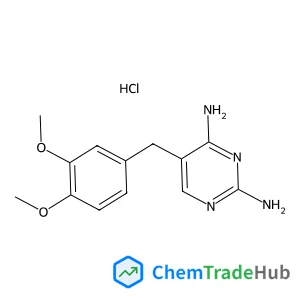
5-(3,4-Dimethoxybenzyl)-2,4-pyrimidinediamine hydrochloride (1:1)
CAS Number:
2507-23-5
Molecular Formula:
C13H17ClN4O2
Recommended Suppliers






Disclaimer
This page provides academic journal information for reference and research purposes only. We are not affiliated with any journal publishers and do not handle publication submissions. For publication-related inquiries, please contact the respective journal publishers directly.
If you notice any inaccuracies in the information displayed, please contact us at support@chemtradehub.com. We will promptly review and address your concerns.