













Impacts of anions on the oxygen reduction reaction kinetics on platinum and palladium surfaces in alkaline solutions
Literature Information
Publication Date
2017-02-17
DOI
10.1039/C7CP00404D
Impact Factor
3.676
Authors
Shangqian Zhu, Xiaomeng Hu, Minhua Shao
View Original
Abstract
The fundamental understanding of the impacts induced by anions on oxygen reduction reaction (ORR) in alkaline media is of great importance in the design of more advanced catalysts for alkaline fuel cells (AFC). In this study, the specific adsorption of F−, Cl−, ClO4−, CO32−, SO42−, and citrate anions on Pt/C and Pd/C catalysts, and their impacts on the ORR kinetics in alkaline solutions were systematically studied. It was found that F−, Cl− and ClO4− did not specifically adsorb on Pt or Pd surfaces and had no poisoning effect on ORR. CO32− and SO42− had significant effects on Pt/C and lowered the activity even at a very low concentration. On the other hand, their impacts on Pd/C were negligible. Self-dissociation of citrate anions was found to occur on both Pt/C and Pd/C in the H adsorption/desorption and double layer regions. For the first time, surface enhanced infrared absorption spectroscopy (SEIRAS) with the attenuated total reflection (ATR) technique was used to investigate the self-dissociation of citrate on Pt and Pd thin film electrodes. The breaking of carboxylic groups and the carbon backbone was proposed as a possible dissociation pathway for citrate. The adsorbed species have a negligible effect on ORR activity on Pt/C as they are removed by oxidation before 0.75 V. In contrast, their oxidation on Pd/C surfaces is not completed until 0.91 V, which causes a lower ORR activity observed in rotating disk electrode measurements. The findings in this paper emphasize the importance of specific adsorption of anions and double-layer interfacial effects on the ORR activity measurement in alkaline solutions.
Related Literature
Dual hydrophilic polymers based on (meth)acrylic acid and poly(ethylene glycol) – synthesis and water uptake behavior
2010-09-08
Paper
DOI: 10.1039/C0PY00156B
Recent advances in sunlight induced polymerization: role of new photoinitiating systems based on the silyl radical chemistry
Jacques Lalevée, Jean Pierre Fouassier
2011-03-24
Paper
DOI: 10.1039/C1PY00073J
Solution, thermal and optical properties of new poly(pyridinium salt)s derived from bisquinoline diamines‡
Alexi K. Nedeltchev, Haesook Han, Pradip K. Bhowmik
2010-05-06
Paper
DOI: 10.1039/C0PY00037J
Functional polymers for optoelectronic applications by RAFT polymerization
Graeme Moad, Ming Chen, Matthias Häussler, Almar Postma, Ezio Rizzardo, San H. Thang
2010-09-23
Review Article
DOI: 10.1039/C0PY00179A
Selective partial hydrolysis of amphiphilic copoly(2-oxazoline)s as basis for temperature and pH responsive micelles
Johan P. A. Heuts, Stephanie Hoeppener
2010-05-21
Paper
DOI: 10.1039/C0PY00052C
Non-viral siRNA delivery vectors: dendritic molecular transporter and molecular transporter nanovectors for target gene silencing‡
Sharon K. Hamilton, Artez L. Sims, Jenna Donavan, Eva Harth
2010-11-18
Paper
DOI: 10.1039/C0PY00342E
Self-assembly and thermodynamic synthesis of rotaxanedendrimers and related structures
Ken Cham-Fai Leung, Kwun-Ngai Lau
2010-05-24
Review Article
DOI: 10.1039/B9PY00380K
A spoonful of sugar: the application of glycopolymers in therapeutics
Sebastian G. Spain, Neil R. Cameron
2010-07-09
Review Article
DOI: 10.1039/C0PY00149J
How does a star chain (nanooctopus) crawl through a nanopore?
Hui Ge, Stergios Pispas
2011-01-14
Paper
DOI: 10.1039/C0PY00361A
You might also like
Compound Q&A
Is 6-(3-Fluorophenyl)picolinic acid (CAS: 887982-40-3) safe?
6-(3-Fluorophenyl)picolinic acid is generally considered safe for laboratory use...
887982-40-36-(3-Fluorophenyl)pi...
Compound Q&A
What industries use (3R)-3-Pyrrolidinol (CAS: 2799-21-5)?
(3R)-3-Pyrrolidinol is used in the pharmaceutical industry as a precursor for dr...
2799-21-5(3R)-3-Pyrrolidinol
Compound Q&A
What precautions should be taken when handling (4R,5R)-4,5-Diethoxycarbonyl-2,2-dimethyldioxolane (CAS: 59779-75-8)?
When handling (4R,5R)-4,5-Diethoxycarbonyl-2,2-dimethyldioxolane (CAS: 59779-75-...
59779-75-8(4R,5R)-4,5-Diethoxy...
Compound Q&A
How is 1-(6-Chloroimidazo[1,2-b]pyridazin-3-yl)ethanone (CAS: 90734-71-7) typically synthesized?
1-(6-Chloroimidazo[1,2-b]pyridazin-3-yl)ethanone is often synthesized via a mult...
90734-71-71-(6-Chloroimidazo[1...
Compound Q&A
What is the market or research trend for N-Ethyl-3,4-dimethylbenzylamine (CAS: 39180-83-1)?
The market for N-Ethyl-3,4-dimethylbenzylamine (CAS: 39180-83-1) remains steady,...
39180-83-1N-Ethyl-3,4-dimethyl...
Compound Q&A
What is Tert-butyl 3-(pyrrolidin-1-yl)azetidine-1-carboxylate (CAS: 1019008-21-9)?
Tert-butyl 3-(pyrrolidin-1-yl)azetidine-1-carboxylate is a chemical compound wit...
1019008-21-9Tert-butyl 3-(pyrrol...
Compound Q&A
What regulatory guidelines apply to 1-Bromo-3-chloro-2,4-dimethoxybenzene (CAS: 1228956-93-1)?
1-Bromo-3-chloro-2,4-dimethoxybenzene (CAS: 1228956-93-1) falls under the classi...
1228956-93-11-Bromo-3-chloro-2,4...
Compound Q&A
Is 8-Bromo-2-methyl-3,4-dihydroisoquinolin-1(2H)-one (CAS: 1368622-07-4) safe?
The safety of 8-Bromo-2-methyl-3,4-dihydroisoquinolin-1(2H)-one (CAS: 1368622-07...
1368622-07-48-Bromo-2-methyl-3,4...
Compound Q&A
Is Benzyl [(3S)-2,6-dioxo-3-piperidinyl]carbamate (CAS: 22785-43-9) safe?
Benzyl [(3S)-2,6-dioxo-3-piperidinyl]carbamate is generally safe when handled wi...
22785-43-9Benzyl [(3S)-2,6-dio...
Compound Q&A
How should 1-{[4-(4,4,5,5-Tetramethyl-1,3,2-dioxaborolan-2-yl)phenyl]sulfonyl}pyrrolidine (CAS: 928657-21-0) be stored?
1-{[4-(4,4,5,5-Tetramethyl-1,3,2-dioxaborolan-2-yl)phenyl]sulfonyl}pyrrolidine s...
928657-21-01-{[4-(4,4,5,5-Tetra...
Source Journal
Physical Chemistry Chemical Physics

CiteScore:
5.5
Self-citation Rate:
10.3%
Articles per Year:
3036
Physical Chemistry Chemical Physics (PCCP) is an international journal co-owned by 19 physical chemistry and physics societies from around the world. This journal publishes original, cutting-edge research in physical chemistry, chemical physics and biophysical chemistry. To be suitable for publication in PCCP, articles must include significant innovation and/or insight into physical chemistry; this is the most important criterion that reviewers and Editors will judge against when evaluating submissions. The journal has a broad scope and welcomes contributions spanning experiment, theory, computation and data science. Topical coverage includes spectroscopy, dynamics, kinetics, statistical mechanics, thermodynamics, electrochemistry, catalysis, surface science, quantum mechanics, quantum computing and machine learning. Interdisciplinary research areas such as polymers and soft matter, materials, nanoscience, energy, surfaces/interfaces, and biophysical chemistry are welcomed if they demonstrate significant innovation and/or insight into physical chemistry. Joined experimental/theoretical studies are particularly appreciated when complementary and based on up-to-date approaches.
Recommended Compounds
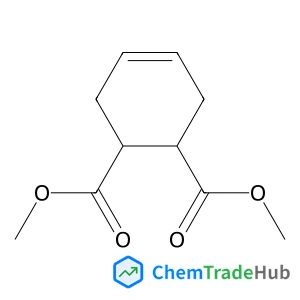
4-Cyclohexene-1,2-dicarboxylic acid, 1,2-dimethyl ester, (1R,2R)-rel-
CAS Number:
17673-68-6
Molecular Formula:
C10H14O4
Recommended Suppliers




Disclaimer
This page provides academic journal information for reference and research purposes only. We are not affiliated with any journal publishers and do not handle publication submissions. For publication-related inquiries, please contact the respective journal publishers directly.
If you notice any inaccuracies in the information displayed, please contact us at support@chemtradehub.com. We will promptly review and address your concerns.