












A multi-walled carbon nanotube-based magnetic molecularly imprinted polymer as a highly selective sorbent for ultrasonic-assisted dispersive solid-phase microextraction of sotalol in biological fluids
Literature Information
Publication Date
2018-05-01
DOI
10.1039/C7AN02077E
Impact Factor
4.616
Authors
Saeedeh Ansari, Saeed Masoum
View Original
Abstract
A modified multiwalled carbon nanotube-based magnetic molecularly imprinted polymer (MWCNT-MMIP) was synthesized and applied for selective extraction and preconcentration of sotalol (SOT) in biological fluid samples by using ultrasonic-assisted dispersive solid-phase microextraction (UA-DSPME). The synthetic particles were characterized by scanning electron microscopy (SEM), transmission electron microscopy (TEM), Brunauer–Emmett–Teller (BET) analysis, vibrating sample magnetometry (VSM) and Fourier transform infrared spectroscopy (FTIR). The screening of UA-DSPME was preliminarily performed by Plackett–Burman design (PBD) and, subsequently, central composite design (CCD) under response surface methodology (RSM) was used individually for evaluation of the significant factors and their possible interaction effects on the adsorption process. Batch mode adsorption studies were performed to evaluate the adsorption kinetics, adsorption isotherms, and selective recognition of MWCNT-MMIPs. The adsorption equilibrium of SOT using MWCNT-MMIPs could be well-defined with the Langmuir isotherm model and the maximum adsorption capacity was calculated to be 79.36 mg g−1. Under optimized conditions, the SOT was selectively and effectively extracted in real biological samples and good linearity was obtained with correlation coefficients (R2) over 0.996 and the detection limit (S/N = 3) was 0.31 ng mL−1. The average recoveries of the spiked human urine and plasma samples at four concentration levels of SOT ranged from 94.60–102.50 and 97.40–101.60 percent, respectively, and the relative standard deviation was found to be lower than 4.50%. The results illustrated that the proposed MWCNT-MMIPs@UA-DSPME extraction method coupled with HPLC-UV determination could be applied for sensitive and selective analysis of trace SOT in biological fluid samples.
Related Literature
Unravelling the microhydration frameworks of prototype PAH by infrared spectroscopy: naphthalene–(water)1–3
Kuntal Chatterjee, Tarun Kumar Roy, Jai Khatri, Gerhard Schwaab, Martina Havenith
2021-05-25
Paper
DOI: 10.1039/D1CP01789F
A theoretical study on the electronic, structural and optical properties of armchair, zigzag and chiral silicon–germanium nanotubes
Alejandro Herrera-Carbajal, Ventura Rodríguez-Lugo, Juan Hernández-Ávila, Ariadna Sánchez-Castillo
2021-05-09
Paper
DOI: 10.1039/D1CP00519G
Spectroscopic investigations of electron and hole dynamics in MAPbBr3 perovskite film and carrier extraction to PEDOT hole transport layer
Mojgan Kouhnavard, Yifan Diao, Pratim Biswas
2021-05-28
Paper
DOI: 10.1039/D1CP00658D
Molecular insights into the binding variance of the SARS-CoV-2 spike with human, cat and dog ACE2 proteins
Yongjian Zang, Xuhua Li, Yizhen Zhao, He Wang, Dongxiao Hao, Lei Zhang, Zhiwei Yang, Xiaohui Yuan, Shengli Zhang
2021-06-03
Paper
DOI: 10.1039/D1CP01611C
Triangular boron carbon nitrides: an unexplored family of chromophores with unique properties for photocatalysis and optoelectronics
Sebastian Pios, Xiang Huang, Andrzej L. Sobolewski, Wolfgang Domcke
2021-05-26
Paper
DOI: 10.1039/D1CP02026A
Influence of water content on the [2σ+2σ+2π] cycloaddition of dimethyl azodicarboxylate with quadricyclane in mixed methanol–water solvents from QM/MM Monte Carlo simulations
Lian Yang, Xudong Liu, Yan Zhang, Yongsheng Yang, Ying Xue
2021-08-23
Paper
DOI: 10.1039/D1CP01973B
Sequence-selective recognition of cationic amphipathic tripeptides with similar structures in aqueous solutions by cucurbit[7]uril
Fenfen Ma, Xiaoyan Zheng, Zesheng Li
2021-05-28
Paper
DOI: 10.1039/D1CP01326B
Evaluation of nine condensed-phase force fields of the GROMOS, CHARMM, OPLS, AMBER, and OpenFF families against experimental cross-solvation free energies
Sadra Kashefolgheta, Shuzhe Wang, William E. Acree, Jr., Philippe H. Hünenberger
2021-04-30
Paper
DOI: 10.1039/D1CP00215E
You might also like
Compound Q&A
What is the market or research trend for N-(4-Methoxybenzyl)-2-pyridinamine (CAS: 52818-63-0)?
N-(4-Methoxybenzyl)-2-pyridinamine (CAS: 52818-63-0) is increasingly being used ...
52818-63-0N-(4-Methoxybenzyl)-...
Compound Q&A
What precautions should be taken when handling Ethyl 4-(2-chlorophenyl)-1,3-thiazole-2-carboxylate (CAS: 1050507-06-6)?
When handling Ethyl 4-(2-chlorophenyl)-1,3-thiazole-2-carboxylate, appropriate p...
1050507-06-6Ethyl 4-(2-chlorophe...
Compound Q&A
What regulatory guidelines apply to diethyldiselane (CAS: 628-39-7)?
Diethyldiselane (CAS: 628-39-7) is classified under the Globally Harmonized Syst...
628-39-7Diethyldiselane
Compound Q&A
What is the market or research trend for oxocopper (CAS: 12053-18-8)?
The market for oxocopper (CAS: 12053-18-8) is primarily driven by its use in cat...
12053-18-8oxocopper; oxo-(oxoc...
Compound Q&A
What is the market or research trend for 5-{[(2-Methyl-2-propanyl)oxy]carbonyl}-5-azaspiro[2.4]heptane-7-carboxylic acid?
The market for 5-{[(2-Methyl-2-propanyl)oxy]carbonyl}-5-azaspiro[2.4]heptane-7-c...
1268519-54-55-{[(2-Methyl-2-prop...
Compound Q&A
What is 2-(1-Pyrrolidinyl)-4-pyridinamine (CAS: 35981-63-6)?
2-(1-Pyrrolidinyl)-4-pyridinamine is a chemical compound with the CAS number 359...
35981-63-62-(1-Pyrrolidinyl)-4...
Compound Q&A
What are the physical and chemical properties of 2-(3-Pyridinyl)-1-azabicyclo[2.2.2]octane (CAS: 91556-75-1)?
2-(3-Pyridinyl)-1-azabicyclo[2.2.2]octane (CAS: 91556-75-1) is a crystalline sol...
91556-75-12-(3-Pyridinyl)-1-az...
Compound Q&A
How is (S)-Alpha-allyl-proline hydrochloride (CAS: 129704-91-2) typically synthesized?
(S)-Alpha-allyl-proline hydrochloride is usually synthesized via a Wittig reacti...
129704-91-2(S)-Alpha-allyl-prol...
Compound Q&A
What is 3-Methyl-1,2-oxazole-5-carboxylic acid (CAS: 4857-42-5)?
3-Methyl-1,2-oxazole-5-carboxylic acid (CAS: 4857-42-5) is an organic compound w...
4857-42-53-Methyl-1,2-oxazole...
Compound Q&A
How is Lys-SMCC-DM1 (CAS: 1281816-04-3) typically synthesized?
Lys-SMCC-DM1 is synthesized via a multi-step process involving the coupling of S...
1281816-04-3Lys-SMCC-DM1
Source Journal
Analyst

CiteScore:
7.8
Self-citation Rate:
5.6%
Articles per Year:
653
Analyst publishes analytical and bioanalytical research that reports premier fundamental discoveries and inventions, and the applications of those discoveries, unconfined by traditional discipline barriers.
Recommended Compounds
![1-(1-Benzyl-1,2,3,6-tetrahydropyridin-4-yl)-1H-benzo[d]imidazol-2(3H)-one structure](https://static.chemtradehub.com/structs/603/60373-71-9-7dfb.webp "1-(1-Benzyl-1,2,3,6-tetrahydropyridin-4-yl)-1H-benzo[d]imidazol-2(3H)-one structure")
1-(1-Benzyl-1,2,3,6-tetrahydropyridin-4-yl)-1H-benzo[d]imidazol-2(3H)-one
CAS Number:
60373-71-9
Molecular Formula:
C19H19N3O
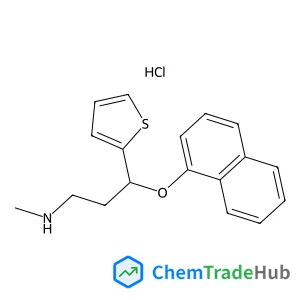
N-Methyl-3-(1-naphthyloxy)-3-(2-thienyl)-1-propanamine hydrochloride (1:1)
CAS Number:
1188266-11-6
Molecular Formula:
C18H20ClNOS
Recommended Suppliers




Disclaimer
This page provides academic journal information for reference and research purposes only. We are not affiliated with any journal publishers and do not handle publication submissions. For publication-related inquiries, please contact the respective journal publishers directly.
If you notice any inaccuracies in the information displayed, please contact us at support@chemtradehub.com. We will promptly review and address your concerns.