












![9,9'-Spirobi[fluoren]-2-amine structure](https://static.chemtradehub.com/structs/118/118951-68-1-0d14.webp "9,9'-Spirobi[fluoren]-2-amine structure")
Solid matrix transformation and tracer addition using molten ammonium bifluoride salt as a sample preparation method for laser ablation inductively coupled plasma mass spectrometry
Literature Information
Publication Date
2017-06-22
DOI
10.1039/C7AN00777A
Impact Factor
4.616
Authors
Jay W. Grate, Matthew J. O'Hara, Cynthia M. Kellogg, Samuel S. Morrison, David W. Koppenaal, George C.-Y. Chan, Xianglei Mao, Vassilia Zorba
View Original
Abstract
Solid sampling and analysis methods, such as laser ablation inductively coupled plasma mass spectrometry (LA-ICP-MS), are challenged by matrix effects and calibration difficulties. Matrix-matched standards for external calibration are seldom available and it is difficult to distribute spikes evenly into a solid matrix as internal standards. While isotopic ratios of the same element can be measured to high precision, matrix-dependent effects in the sampling and analysis process frustrate accurate quantification and elemental ratio determinations. Here we introduce a potentially general solid matrix transformation approach entailing chemical reactions in molten ammonium bifluoride (ABF) salt that enables the introduction of spikes as tracers or internal standards. Proof of principle experiments show that the decomposition of uranium ore in sealed PFA fluoropolymer vials at 230 °C yields, after cooling, new solids suitable for direct solid sampling by LA. When spikes are included in the molten salt reaction, subsequent LA-ICP-MS sampling at several spots indicate that the spikes are evenly distributed, and that U-235 tracer dramatically improves reproducibility in U-238 analysis. Precisions improved from 17% relative standard deviation for U-238 signals to 0.1% for the ratio of sample U-238 to spiked U-235, a factor of over two orders of magnitude. These results introduce the concept of solid matrix transformation (SMT) using ABF, and provide proof of principle for a new method of incorporating internal standards into a solid for LA-ICP-MS. This new approach, SMT-LA-ICP-MS, provides opportunities to improve calibration and quantification in solids based analysis. Looking forward, tracer addition to transformed solids opens up LA-based methods to analytical methodologies such as standard addition, isotope dilution, preparation of matrix-matched solid standards, external calibration, and monitoring instrument drift against external calibration standards.
Related Literature
Assessing nickel oxide electrocatalysts incorporating diamines and having improved oxygen evolution activity using operando UV/visible and X-ray absorption spectroscopy
Takafumi Miura, Shun Tsunekawa, Sho Onishi, Toshiaki Ina, Kehsuan Wang, Genta Watanabe, Chechia Hu, Hiroshi Kondoh, Takeshi Kawai
2021-10-11
Paper
DOI: 10.1039/D1CP03323A
Scouting for strong light–matter coupling signatures in Raman spectra
Lukasz Piatkowski, Frank Wackenhut, Sylwester Gawinkowski, Alfred J. Meixner
2021-07-29
Paper
DOI: 10.1039/D1CP01863A
Preferred penetration of active nano-rods into narrow channels and their clustering
Zhengjia Wang, Kang-Ching Chu, Yu-Jane Sheng
2021-07-05
Paper
DOI: 10.1039/D1CP01065D
Single sheets of graphene for fabrication of fibers with enhanced mechanical properties
Muhammad G. Salim, Luke A. Thimons, Min A. Kim, Brennan Carr, Michelle Montgomery, Nathan Tolman, Tevis D. B. Jacobs, Haitao Liu
2021-09-20
Paper
DOI: 10.1039/D1CP03238K
The Fermi level as an energy reference in liquid jet X-ray photoelectron spectroscopy studies of aqueous solutions
Lucía Pérez Ramírez, Anthony Boucly, Florent Saudrais, Emmanuel Maisonhaute, Aleksandar R. Milosavljević, Christophe Nicolas, François Rochet
2021-07-05
Paper
DOI: 10.1039/D1CP01511G
Formation of dimethyl carbonate via direct esterification of CO2 with methanol on reduced or stoichiometric CeO2(111) and (110) surfaces
Jian Jiang, Chris M. Marin, Avinash Kumar Both, Chin Li Cheung, Lei Li, Xiao Cheng Zeng
2021-07-19
Paper
DOI: 10.1039/D1CP02152D
A graphene–Mo2C heterostructure for a highly responsive broadband photodetector
Xiaozhi Bao, Tian Sun, Yan Liu, Chuan Xu, Weiliang Ma, Junpo Guo, Yun Zheng, Shivananju Bannur Nanjunda, Huating Liu, Zongyu Huang, Shenghuang Lin, Guichuan Xing, Wencai Ren, Qiaoliang Bao, Huaiyu Shao
2021-09-15
Paper
DOI: 10.1039/D1CP03536C
An interplay of various damage channels in polyethylene exposed to ultra-short XUV/X-ray pulses
P. Babaev, J. Chalupský, A. E. Volkov
2021-07-02
Paper
DOI: 10.1039/D1CP02199K
You might also like
Compound Q&A
How is Ethyl 4-chlorothieno[2,3-b]pyridine-5-carboxylate (CAS: 59713-58-5) typically synthesized?
Ethyl 4-chlorothieno[2,3-b]pyridine-5-carboxylate (CAS: 59713-58-5) can be synth...
59713-58-5Ethyl 4-chlorothieno...
Compound Q&A
What regulatory guidelines apply to 5-Methyl-1H-indole-3-carbaldehyde (CAS: 52562-50-2)?
5-Methyl-1H-indole-3-carbaldehyde (CAS: 52562-50-2) is subject to various regula...
52562-50-25-Methyl-1H-indole-3...
Compound Q&A
What are the physical and chemical properties of (1,3-Dimethyl-2,4-dioxo-1,2,3,4-tetrahydro-5-pyrimidinyl)boronic acid (CAS: 223418-73-3)?
(1,3-Dimethyl-2,4-dioxo-1,2,3,4-tetrahydro-5-pyrimidinyl)boronic acid is a white...
223418-73-3(1,3-Dimethyl-2,4-di...
Compound Q&A
How should waste containing Sulfocostunolide A (CAS: 1016983-51-9) be handled?
Waste containing Sulfocostunolide A (CAS: 1016983-51-9) should be handled with c...
1016983-51-9Sulfocostunolide A
Compound Q&A
What precautions should be taken when handling Murraxocin (CAS: 88478-44-8)?
When handling Murraxocin (CAS: 88478-44-8), ensure proper personal protective eq...
88478-44-8Murraxocin
Compound Q&A
What are the physical and chemical properties of Formvar (CAS: 63148-64-1)?
Formvar (CAS: 63148-64-1) is an alkyd resin characterized by a high molecular we...
63148-64-1Formvar(R)
Compound Q&A
Is (S)-4-benzyl-2-((benzyloxy)methyl)morpholine (CAS: 205242-66-6) safe?
(S)-4-benzyl-2-((benzyloxy)methyl)morpholine is generally safe when handled with...
205242-66-6(S)-4-benzyl-2-((ben...
Compound Q&A
What industries use Methyl 1-(5-bromo-2-pyrimidinyl)cyclopropanecarboxylate (CAS: 1447607-69-3)?
Methyl 1-(5-bromo-2-pyrimidinyl)cyclopropanecarboxylate (CAS: 1447607-69-3) is p...
1447607-69-3Methyl 1-(5-bromo-2-...
Compound Q&A
Is 2-Methyl-1-phenyl-1-propanamine hydrochloride (CAS: 24290-47-9) safe?
2-Methyl-1-phenyl-1-propanamine hydrochloride (CAS: 24290-47-9) is generally con...
24290-47-92-Methyl-1-phenyl-1-...
Compound Q&A
How is 3-(4-Bromophenyl)-2-methylpropanoic acid (CAS: 66735-01-1) typically synthesized?
3-(4-Bromophenyl)-2-methylpropanoic acid is synthesized through a multi-step pro...
66735-01-13-(4-Bromophenyl)-2-...
Source Journal
Analyst

CiteScore:
7.8
Self-citation Rate:
5.6%
Articles per Year:
653
Analyst publishes analytical and bioanalytical research that reports premier fundamental discoveries and inventions, and the applications of those discoveries, unconfined by traditional discipline barriers.
Recommended Compounds
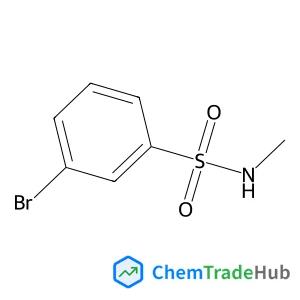
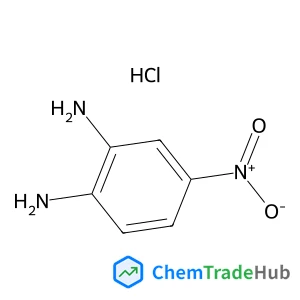

![2-(Methylsulfonyl)-2,4,5,6-tetrahydropyrrolo[3,4-c]pyrazole structure](https://static.chemtradehub.com/structs/122/1226781-80-1-09d5.webp "2-(Methylsulfonyl)-2,4,5,6-tetrahydropyrrolo[3,4-c]pyrazole structure")
2-(Methylsulfonyl)-2,4,5,6-tetrahydropyrrolo[3,4-c]pyrazole
CAS Number:
1226781-80-1
Molecular Formula:
C6H9N3O2S
Recommended Suppliers




Disclaimer
This page provides academic journal information for reference and research purposes only. We are not affiliated with any journal publishers and do not handle publication submissions. For publication-related inquiries, please contact the respective journal publishers directly.
If you notice any inaccuracies in the information displayed, please contact us at support@chemtradehub.com. We will promptly review and address your concerns.