












Formation of dimethyl carbonate via direct esterification of CO2 with methanol on reduced or stoichiometric CeO2(111) and (110) surfaces
Literature Information
Publication Date
2021-07-19
DOI
10.1039/D1CP02152D
Impact Factor
3.676
Authors
Jian Jiang, Chris M. Marin, Avinash Kumar Both, Chin Li Cheung, Lei Li, Xiao Cheng Zeng
View Original
Abstract
CeO2-Catalyzed esterification of CO2, a well-known greenhouse gas, with methanol has been widely recognized as a promising alternative method to produce dimethyl carbonate (DMC). Herein, we performed a comprehensive study of catalytic mechanisms underlying the formation of DMC from CO2 and methanol on both stoichiometric and reduced CeO2(111) and (110) surfaces. To this end, the saddle-point searching algorithm is employed. Specifically, using the monomethyl carbonate (MMC) as the key intermediate, a three-step Langmuir–Hinshelwood (LH) mechanism, including the formation and esterification of monomethyl carbonate and removal of water molecule, is identified for the catalytic DMC formation on either the reduced or the stoichiometric CeO2(111) and (110) surfaces. For both CeO2(111) and (110) surfaces, our study indicates that the presence of oxygen vacancies can markedly lower the activation energy barrier. Different rate-limiting steps are identified, however, for the reduced CeO2(111) and (110) surfaces. Successful identification of the rate-limiting step and the associated active CO2 species will provide atomic-level guidance on selection of metal-oxide-based catalysts toward direct synthesis of DMC from the green-house gas CO2 and methanol.
Related Literature
Proteinadsorption on the hydrophilic surface of a glassy polymer: a computer simulation study
Giuseppina Raffaini, Fabio Ganazzoli
2006-05-19
Paper
DOI: 10.1039/B604540E
Periodic ab initio study of structural and vibrational features of hexagonal hydroxyapatite Ca10(PO4)6(OH)2
Marta Corno, Claudia Busco, Bartolomeo Civalleri, Piero Ugliengo
2006-04-24
Paper
DOI: 10.1039/B602419J
An NMR and relativistic DFT investigation of one-bond nuclear spin–spin coupling in solid triphenyl group-14 chlorides
Mathew J. Willans, Bryan A. Demko, Roderick E. Wasylishen
2006-05-10
Paper
DOI: 10.1039/B603937E
Molecular dynamics simulations of the aqueous interface with the [BMI][PF6] ionic liquid: comparison of different solvent models‡
G. Chevrot, R. Schurhammer, G. Wipff
2006-08-03
Paper
DOI: 10.1039/B608218A
Scalar relativistic calculations of hyperfine coupling tensors using the Douglas–Kroll–Hess method with a finite-size nucleus model
Elena Malkin, Irina Malkin, Olga L. Malkina, Vladimir G. Malkin, Martin Kaupp
2006-08-04
Paper
DOI: 10.1039/B607044B
Enhanced photolysis in aerosols: evidence for important surface effects
Paul Nissenson, Christopher J. H. Knox, Barbara J. Finlayson-Pitts, Leon F. Phillips, Donald Dabdub
2006-09-14
Paper
DOI: 10.1039/B609219E
Quantitative chirality synchronization in trifluoroethanol dimers‡
Tina Scharge, Thomas Häber, Martin A. Suhm
2006-09-21
Communication
DOI: 10.1039/B609868A
Toward an integrated computational approach to CW-ESR spectra of free radicals
Antonino Polimeno
2006-08-08
Invited Article
DOI: 10.1039/B607998A
Measuring temperature gradients in evaporating multicomponent alcohol/water droplets
2006-05-24
Paper
DOI: 10.1039/B600530F
You might also like
Compound Q&A
How is Ethyl 4-chlorothieno[2,3-b]pyridine-5-carboxylate (CAS: 59713-58-5) typically synthesized?
Ethyl 4-chlorothieno[2,3-b]pyridine-5-carboxylate (CAS: 59713-58-5) can be synth...
59713-58-5Ethyl 4-chlorothieno...
Compound Q&A
What regulatory guidelines apply to 5-Methyl-1H-indole-3-carbaldehyde (CAS: 52562-50-2)?
5-Methyl-1H-indole-3-carbaldehyde (CAS: 52562-50-2) is subject to various regula...
52562-50-25-Methyl-1H-indole-3...
Compound Q&A
What are the physical and chemical properties of (1,3-Dimethyl-2,4-dioxo-1,2,3,4-tetrahydro-5-pyrimidinyl)boronic acid (CAS: 223418-73-3)?
(1,3-Dimethyl-2,4-dioxo-1,2,3,4-tetrahydro-5-pyrimidinyl)boronic acid is a white...
223418-73-3(1,3-Dimethyl-2,4-di...
Compound Q&A
How should waste containing Sulfocostunolide A (CAS: 1016983-51-9) be handled?
Waste containing Sulfocostunolide A (CAS: 1016983-51-9) should be handled with c...
1016983-51-9Sulfocostunolide A
Compound Q&A
What precautions should be taken when handling Murraxocin (CAS: 88478-44-8)?
When handling Murraxocin (CAS: 88478-44-8), ensure proper personal protective eq...
88478-44-8Murraxocin
Compound Q&A
What are the physical and chemical properties of Formvar (CAS: 63148-64-1)?
Formvar (CAS: 63148-64-1) is an alkyd resin characterized by a high molecular we...
63148-64-1Formvar(R)
Compound Q&A
Is (S)-4-benzyl-2-((benzyloxy)methyl)morpholine (CAS: 205242-66-6) safe?
(S)-4-benzyl-2-((benzyloxy)methyl)morpholine is generally safe when handled with...
205242-66-6(S)-4-benzyl-2-((ben...
Compound Q&A
What industries use Methyl 1-(5-bromo-2-pyrimidinyl)cyclopropanecarboxylate (CAS: 1447607-69-3)?
Methyl 1-(5-bromo-2-pyrimidinyl)cyclopropanecarboxylate (CAS: 1447607-69-3) is p...
1447607-69-3Methyl 1-(5-bromo-2-...
Compound Q&A
Is 2-Methyl-1-phenyl-1-propanamine hydrochloride (CAS: 24290-47-9) safe?
2-Methyl-1-phenyl-1-propanamine hydrochloride (CAS: 24290-47-9) is generally con...
24290-47-92-Methyl-1-phenyl-1-...
Compound Q&A
How is 3-(4-Bromophenyl)-2-methylpropanoic acid (CAS: 66735-01-1) typically synthesized?
3-(4-Bromophenyl)-2-methylpropanoic acid is synthesized through a multi-step pro...
66735-01-13-(4-Bromophenyl)-2-...
Source Journal
Physical Chemistry Chemical Physics

CiteScore:
5.5
Self-citation Rate:
10.3%
Articles per Year:
3036
Physical Chemistry Chemical Physics (PCCP) is an international journal co-owned by 19 physical chemistry and physics societies from around the world. This journal publishes original, cutting-edge research in physical chemistry, chemical physics and biophysical chemistry. To be suitable for publication in PCCP, articles must include significant innovation and/or insight into physical chemistry; this is the most important criterion that reviewers and Editors will judge against when evaluating submissions. The journal has a broad scope and welcomes contributions spanning experiment, theory, computation and data science. Topical coverage includes spectroscopy, dynamics, kinetics, statistical mechanics, thermodynamics, electrochemistry, catalysis, surface science, quantum mechanics, quantum computing and machine learning. Interdisciplinary research areas such as polymers and soft matter, materials, nanoscience, energy, surfaces/interfaces, and biophysical chemistry are welcomed if they demonstrate significant innovation and/or insight into physical chemistry. Joined experimental/theoretical studies are particularly appreciated when complementary and based on up-to-date approaches.
Recommended Compounds
![4-{1-[4-(4,4,5,5-Tetramethyl-1,3,2-dioxaborolan-2-yl)phenyl]cyclopropyl}morpholine structure](https://static.chemtradehub.com/structs/120/1206594-08-2-7afb.webp "4-{1-[4-(4,4,5,5-Tetramethyl-1,3,2-dioxaborolan-2-yl)phenyl]cyclopropyl}morpholine structure")
4-{1-[4-(4,4,5,5-Tetramethyl-1,3,2-dioxaborolan-2-yl)phenyl]cyclopropyl}morpholine
CAS Number:
1206594-08-2
Molecular Formula:
C19H28BNO3
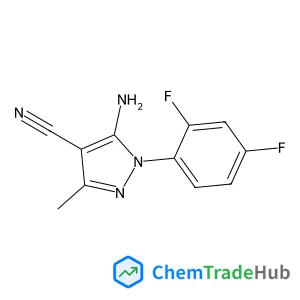
5-Amino-1-(2,4-difluorophenyl)-3-methyl-1H-pyrazole-4-carbonitrile
CAS Number:
1020057-92-4
Molecular Formula:
C11H8F2N4
Recommended Suppliers







Disclaimer
This page provides academic journal information for reference and research purposes only. We are not affiliated with any journal publishers and do not handle publication submissions. For publication-related inquiries, please contact the respective journal publishers directly.
If you notice any inaccuracies in the information displayed, please contact us at support@chemtradehub.com. We will promptly review and address your concerns.