












An interplay of various damage channels in polyethylene exposed to ultra-short XUV/X-ray pulses
Literature Information
Publication Date
2021-07-02
DOI
10.1039/D1CP02199K
Impact Factor
3.676
Authors
P. Babaev, J. Chalupský, A. E. Volkov
View Original
Abstract
Polyethylene (PE) irradiated with femtosecond extreme ultraviolet or X-ray laser pulses in a single-shot damage regime is studied theoretically. The employed microscopic simulation tool XTANT-3 traces nonequilibrium electron kinetics, energy exchange between electrons and atoms, nonthermal modification of interatomic potential, and the induced atomic response. It is found that the nonthermal detachment of hydrogen atoms in bulk PE starts at the threshold deposited dose of ∼0.05 eV per atom. With an increase in the dose, more hydrogen atoms detach from the carbon backbone. At a dose of ∼0.3 eV per atom, hydrogen behaves like a liquid flowing around carbon chains. It is accompanied by the appearance of defect energy levels within the band gap. At a dose of ∼0.5 eV per atom, carbon chains actively bend and cross-link. In the range of doses from ∼0.5 eV per atom to ∼0.9 eV per atom, the electronic excitation induces formation of new carbon structures embedded in the hydrogen liquid, such as benzene-like rings. The band gap collapses at such doses, merging the valence and the conduction bands. Finally, at doses above ∼0.9 eV per atom, the carbon subsystem also melts into liquid. All of these damage mechanisms are mainly nonthermal, triggered by promotion of electrons from the valence into the conduction band of PE. At high doses, however, thermal electron–ion coupling is extremely fast causing equilibration of the electronic and the ionic temperatures within a hundred femtoseconds.
Related Literature
Is perturbation DFT approach applicable to purely repulsive fluids?
Shiqi Zhou, Andrej Jamnik
2006-07-14
Paper
DOI: 10.1039/B606401A
An ab initio investigation of the O(3P)–H2(1Σ +g) van der Waals well
Sule Atahan, Jacek Kłos, Piotr S. Żuchowski
2006-08-29
Paper
DOI: 10.1039/B608871F
Isomeric transitions in size-selected methanol hexamers probed by OH-stretch spectroscopy‡
C. Steinbach, M. Fárník, I. Ettischer, J. Siebers, U. Buck
2006-05-17
Paper
DOI: 10.1039/B604715G
Toward an integrated computational approach to CW-ESR spectra of free radicals
Antonino Polimeno
2006-08-08
Invited Article
DOI: 10.1039/B607998A
New organic noble gas molecules: energetics, stability and potential energy surfaces of HCCXeCCH and HCCKrCCH
2006-08-14
Paper
DOI: 10.1039/B606478G
Calculation of intermolecular interactions in the benzene dimer using coupled-cluster and local electron correlation methods‡
J. Grant Hill, James A. Platts, Hans-Joachim Werner
2006-07-27
Paper
DOI: 10.1039/B608623C
Probing spin–orbit mixing and the singlet–triplet gap in dichloromethylene via Ka-sorted emission spectra
Calvin Mukarakate, Yulia Mishchenko, Danielle Brusse, Chong Tao, Scott A. Reid
2006-08-21
Paper
DOI: 10.1039/B610582C
Mass-analyzed threshold ionization spectroscopy of pyridine. Structural distortion in the first excited state
M. Riese, Z. Altug, J. Grotemeyer
2006-08-29
Paper
DOI: 10.1039/B607402B
You might also like
Compound Q&A
How is Ethyl 4-chlorothieno[2,3-b]pyridine-5-carboxylate (CAS: 59713-58-5) typically synthesized?
Ethyl 4-chlorothieno[2,3-b]pyridine-5-carboxylate (CAS: 59713-58-5) can be synth...
59713-58-5Ethyl 4-chlorothieno...
Compound Q&A
What regulatory guidelines apply to 5-Methyl-1H-indole-3-carbaldehyde (CAS: 52562-50-2)?
5-Methyl-1H-indole-3-carbaldehyde (CAS: 52562-50-2) is subject to various regula...
52562-50-25-Methyl-1H-indole-3...
Compound Q&A
What are the physical and chemical properties of (1,3-Dimethyl-2,4-dioxo-1,2,3,4-tetrahydro-5-pyrimidinyl)boronic acid (CAS: 223418-73-3)?
(1,3-Dimethyl-2,4-dioxo-1,2,3,4-tetrahydro-5-pyrimidinyl)boronic acid is a white...
223418-73-3(1,3-Dimethyl-2,4-di...
Compound Q&A
How should waste containing Sulfocostunolide A (CAS: 1016983-51-9) be handled?
Waste containing Sulfocostunolide A (CAS: 1016983-51-9) should be handled with c...
1016983-51-9Sulfocostunolide A
Compound Q&A
What precautions should be taken when handling Murraxocin (CAS: 88478-44-8)?
When handling Murraxocin (CAS: 88478-44-8), ensure proper personal protective eq...
88478-44-8Murraxocin
Compound Q&A
What are the physical and chemical properties of Formvar (CAS: 63148-64-1)?
Formvar (CAS: 63148-64-1) is an alkyd resin characterized by a high molecular we...
63148-64-1Formvar(R)
Compound Q&A
Is (S)-4-benzyl-2-((benzyloxy)methyl)morpholine (CAS: 205242-66-6) safe?
(S)-4-benzyl-2-((benzyloxy)methyl)morpholine is generally safe when handled with...
205242-66-6(S)-4-benzyl-2-((ben...
Compound Q&A
What industries use Methyl 1-(5-bromo-2-pyrimidinyl)cyclopropanecarboxylate (CAS: 1447607-69-3)?
Methyl 1-(5-bromo-2-pyrimidinyl)cyclopropanecarboxylate (CAS: 1447607-69-3) is p...
1447607-69-3Methyl 1-(5-bromo-2-...
Compound Q&A
Is 2-Methyl-1-phenyl-1-propanamine hydrochloride (CAS: 24290-47-9) safe?
2-Methyl-1-phenyl-1-propanamine hydrochloride (CAS: 24290-47-9) is generally con...
24290-47-92-Methyl-1-phenyl-1-...
Compound Q&A
How is 3-(4-Bromophenyl)-2-methylpropanoic acid (CAS: 66735-01-1) typically synthesized?
3-(4-Bromophenyl)-2-methylpropanoic acid is synthesized through a multi-step pro...
66735-01-13-(4-Bromophenyl)-2-...
Source Journal
Physical Chemistry Chemical Physics

CiteScore:
5.5
Self-citation Rate:
10.3%
Articles per Year:
3036
Physical Chemistry Chemical Physics (PCCP) is an international journal co-owned by 19 physical chemistry and physics societies from around the world. This journal publishes original, cutting-edge research in physical chemistry, chemical physics and biophysical chemistry. To be suitable for publication in PCCP, articles must include significant innovation and/or insight into physical chemistry; this is the most important criterion that reviewers and Editors will judge against when evaluating submissions. The journal has a broad scope and welcomes contributions spanning experiment, theory, computation and data science. Topical coverage includes spectroscopy, dynamics, kinetics, statistical mechanics, thermodynamics, electrochemistry, catalysis, surface science, quantum mechanics, quantum computing and machine learning. Interdisciplinary research areas such as polymers and soft matter, materials, nanoscience, energy, surfaces/interfaces, and biophysical chemistry are welcomed if they demonstrate significant innovation and/or insight into physical chemistry. Joined experimental/theoretical studies are particularly appreciated when complementary and based on up-to-date approaches.
Recommended Compounds
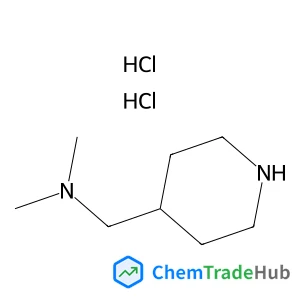
N,N-dimethyl(piperidin-4-yl)methanamine hydrochloride
CAS Number:
172281-72-0
Molecular Formula:
C8H20Cl2N2
![9H-Fluoren-9-ylmethyl [(2S)-1-hydroxy-3-(1H-indol-3-yl)-2-propanyl]carbamate structure](https://static.chemtradehub.com/structs/153/153815-60-2-a67d.webp "9H-Fluoren-9-ylmethyl [(2S)-1-hydroxy-3-(1H-indol-3-yl)-2-propanyl]carbamate structure")
9H-Fluoren-9-ylmethyl [(2S)-1-hydroxy-3-(1H-indol-3-yl)-2-propanyl]carbamate
CAS Number:
153815-60-2
Molecular Formula:
C26H24N2O3
Recommended Suppliers






Disclaimer
This page provides academic journal information for reference and research purposes only. We are not affiliated with any journal publishers and do not handle publication submissions. For publication-related inquiries, please contact the respective journal publishers directly.
If you notice any inaccuracies in the information displayed, please contact us at support@chemtradehub.com. We will promptly review and address your concerns.