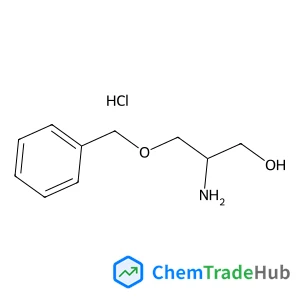
(R)-2-amino-3-(benzyloxy)propan-1-ol hydrochloride
CAS Number:
58577-95-0
Molecular Formula:
C10H16ClNO2
Xiaozhi Bao, Tian Sun, Yan Liu, Chuan Xu, Weiliang Ma, Junpo Guo, Yun Zheng, Shivananju Bannur Nanjunda, Huating Liu, Zongyu Huang, Shenghuang Lin, Guichuan Xing, Wencai Ren, Qiaoliang Bao, Huaiyu Shao
Photodetectors based on intrinsic graphene can operate over a broad wavelength range with ultrafast response, but their responsivity is much lower than commercial silicon photodiodes. The combination of graphene with two-dimensional (2D) semiconductors may enhance the light absorption, but there is still a cutoff wavelength originating from the bandgap of semiconductors. Here, we report a highly responsive broadband photodetector based on the heterostructure of graphene and transition metal carbides (TMCs, more specifically Mo2C). The graphene–Mo2C heterostructure enhanced light absorption over a broad wavelength range from ultraviolet to infrared. In addition, there is very small resistance for photoexcited carriers in both graphene and Mo2C. Consequently, photodetectors based on the graphene–Mo2C heterostructure deliver a very high responsivity from visible to infrared telecommunication wavelengths.
DOI: 10.1039/B600530F
Nick C. Polfer, Jos Oomens, Robert C. Dunbar
DOI: 10.1039/B603665A
Uroš Tasić, Yuri Alexeev, Grigoriy Vayner, T. Daniel Crawford, Theresa L. Windus, William L. Hase
DOI: 10.1039/B609743J
E. Groppo, C. Lamberti, F. Cesano, A. Zecchina
DOI: 10.1039/B604515D
Elena Malkin, Irina Malkin, Olga L. Malkina, Vladimir G. Malkin, Martin Kaupp
DOI: 10.1039/B607044B
J. M. G. Sarraguça, A. A. C. C. Pais
DOI: 10.1039/B606087K
Ethyl 4-chlorothieno[2,3-b]pyridine-5-carboxylate (CAS: 59713-58-5) can be synth...
5-Methyl-1H-indole-3-carbaldehyde (CAS: 52562-50-2) is subject to various regula...
(1,3-Dimethyl-2,4-dioxo-1,2,3,4-tetrahydro-5-pyrimidinyl)boronic acid is a white...
Waste containing Sulfocostunolide A (CAS: 1016983-51-9) should be handled with c...
When handling Murraxocin (CAS: 88478-44-8), ensure proper personal protective eq...
Formvar (CAS: 63148-64-1) is an alkyd resin characterized by a high molecular we...
(S)-4-benzyl-2-((benzyloxy)methyl)morpholine is generally safe when handled with...
Methyl 1-(5-bromo-2-pyrimidinyl)cyclopropanecarboxylate (CAS: 1447607-69-3) is p...
2-Methyl-1-phenyl-1-propanamine hydrochloride (CAS: 24290-47-9) is generally con...
3-(4-Bromophenyl)-2-methylpropanoic acid is synthesized through a multi-step pro...

Physical Chemistry Chemical Physics (PCCP) is an international journal co-owned by 19 physical chemistry and physics societies from around the world. This journal publishes original, cutting-edge research in physical chemistry, chemical physics and biophysical chemistry. To be suitable for publication in PCCP, articles must include significant innovation and/or insight into physical chemistry; this is the most important criterion that reviewers and Editors will judge against when evaluating submissions. The journal has a broad scope and welcomes contributions spanning experiment, theory, computation and data science. Topical coverage includes spectroscopy, dynamics, kinetics, statistical mechanics, thermodynamics, electrochemistry, catalysis, surface science, quantum mechanics, quantum computing and machine learning. Interdisciplinary research areas such as polymers and soft matter, materials, nanoscience, energy, surfaces/interfaces, and biophysical chemistry are welcomed if they demonstrate significant innovation and/or insight into physical chemistry. Joined experimental/theoretical studies are particularly appreciated when complementary and based on up-to-date approaches.
![Sodium 6-amino-3-[(E)-{4-[(E)-(4-aminophenyl)diazenyl]-2-methoxy-5-methylphenyl}diazenyl]-4-hydroxy-2-naphthalenesulfonate structure](https://static.chemtradehub.com/structs/294/2945-96-2-092f.webp "Sodium 6-amino-3-[(E)-{4-[(E)-(4-aminophenyl)diazenyl]-2-methoxy-5-methylphenyl}diazenyl]-4-hydroxy-2-naphthalenesulfonate structure")